10 Slick Home Office Makeover Ideas for Fall 2026
By Mehboob Hussain
I have spent the last few falls rearranging the same small corner of my home, and I will be honest with you: most home office makeovers I see online are fantasy rooms. They assume you own a spare bedroom, a renovation budget, and a landlord who lets you drill into anything. I have none of those things, and I suspect you might not either. My own workspace is a desk squeezed beside a window, in a room that also has to function as a living space, and it took me years to accept that this is not a problem to solve with money. It is a problem to solve with editing.
Here is my opinion, stated plainly: a slick home office is not an expensive home office. It is an uncluttered one with exactly one thing worth looking at. Everything else should be quiet, useful, and out of sight. Skip the matching desk set this year — matching sets are the fastest way to make a small room look like a furniture showroom, and they cost a fortune for the privilege. This is the one I’d buy instead: a single statement chair, or one bold print, or one good lamp, and then ruthless calm everywhere else. The ten ideas below all follow that rule, and every one of them works in a rented room, a shared flat, or a corner you stole from your own living room. No drilling into brick, no renovation, no five-figure budget.
1. Claim the Window Corner, Not the Whole Room
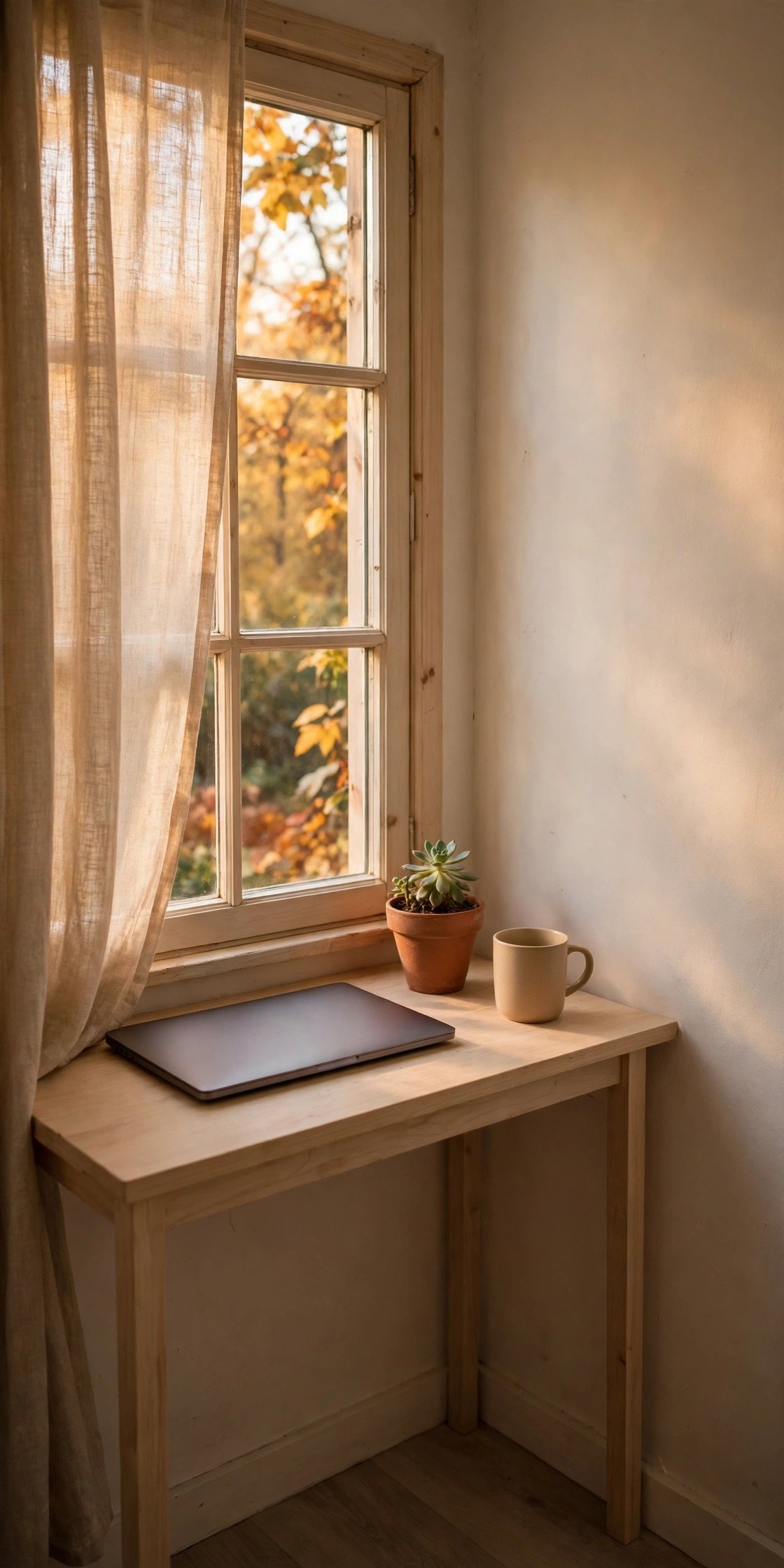
I used to believe a home office needed a room of its own, and that belief kept me working from my bed for far too long. The fix, when it finally came, was embarrassingly small: a slim desk pushed against the wall beside the window, facing into the room rather than staring at plaster. Natural light does more for your focus than any gadget I have tested, and a window corner is usually dead space anyway — too small for a sofa, perfect for a desk. Measure the gap before you shop, because in my experience the desk that fits is almost always narrower than the one you wanted, and that is a good thing. A narrow desk forces you to keep only the laptop, a notebook, and one plant on it. Anything else lives elsewhere, which is the entire point. If the corner has a radiator underneath, skip this spot — you will roast by noon and abandon it by October.
2. Buy One Statement Chair and Let Everything Else Stay Quiet
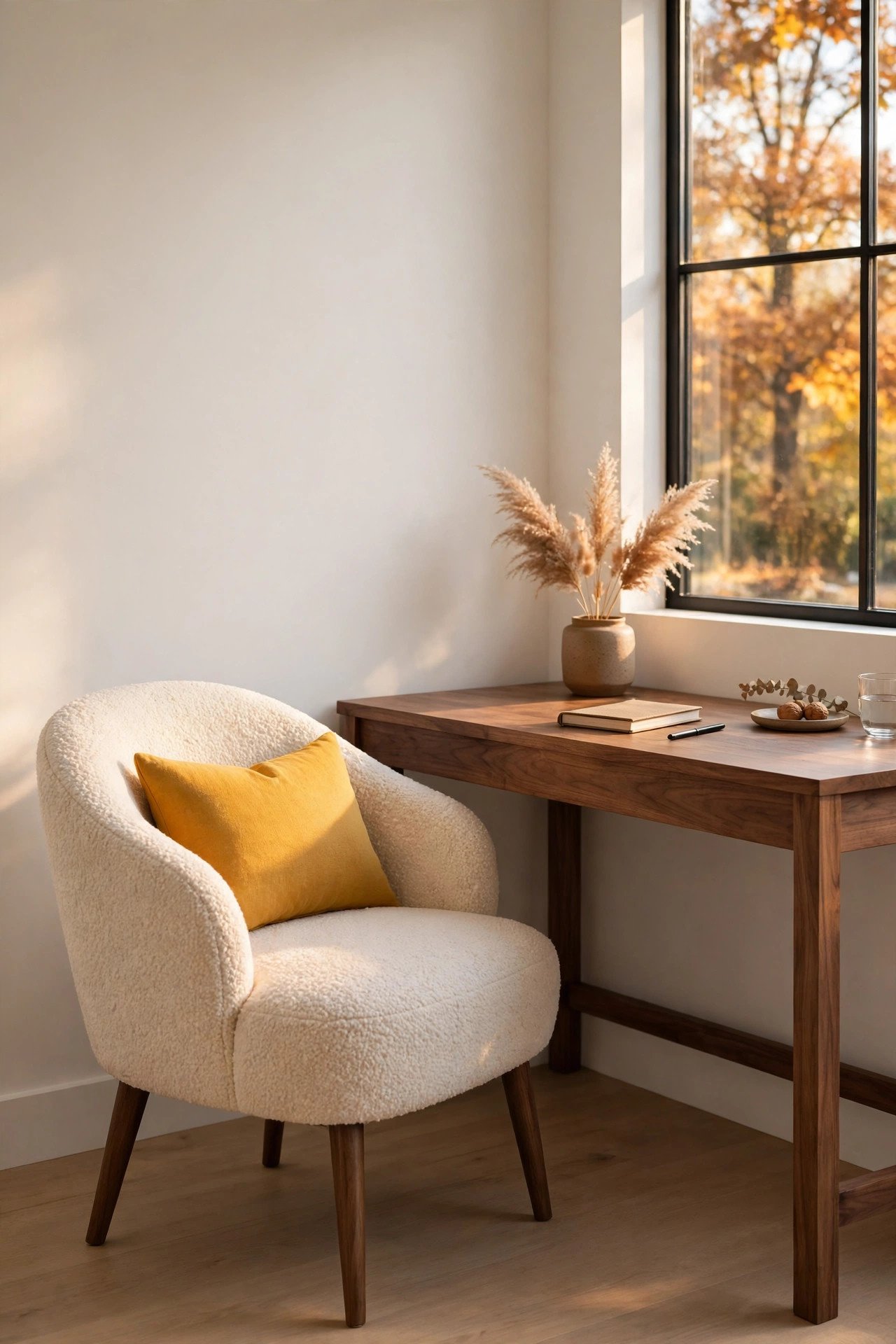
If you spend money on exactly one thing this fall, make it the chair. I learned this the expensive way, buying a cheap chair first and replacing it within months, then buying a good one and wondering why I had not done it at the start. A boucle or leather accent chair in a warm neutral instantly makes the whole corner look intentional, even if the desk underneath it cost very little. Here is the judgment call: this only works if everything else stays quiet. One loud chair plus a loud rug plus loud wall art is a shouting match, and small rooms lose shouting matches fast. Keep the desk plain, the walls plain, and let the chair carry the room. Test the seat height against your desk before you commit — a beautiful chair at the wrong height is just an expensive way to ruin your posture. And if you find a good one secondhand, buy it on the spot; good chairs do not wait around.
3. Floating Shelves Plus Cable Discipline
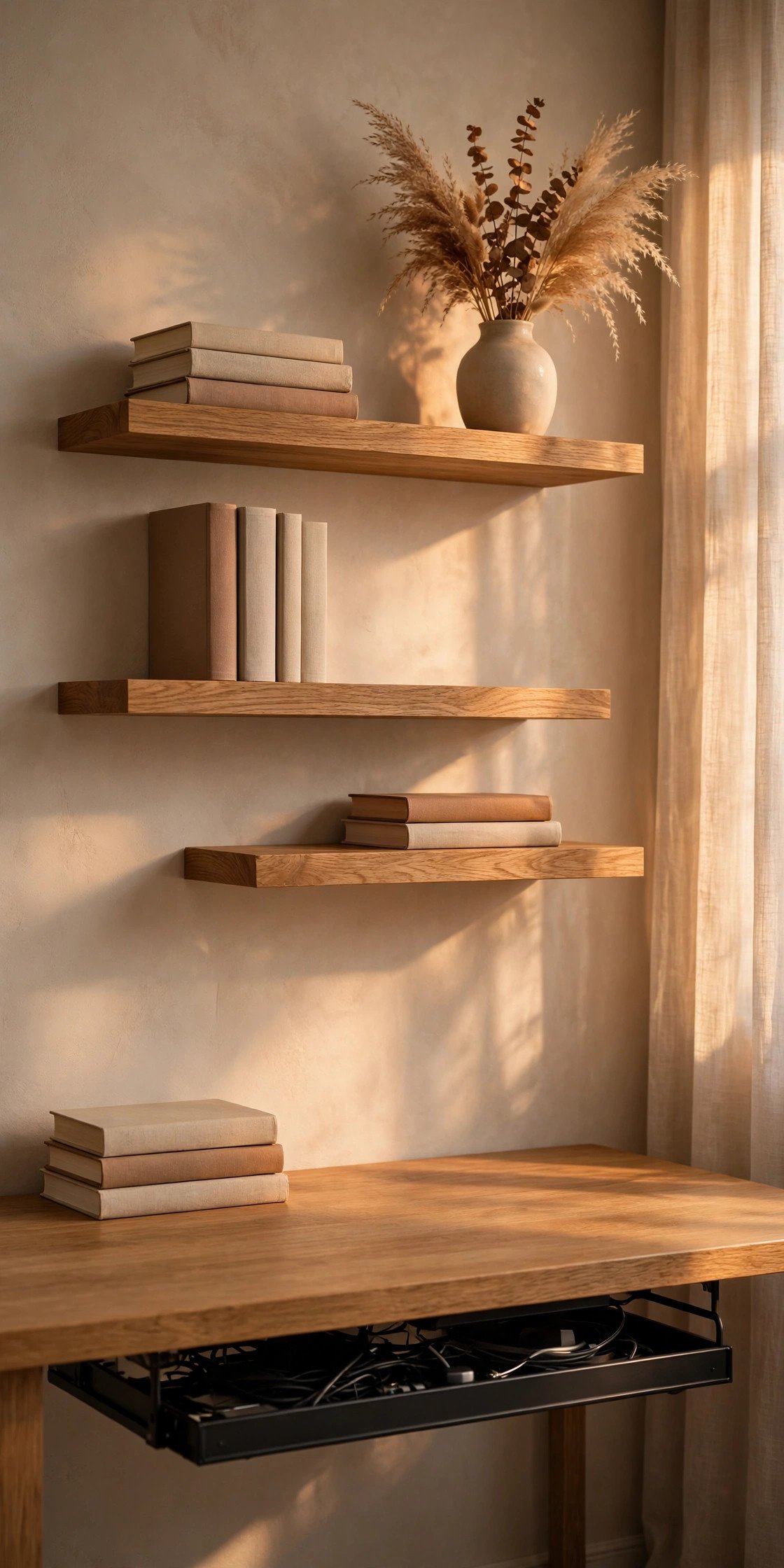
Nothing kills a slick office faster than cables, and I say that as someone who lived with a spaghetti junction behind his desk for a year. A fifteen-minute fix changed the whole room: a stick-on cable tray under the desk, one cable sleeve for the run to the wall, and a power strip screwed — or, in a rental, stuck with heavy-duty adhesive — out of sight. Floating shelves do the second half of the job. They lift books, a plant, and one vase off the desk surface, which is the difference between a workspace and a storage unit. My rule is three objects per shelf, maximum, and one of them should be something you actually use. Skip the tiny decorative ladders and miniature plants; they read as clutter from two feet away. If your landlord bans drilling, adhesive shelves rated for real weight exist now, and I have used them successfully — just respect the weight limit, because a shelf of books on your laptop is a bad morning.
4. The Thrifted Desk Upgrade

New desks are, in my opinion, one of the worst values in home decor — flat-packed, wobbly within a year, and priced like furniture that will last. A thrifted solid-wood desk is the opposite: cheaper, sturdier, and already full of character. I found mine in a secondhand shop for less than a new flat-pack would have cost, and a single afternoon of sanding and oiling made it the best-looking thing in the room. Check the drawers before you pay; sticky drawers are fixable with a candle rubbed along the runners, but a warped top is not worth negotiating over. This is also where my thrifting habit pays off in general — if you want the full strategy, read The Only 5 Thrifted Finds Worth Hunting For This Fall. Pair the old desk with one modern lamp and the whole corner looks curated rather than cobbled together, which is exactly the trick.
5. The Rolling Office Cart for Shared Rooms
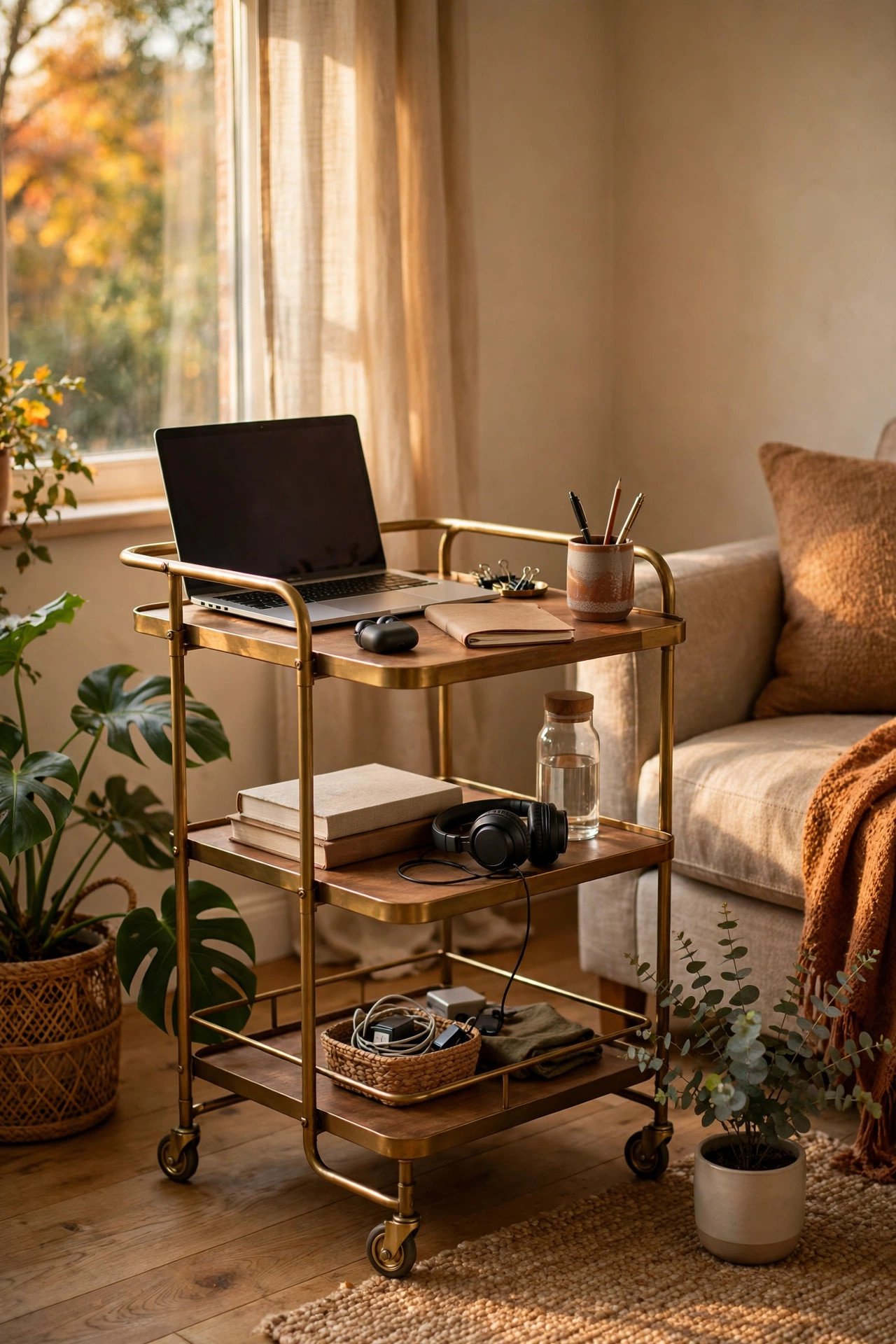
Here is the idea I recommend most to people who share their home: stop trying to own a permanent office and build a mobile one instead. A sturdy rolling cart — the kind sold for kitchens — holds a laptop, a notebook, a pen cup, and a small plant, and it wheels into a corner when the workday ends. I have watched friends transform their evenings with this one change, because the room stops being an office at 6 p.m. and becomes a living room again. The trick is discipline about what lives on the cart: if it does not fit on two shelves, it does not belong there. Skip the giant multi-tier trolleys; they become junk drawers on wheels within a month. A compact two-shelf cart with a top tray is the sweet spot, and it costs less than a single office chair. When guests come over, the whole office disappears behind a door in ten seconds, and that is a kind of luxury no desk can offer.
6. A Pegboard Wall Ends the Drawer Rummage
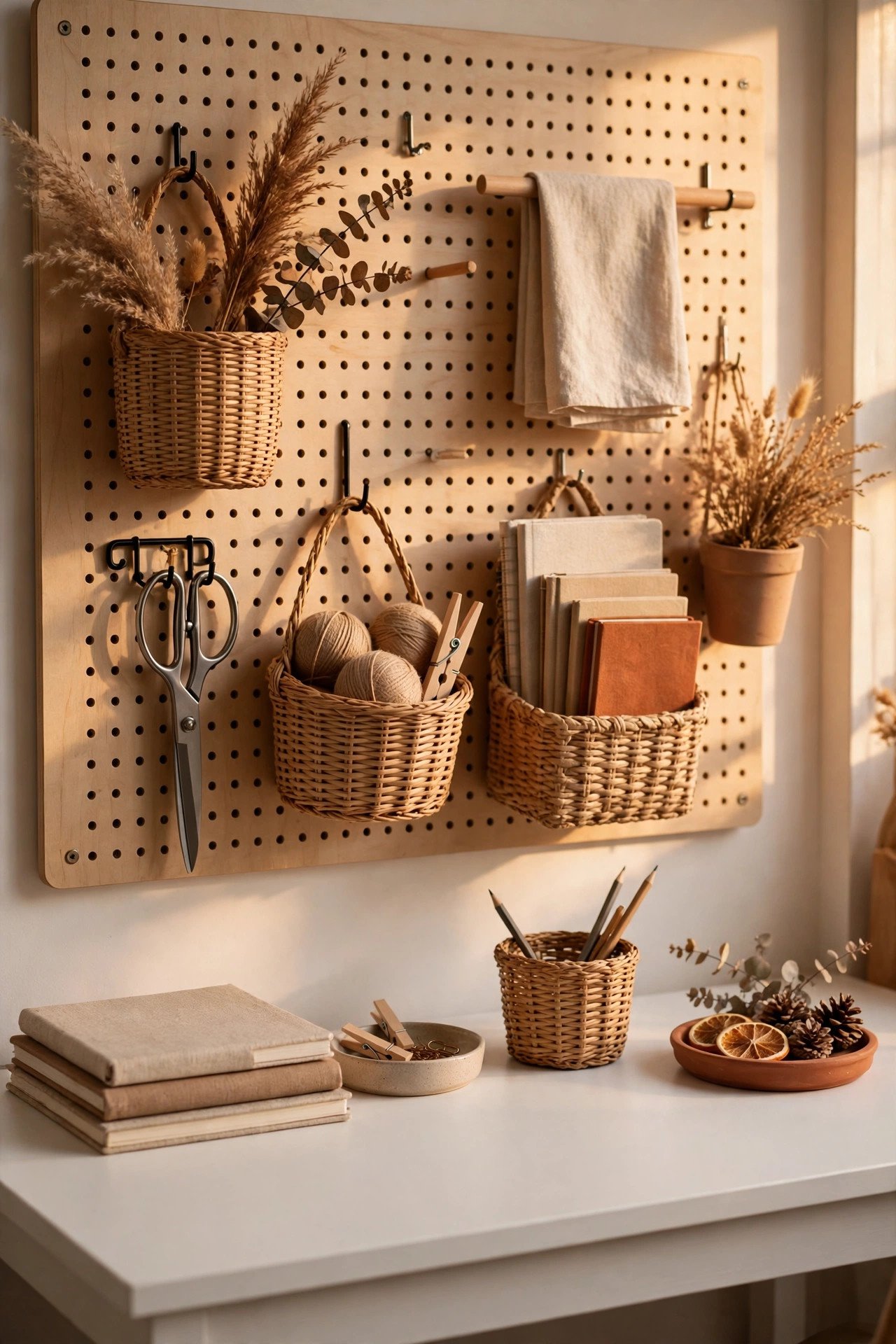
I used to lose ten minutes a day to a single desk drawer. Scissors, chargers, sticky notes, and three pens that did not work — the drawer was where productivity went to hide. A pegboard above the desk fixed it in one afternoon, and I now consider it the most underrated office upgrade there is. Everything hangs where you can see it: scissors, a small basket for cables, a clip for the week’s to-do list. The visual trick is to keep it to one board, not a wall of them, and to leave a third of the hooks empty so it reads as organized rather than crowded. Paint it the same colour as the wall if you want it to disappear, or a warm wood tone if you want it to be a feature. Either way, skip the novelty hooks shaped like animals — they are the first thing to look dated, and a pegboard should be the last thing in your office that needs replacing.
7. Layer One Warm Lamp for Autumn Evenings
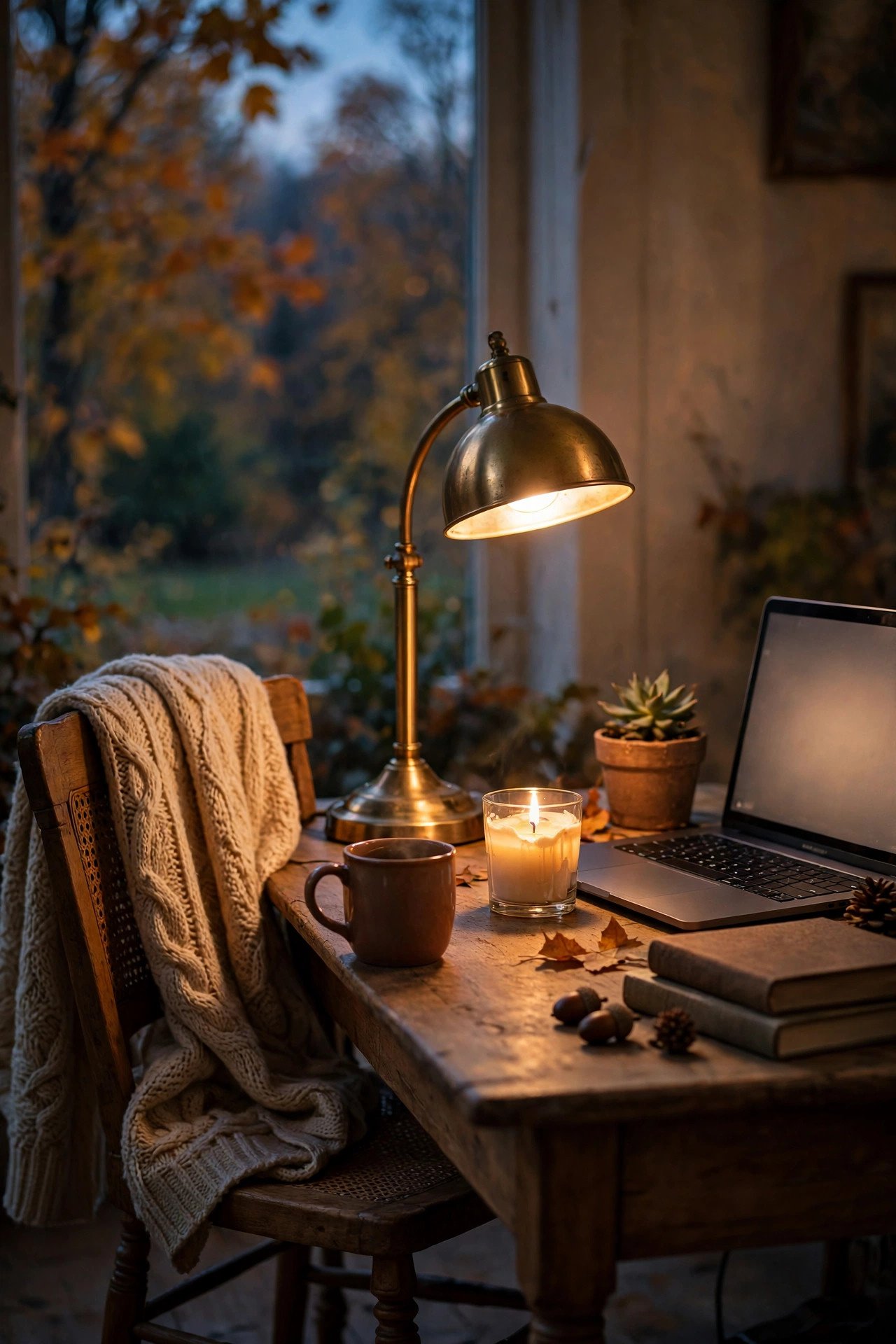
Fall changes the light in your office whether you plan for it or not, and most people respond by switching on a harsh ceiling light that makes the whole room feel like a waiting room. I did that for years, and my evening work suffered for it. The fix is one warm lamp — brass, if you can find it — placed to the side of your dominant hand so it lights the desk without glaring on the screen. Add a candle on the far side of the desk, unlit during calls and lit after them, and the corner becomes somewhere you actually want to sit at 7 p.m. This is the one I’d buy before anything decorative: a good lamp changes how the room feels at every hour, while a poster only changes how it looks. Choose a warm bulb, around 2700K, and skip the colour-changing smart bulbs for a workspace — you will set them to warm white and never touch the app again, and you paid double for the privilege.
8. Closed Storage: Hide It, Don’t Organize It
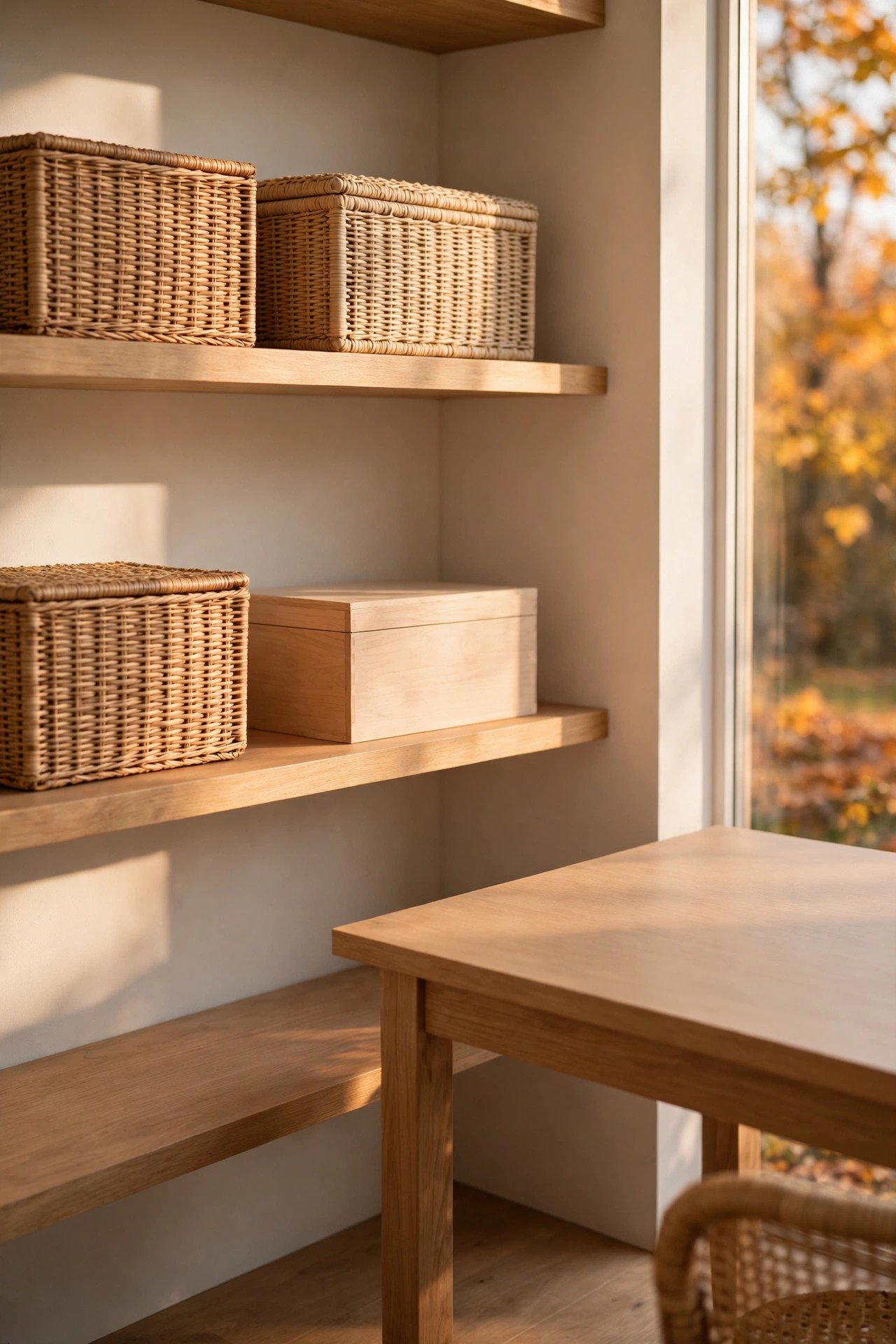
Here is a confession: I am not a naturally tidy person, and every open-shelf organizing system I have tried has eventually collapsed into visible chaos. Closed storage saved me. Woven baskets with lids, one lidded box per category, and a rule that anything without a lid lives somewhere else — that is the whole system, and it works because it forgives you. A basket does not need to be perfectly arranged inside; it only needs to look calm from the outside. Label the boxes if you share the room, or you will spend your life answering “where is the charger?” from the next room. Skip the clear plastic bins, no matter how practical they seem — they turn every shelf into a display of clutter, which defeats the point. Slick is not about owning less, necessarily. It is about what the eye is allowed to see, and lids are the cheapest way to control that.
9. The Kitchen-Table Office That Packs Away
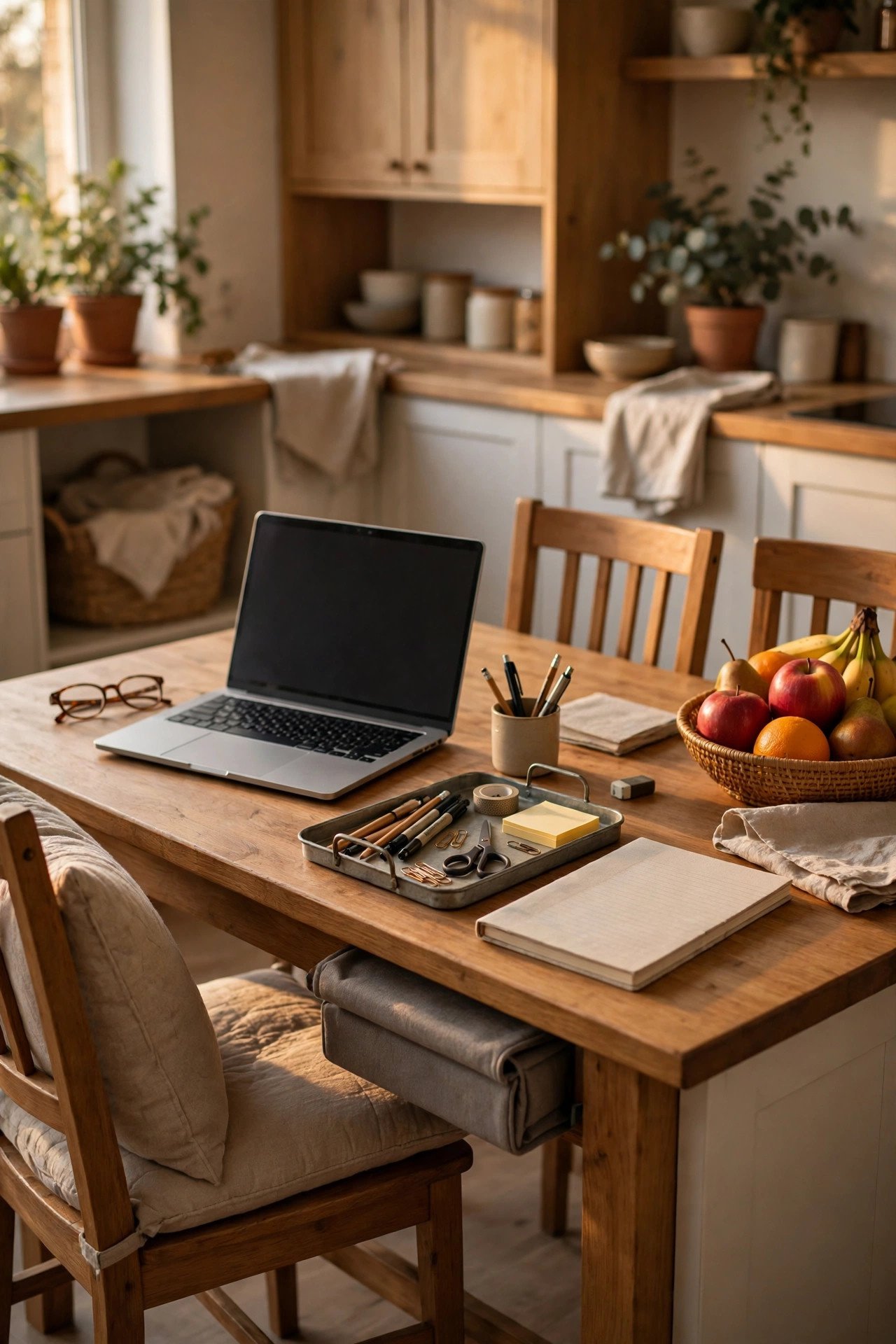
Not everyone has a corner to spare, and I respect the kitchen-table workers more than any other group — they build an office every morning and dismantle it every evening. If that is you, the upgrade is a single tray. Everything work-related lives on it: laptop stand, notebook, pen, charger. When dinner starts, the tray lifts off the table and onto a shelf, and the table is a table again. The second upgrade is a proper cushion on the dining chair, because dining chairs were not designed for eight hours and your back will tell you so by November. Skip the bulky gaming chair at the kitchen table; it dominates the room and announces “office” long after work ends. A tray plus a cushion costs almost nothing, takes no space, and — in my experience — is the difference between a kitchen table that works and one that slowly ruins your posture and your evenings.
10. One Bold Print Above the Desk
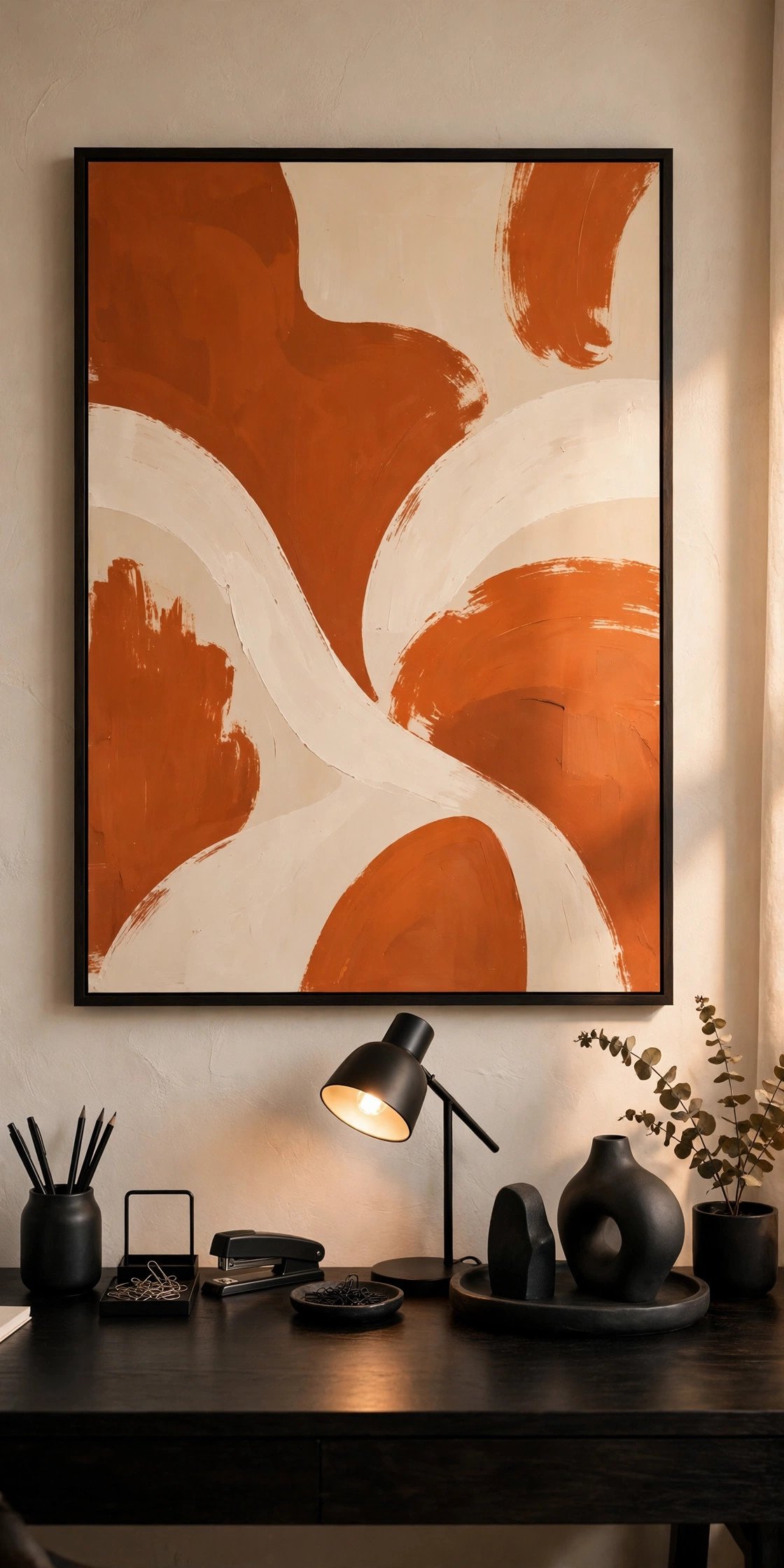
Every slick office needs one thing that is purely for looking at, and a single large print above the desk is my favourite version of it. Not a gallery wall — gallery walls in small rooms read as visual noise, and I have taken down two of them to prove it to myself. One big print, framed simply, in colours that echo something already in the room: a burnt-orange abstract above a walnut desk, for instance, or a deep green landscape near a plant. This is the statement piece if you did not buy the statement chair; you need one, not both. Hang it at eye level when seated, not standing, because you are the one looking at it all day. If drilling is banned, picture-hanging strips rated for the frame’s weight hold surprisingly well on smooth walls — just use two strips, not one, and press them for the full thirty seconds the packet asks for. Cheap shortcuts here end with broken glass, and nobody needs that story.
If you are still deciding which overall style your home leans toward, my comparison of Wabi-Sabi vs Warm Minimalism will help you pick a direction before you buy anything, and if your taste runs more cosmic than calm, How to Do Extra Celestial Decor Without Looking Like a Movie Set shows how to add one dramatic accent without wrecking the calm. The through-line of all ten ideas is the same: edit first, buy second, and let one good piece do the talking. Your fall workspace does not need to be bigger or richer. It needs to be calmer, with one thing in it that makes you smile when you sit down — and that, I have found, is worth more than any full-room makeover.
Frequently Asked Questions
What does a slick home office makeover mean?
A slick home office is uncluttered, calm, and built around one statement piece — a chair, a print, or a lamp — rather than expensive furniture throughout. The goal is a space that looks intentional and feels easy to work in, even in a small or rented room.
Can I make over a home office without drilling or renovating?
Yes. Every idea in this guide avoids renovation: adhesive shelves and hooks, leaning furniture, rolling carts, picture-hanging strips, and freestanding storage. Just respect weight ratings on adhesives, especially for shelves and framed prints.
What is the cheapest slick home office upgrade?
A cable tray and a warm desk lamp, usually together under the cost of a single dinner out. Hiding cables and fixing the light changes how the whole corner feels, which is why I recommend them before any decorative purchase.
How do I make a home office work in a rented room?
Choose freestanding or adhesive solutions, keep furniture narrow and mobile, and put your money into one statement piece you can take with you. A rolling cart or a good chair moves to your next home; a built-in desk does not.
What is the one thing worth spending more on?
The chair, in my experience. You sit in it for hours every day, and a good one improves both comfort and the look of the room. Buy it secondhand if you can — solid chairs hold their value and their shape.
How do I keep a small home office from looking cluttered?
Use closed storage with lids, limit open shelves to three objects each, and give everything a home that is not the desk surface. If something does not have a place, it will live on your desk, and the desk is where clutter is most visible.
Is a gallery wall a good idea above a desk?
In a small room, usually not — multiple frames compete for attention and read as noise. One large print at seated eye level gives you the same personality with far less visual clutter, and it is easier to hang in a rental.
What lighting is best for a fall home office?
A warm desk lamp around 2700K placed beside your dominant hand, plus natural window light during the day. Avoid harsh overhead lighting in the evenings; it flattens the room and makes long sessions feel draining.
Mehboob Hussain is the founder and editor of MubStyle, where he covers fashion, beauty, home decor and wellness. He personally reviews and edits every article on MubStyle, and directs the original visuals for each guide. Based in Multan, Pakistan.

Mehboob Hussain is the founder and editor of MubStyle, where he covers fashion, beauty, home decor and wellness. He personally reviews and edits every article on MubStyle, and directs the original visuals for each guide. Based in Multan, Pakistan.