For the past month I’ve been running a quiet experiment in my own home: one corner styled wabi-sabi — a low wooden stool, a cracked clay pot, a limewash test patch on the wall — and another corner styled warm minimalism — a bouclé cushion, a caramel throw, warm lamplight. Same house, same light, same everyday mess. I wanted to know which one survives real life, not a photoshoot.
Here’s my honest opinion up front: these two styles look like the same Pinterest board, but they punish completely different mistakes. Wabi-sabi punishes fakes — one mass-produced “distressed” vase from a chain store and the whole spell breaks. Warm minimalism punishes clutter — it’s forgiving about where things come from, but not about how many of them there are. And my judgment call, after a month of living with both: for most real homes — kids, pets, laundry piles, normal chaos — warm minimalism wins, and it’s not particularly close.
That said, wabi-sabi is the more soulful of the two, and for a certain kind of person — patient, drawn to old things, happy to wait years for a piece to earn its patina — it’s the only choice that will ever feel right. Over ten rounds below I’ll score them head-to-head; warm minimalism takes six, wabi-sabi takes three, and one round is a genuine tie. The verdict names an overall winner for fall 2026 — plus the one combo move I’d actually recommend.
Round 1: The Philosophy
Wabi-sabi is a centuries-old Japanese aesthetic built on three ideas: nothing lasts, nothing is finished, and nothing is perfect — cracked pottery displayed proudly, raw wood, asymmetry treated as a feature. Warm minimalism is younger and more practical: minimalism’s clean lines with everything cold removed — grey becomes caramel, chrome becomes oak, bare floors get wool rugs.
Here’s the difference that actually matters: wabi-sabi asks you to change how you see, while warm minimalism asks you to change what you own. One is a discipline of attention; the other is a shopping list with taste. I’ve come to respect both, but for different reasons — wabi-sabi made me notice the beauty in my grandmother’s worn wooden spoon; warm minimalism made my living room a place people actually want to sit in.
Round winner: Tie. Wabi-sabi has the deeper soul; warm minimalism has the clearer manual. Both philosophies are honest — neither is a marketing gimmick.
Round 2: Color Palette
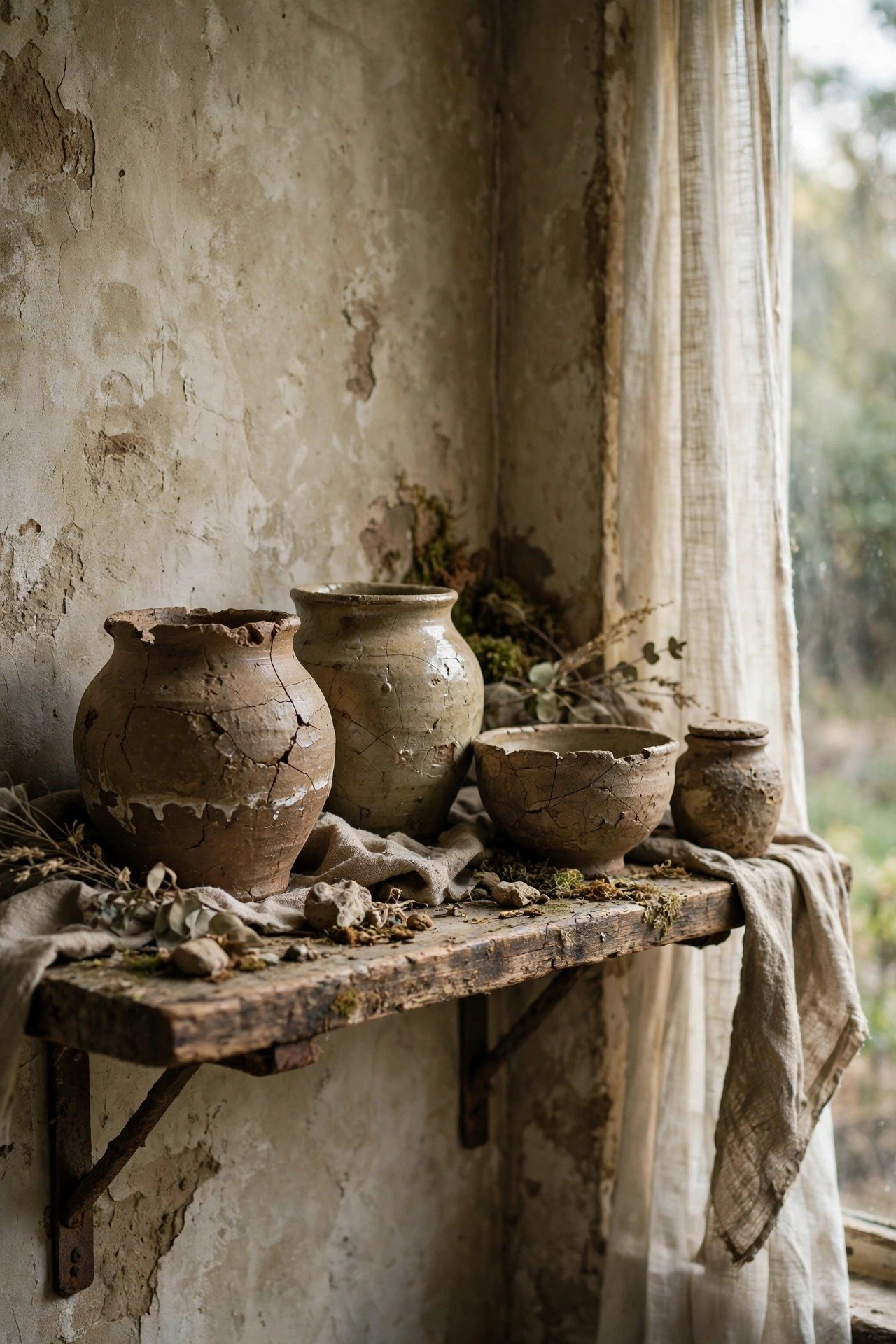
Wabi-sabi’s palette is the earth at its quietest: stone grey, clay, ash, undyed linen, charcoal, black-brown. Beautiful — and brutally unforgiving. Get the grey one shade too cool and your living room reads as an unfinished basement; there’s nowhere to hide when the palette is this restrained. Warm minimalism’s palette is the earth at its friendliest: beige, cream, caramel, honey, terracotta, warm brown. It’s almost impossible to get wrong, and it flatters every skin tone and every hour of daylight.
Fall 2026 settles this round before I even argue it. Warm minimalism is the season’s dominant decor narrative — the Houzz 2026 Fall Design Trends Report says so outright — and Pinterest searches for warm and brown interiors are surging 30–40%. The culture has voted with its eyeballs. If you want the full spectrum of those cozy browns, my warm brown decor ideas for fall 2026 is the palette playbook.
Round winner: Warm minimalism. Fall belongs to warm browns, and they’re kinder to real rooms.
Round 3: Furniture
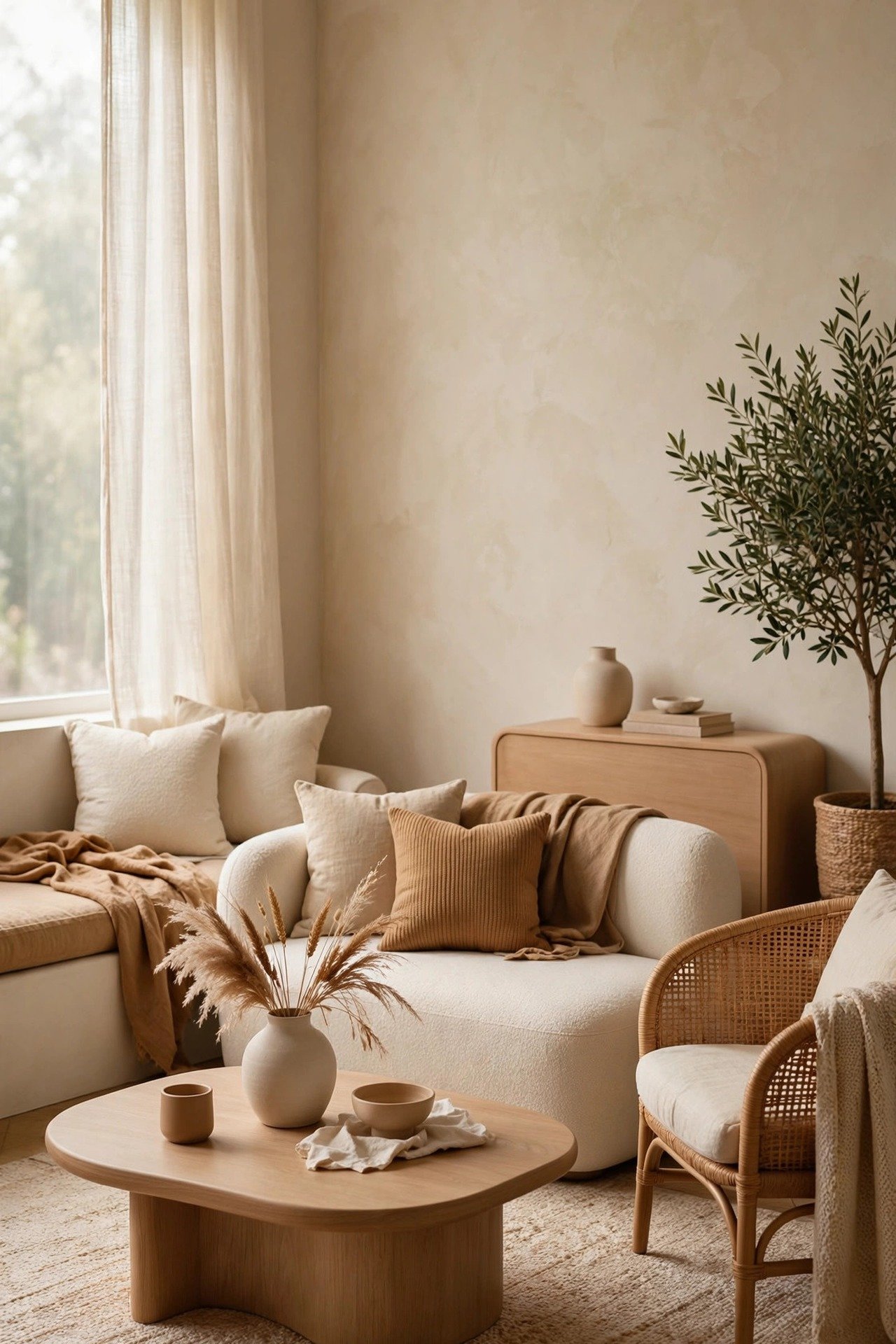
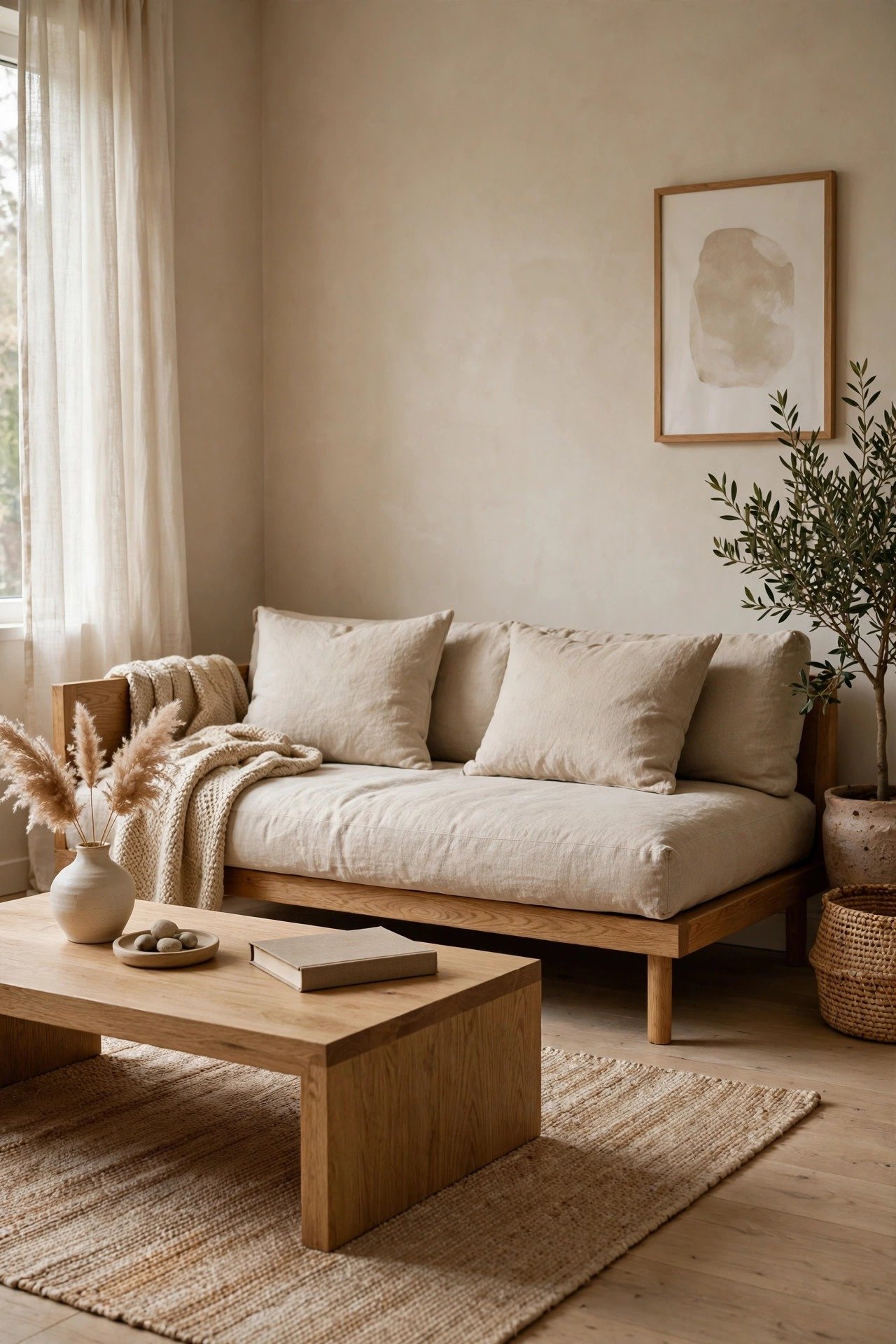
Wabi-sabi furniture is low, raw, and honest: hand-hewn stools, low tables with visible joinery, floor cushions instead of sofas. When it’s real, it’s breathtaking. When it’s real, it also costs real money — a genuinely hand-planed oak stool represents a craftsman’s week of work — and your back will remind you it’s low to the ground every single evening. Warm minimalism’s furniture is comfort-first minimalism: curved bouclé armchairs, deep linen sofas, solid oak tables with rounded edges. Simple shapes, soft landings.
I ran the Tuesday-night test at home: after a long day, did I reach for the wabi-sabi floor cushion or the warm minimalist armchair? The armchair won every time — and I genuinely love the philosophy of the floor cushion. Furniture you avoid sitting on is sculpture, not furniture.
Round winner: Warm minimalism. Comfort is a feature, not a compromise.
Round 4: Lighting
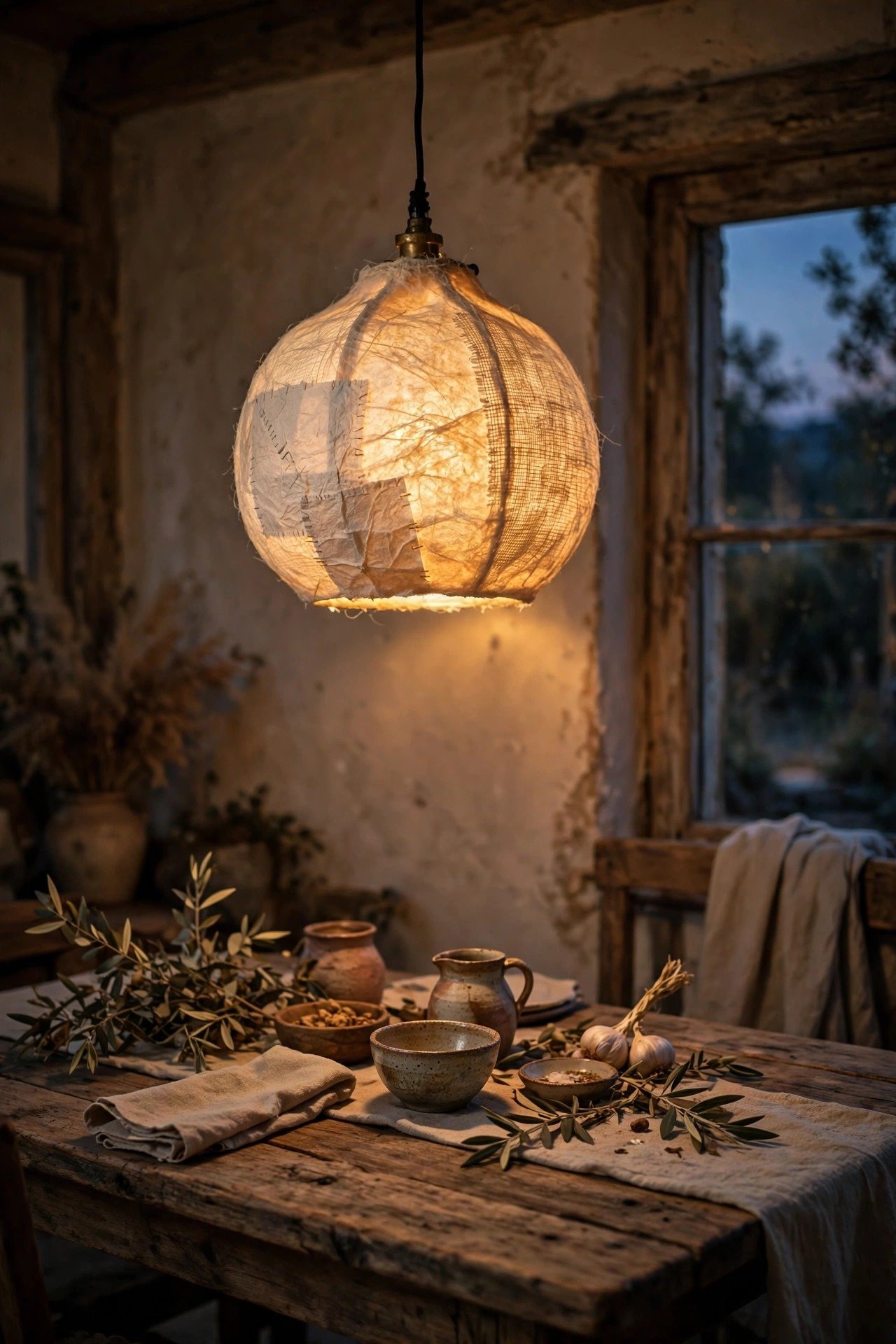
This is wabi-sabi’s home turf, and I’ll award it the round gladly. Wabi-sabi lighting is atmosphere before illumination: handmade washi paper lanterns glowing at dusk, candles in rough clay holders, corners left deliberately dim so shadows can do their quiet work. A single paper lantern over a wooden table at 6pm does more for a room’s soul than any designer floor lamp I’ve ever owned. Warm minimalism’s lighting is lovely but safer — linen drum shades, dimmable warm LEDs, sculptural table lamps — layered, flattering, and a little predictable.
My one non-negotiable for both styles: banish cool-white bulbs. One warm 2700K bulb swap transforms either style more than a new sofa would. And if your lighting taste runs more dramatic than dim, my extra celestial decor guide takes glow in the opposite, maximalist direction.
Round winner: Wabi-sabi. Nobody does dusk like a paper lantern.
Round 5: Textiles
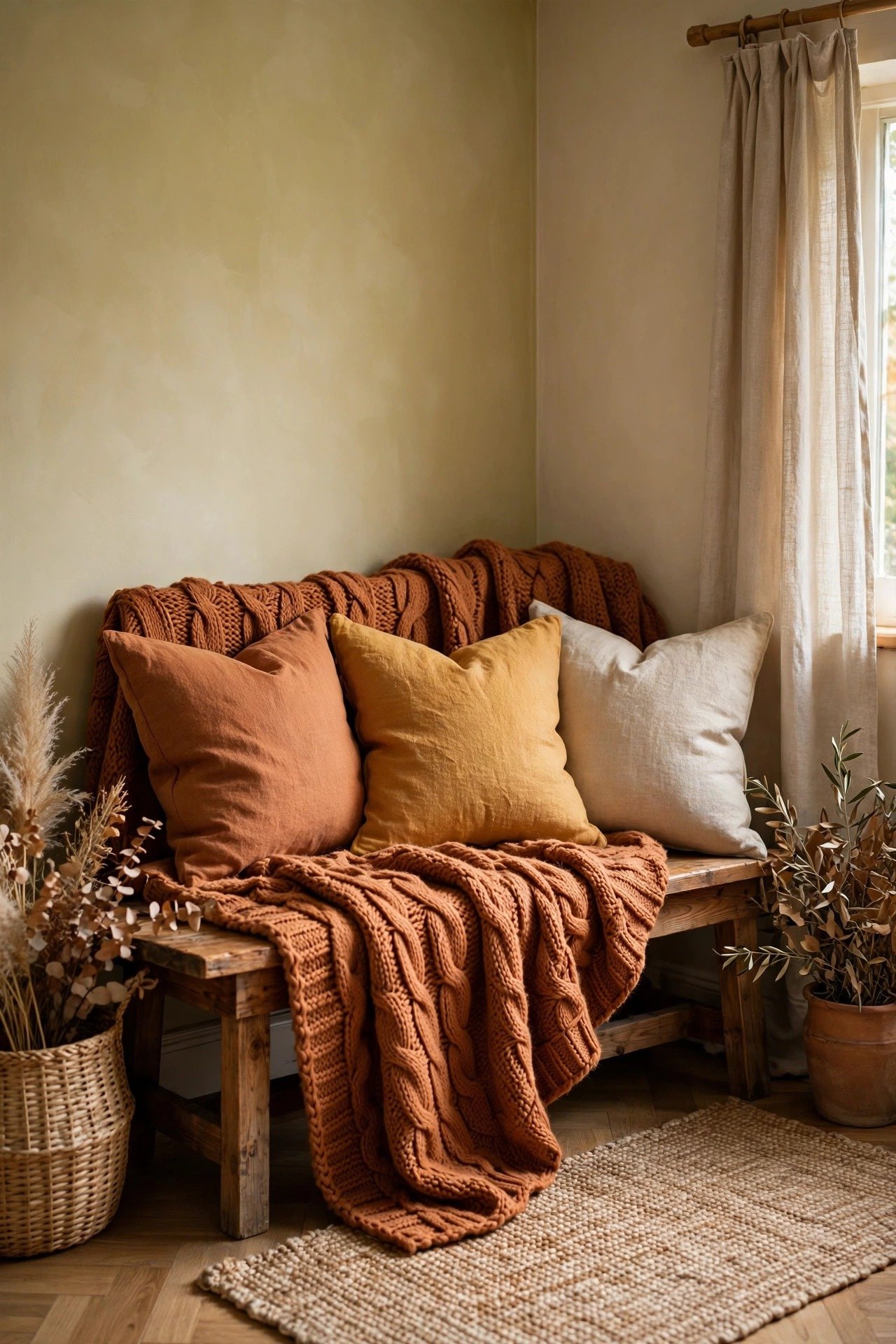
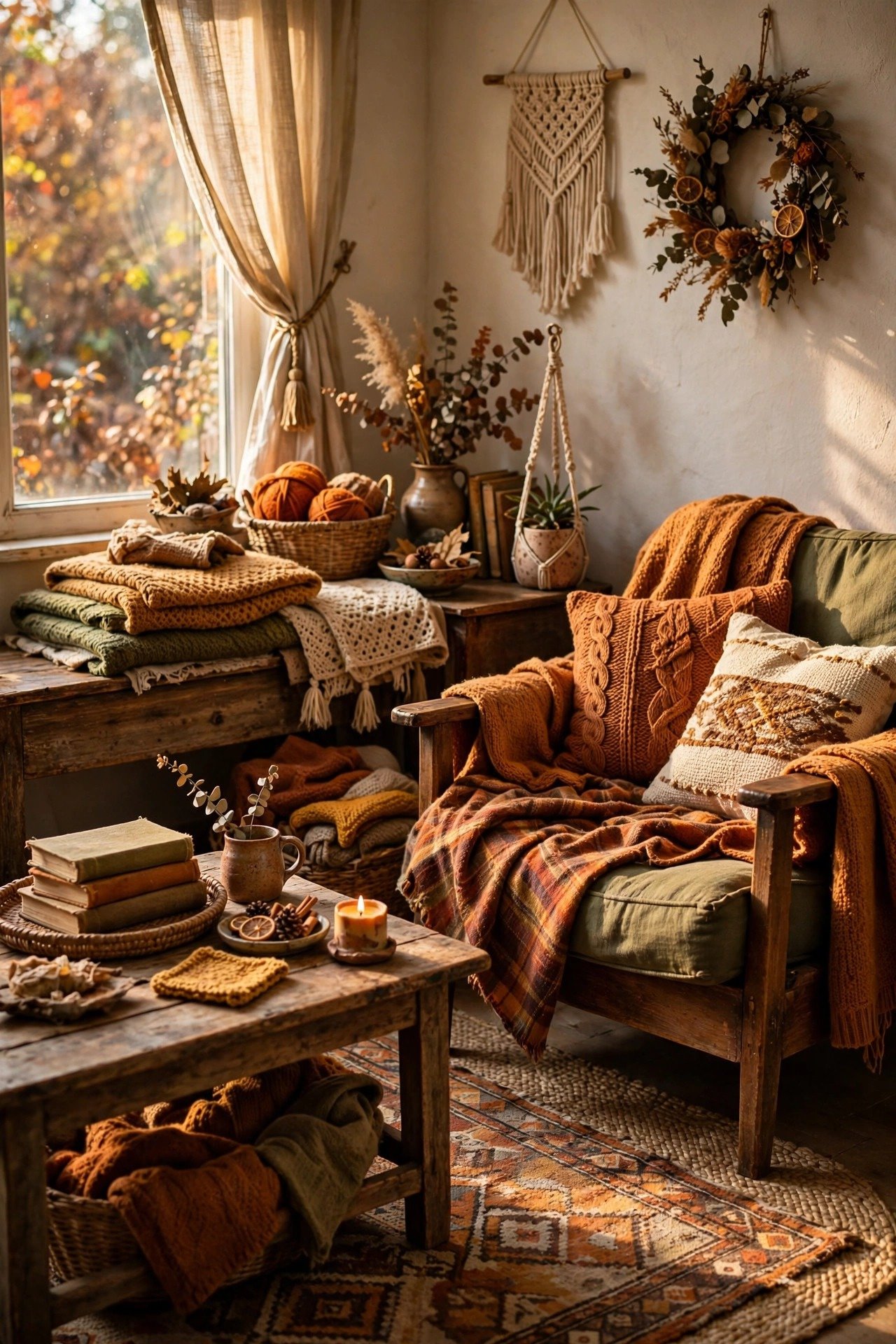
Wabi-sabi textiles are humble and honest: undyed linen, hemp, visible mending — sashiko stitching that turns a repair into decoration. I admire it enormously in theory. In practice, on an October evening when the air turns cool, a room dressed only in thin natural linen can feel austere, even a little severe. Warm minimalism treats textiles as the entire point: chunky knit throws, wool blankets, bouclé and velvet cushions in caramel and cream, rugs you can sink your feet into.
Textiles are where warm minimalism earns its “warm” — layering a caramel throw over a cream sofa over a jute rug is the fastest, cheapest coziness-per-dollar move in fall decor. Wabi-sabi’s restraint is beautiful, but restraint doesn’t keep you warm.
Round winner: Warm minimalism. Fall is a textile season, and this style dresses for it.
Round 6: Walls & Surfaces
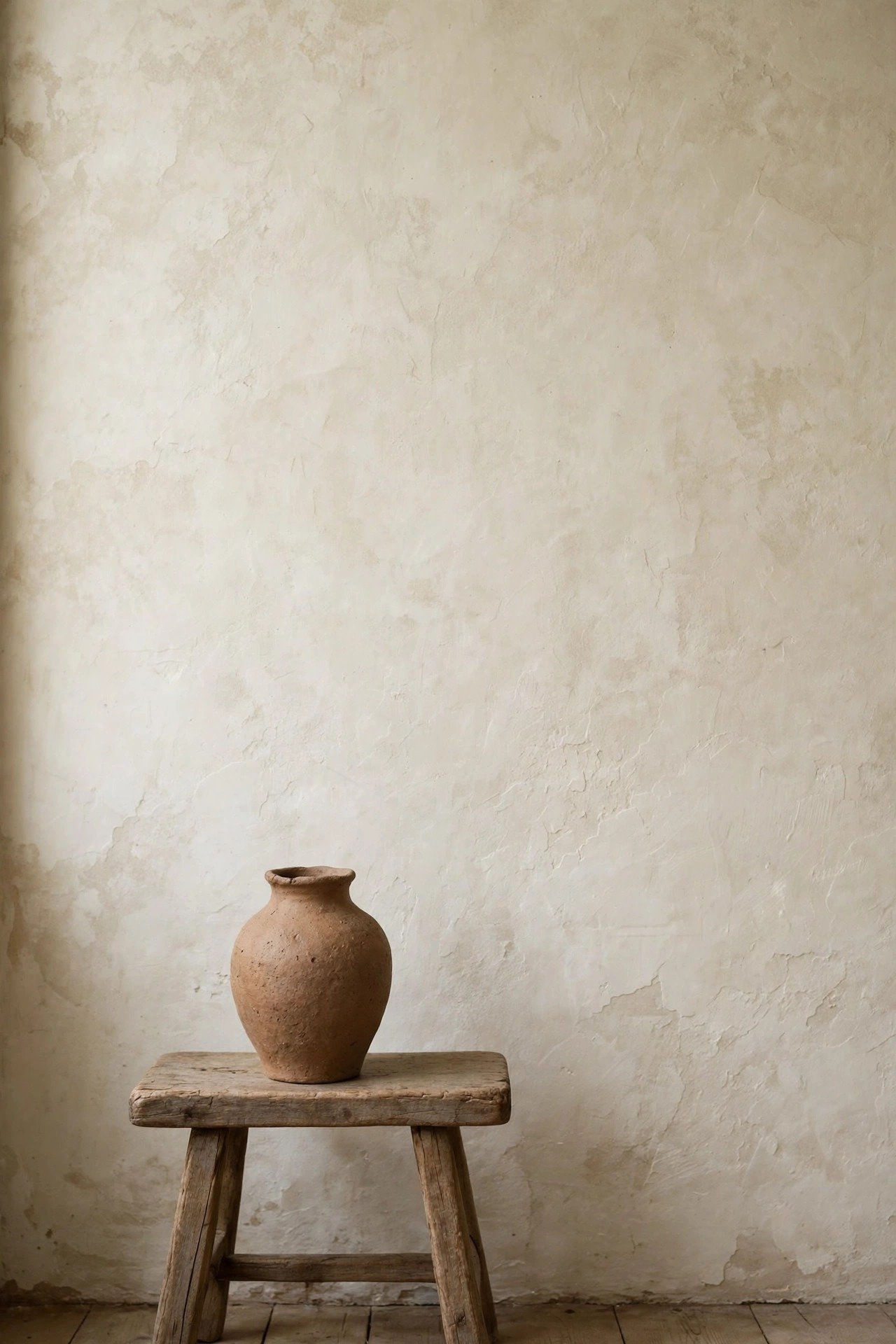
Wabi-sabi owns this round outright. Limewashed plaster walls — soft, cloudy, full of movement — are the single most transformative affordable move in this entire comparison. One weekend, one bag of limewash, and a flat boring wall gains the depth of an old farmhouse. A single handmade clay vase against limewash needs no gallery wall behind it.
Warm minimalism’s walls, by contrast, are pleasant but plain: warm white paint, maybe wood paneling or a travertine shelf. Nothing wrong with them — they’re the perfect quiet backdrop — but they don’t do anything. In my test corner, the limewash patch is the one thing guests actually reached out and touched. People don’t touch warm white paint.
Round winner: Wabi-sabi. Texture you can feel beats paint you can only see.
Round 7: Accessories & Objects
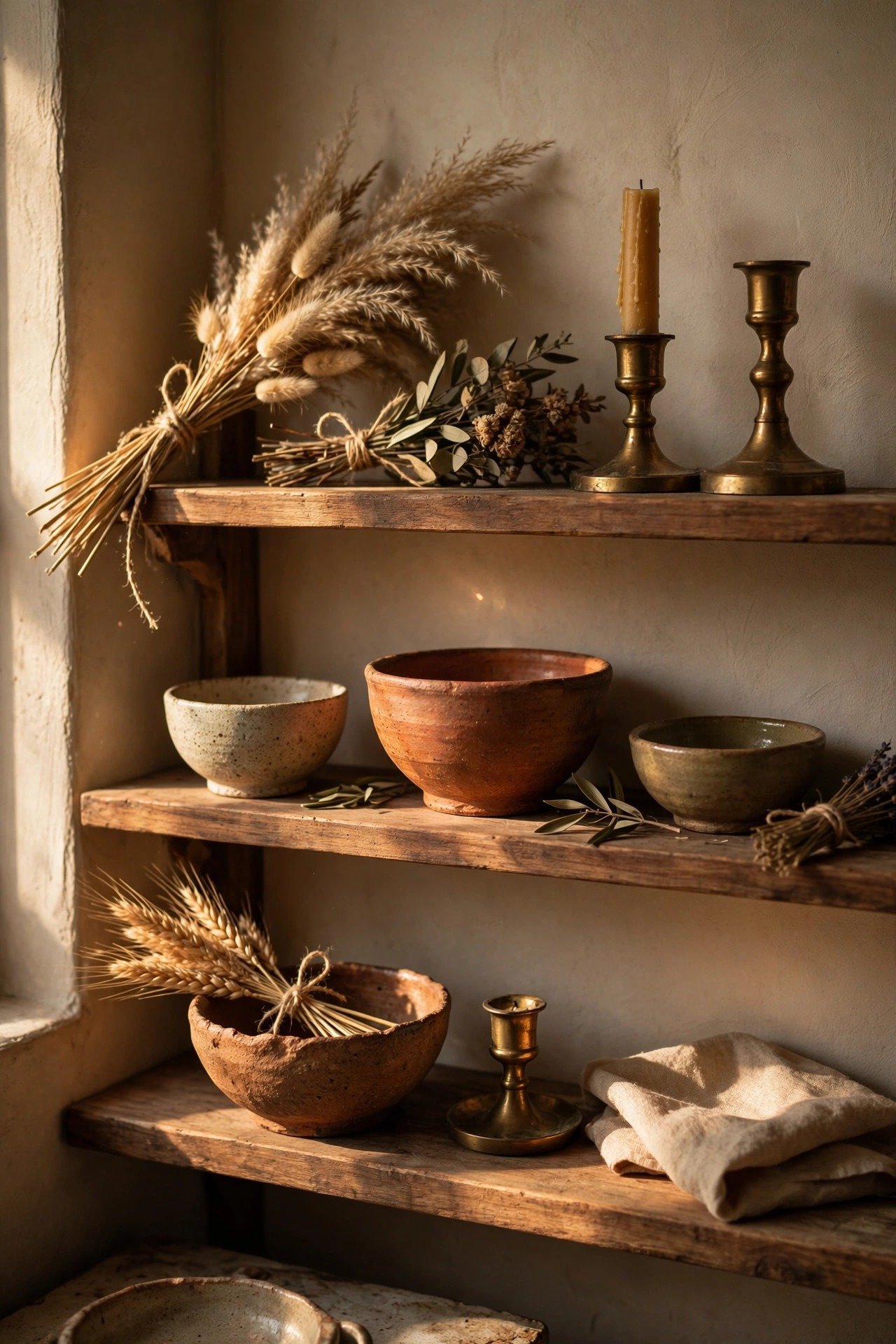
Wabi-sabi’s object philosophy is “fewer, better, real”: one weathered clay pot with a visible crack, a river stone, dried flowers in a handmade vase — each displayed like it matters, because it does. Done right, a single imperfect object outshines five matching accessories. But here’s the catch: wabi-sabi punishes fakes harder than any style I know. A mass-produced “rustic” vase from a chain store actively kills the effect, because the whole philosophy is about truth in materials.
Warm minimalism plays it safer: curated wooden shelves, brass candle holders, coffee-table books, ceramics in warm tones. Lovely, livable, and — I’ll be honest — a little forgettable. If you love objects with handmade soul and earthy character, my afrohemian decor ideas overlap beautifully with this round’s spirit.
Round winner: Wabi-sabi. One real object beats five pretty ones — if it’s actually real.
Round 8: Plants & Nature
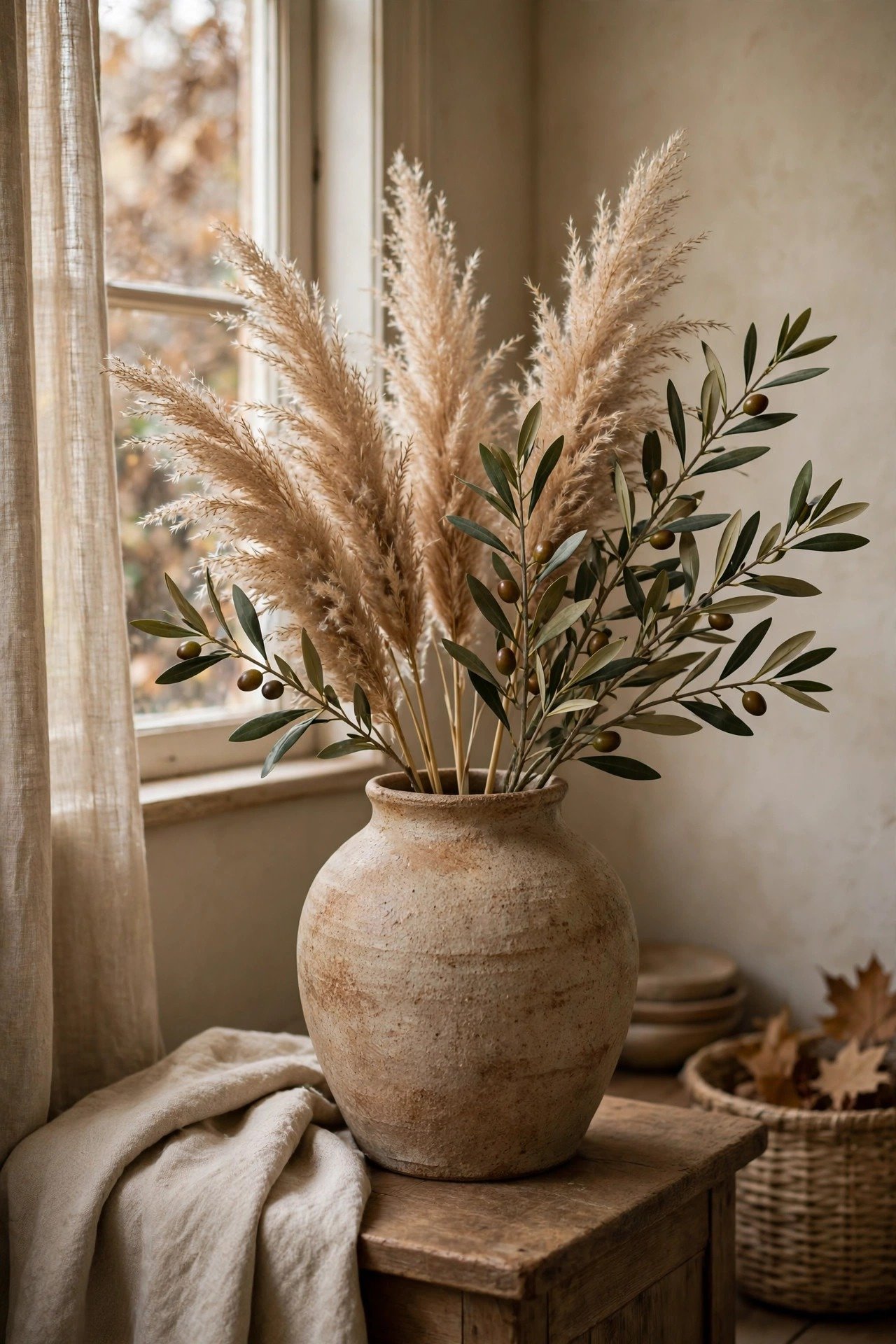
Wabi-sabi brings nature inside with a poet’s restraint: a single bare branch in a stoneware vase, an ikebana-like arrangement of three stems, dried grasses, a patch of moss. Stunning in photographs. In my experience, though, most of us kill the single precious branch, feel guilty about it, and replace it with nothing. Warm minimalism is far more forgiving: a sturdy olive tree in the corner, a full fiddle-leaf fig, dried pampas grass that literally cannot die.
My judgment call: unless you’re the kind of person who will genuinely tend a single branch like a bonsai, choose the forgiving green. A thriving olive tree does more for a room’s life than a dead artful twig does for its philosophy. Dried arrangements — pampas, wheat, olive branches — are the happy middle both styles share, and they’re the one I’d buy first.
Round winner: Warm minimalism. Living plants should survive their owners.
Round 9: Budget — What It Really Costs
Here’s wabi-sabi’s cruel paradox: the humblest-looking style is brutally expensive to do authentically. Real handmade pottery, solid reclaimed wood, properly done limewash — you’re paying for a craftsman’s time, not a factory’s output. The budget path exists — flea markets are full of genuine patina if you have the eye — but it costs time instead of money, and fakes will betray you. A twelve-dollar “distressed” vase reads as exactly that.
Warm minimalism is simply cheaper to pull off well. Warm white paint, an oak-look bookshelf, high-street bouclé cushions, a caramel throw — a full living-room refresh lands in the low hundreds, and nothing in it needs to be authentic to look intentional. For most budgets, this round isn’t close.
Round winner: Warm minimalism. Authenticity is expensive; warmth is affordable.
Round 10: Small-Space & Real-Life Test
The final round is the only one that truly matters, because it’s the test my two home corners actually took. Wabi-sabi’s sparseness is merciless in real life: every toy shows, every laundry pile becomes the focal point, and low furniture plus pets equals chaos. “Curated imperfection” is a razor-thin line, and normal family life stomps right over it. My wabi-sabi corner needed daily resetting to keep its spell; by day four I was tidying a philosophy instead of living in a room.
Warm minimalism forgives. Closed storage swallows the clutter, washable throws survive the pets, sturdy fabrics shrug off daily life — and the room still looks intentional with a laundry basket in the corner. In a small apartment, that forgiveness is everything. A style that needs you to be a different person is a style that will lose.
Round winner: Warm minimalism, decisively. Real life is the final judge.
My Honest Verdict
The overall winner for fall 2026 is warm minimalism — for most readers, most homes, most budgets. It takes six of my ten rounds, it’s the season’s dominant trend story, it’s kinder to small spaces and tight budgets, and it’s the only one of the two that survives kids, pets, and laundry piles without daily maintenance. If you want a home that looks like those calm, caramel-toned rooms all over your feed and still functions on a chaotic Tuesday, this is your style.
The exception: wabi-sabi is the right choice if you’re a patient nester — someone who’d rather spend a year finding the right handmade bowl than an afternoon filling a cart. It won lighting, walls, and objects in my scoring because those are the rounds where soul matters more than convenience, and nobody does soul like wabi-sabi. But go in with open eyes: it only works if every piece is real, and “real” costs money or time. Skip it entirely if you’re tempted by mass-produced distressed decor — that’s the one version of this style I’d tell you not to buy.
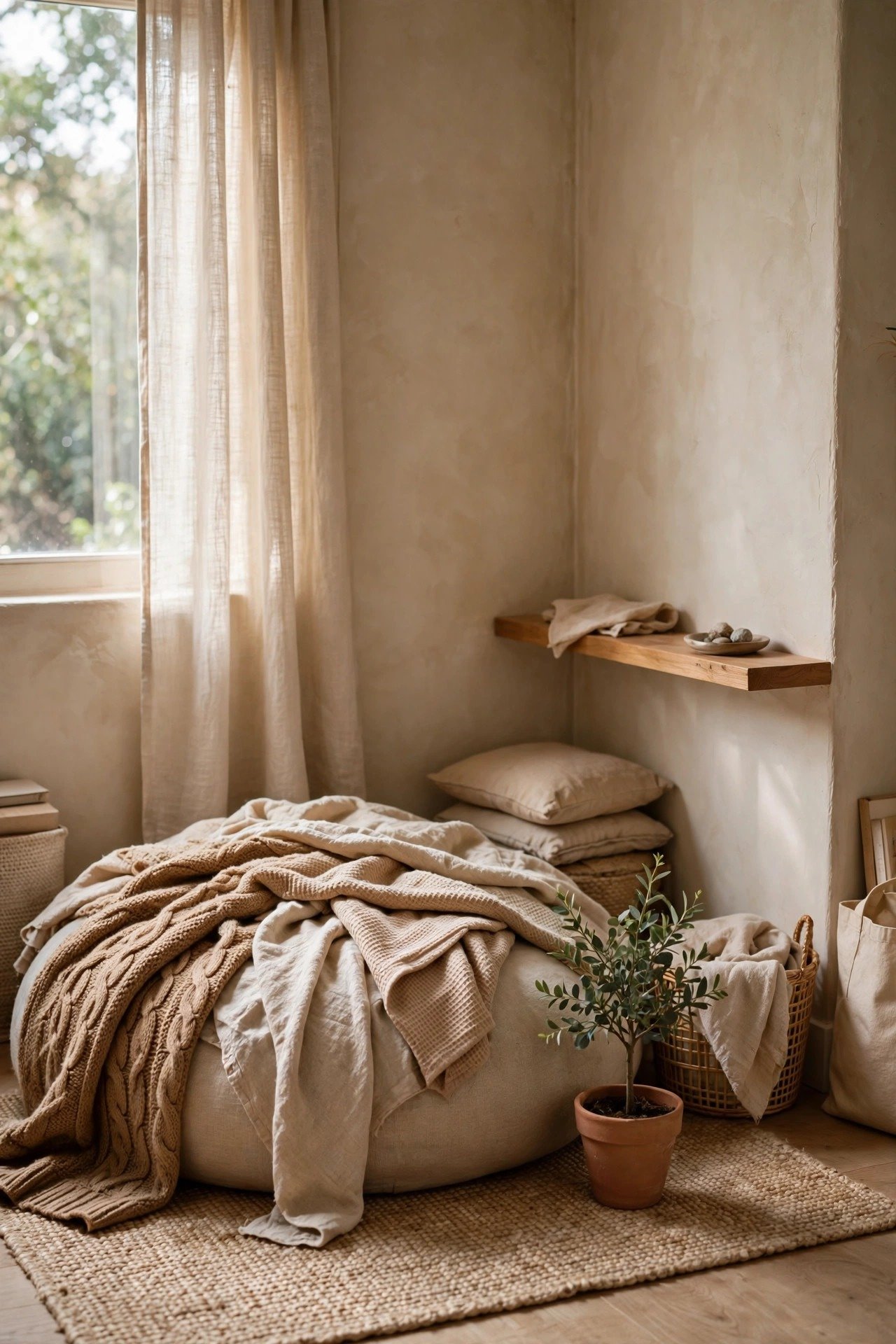
And here’s the combo move I’d actually recommend — the one I’d do in my own home: build a warm minimalist shell, then spend your object budget the wabi-sabi way. Warm white walls, comfortable sofa, forgiving textiles — and instead of five matching accessories, buy one real handmade piece: a clay vase with a visible crack, a washi paper lantern, a limewash accent wall. Warm minimalism for the life you live; wabi-sabi for the moments you notice. That’s the fall 2026 home I’d want to come back to.
Frequently asked questions
What is wabi-sabi in interior design?
Wabi-sabi is a centuries-old Japanese aesthetic built on three ideas: nothing lasts, nothing is finished, and nothing is perfect. In interiors that means cracked pottery displayed proudly, raw wood that shows its grain, asymmetry treated as a feature, and materials — clay, stone, linen, plaster — left honest. It’s an evergreen high-search aesthetic, and its power is philosophical: it asks you to find beauty in imperfection rather than to buy it.
What is warm minimalism?
Warm minimalism takes minimalism’s clean lines and edited rooms and removes everything cold about them: grey becomes caramel, chrome becomes oak, bare floors get wool rugs. It’s the dominant decor narrative of 2026 — the Houzz 2026 Fall Design Trends Report names it outright, and Pinterest searches for warm and brown interiors are up 30–40%. Think cozy, calm, uncluttered rooms in beige, cream, and honey tones.
Which style costs less?
Warm minimalism, for most people — high-street pieces, warm paint, and layered textiles for a few hundred dollars. Authentic wabi-sabi is paradoxically expensive, though patient thrifters can find genuine patina cheap at flea markets. The budget killer is fake wabi-sabi: mass-produced “distressed” pieces that destroy the effect.
Which is better for small apartments?
Warm minimalism. Its closed storage, washable throws, and sturdy fabrics absorb everyday clutter, so a small space still looks intentional with a laundry basket in the corner. Wabi-sabi’s sparseness can work beautifully in tiny rooms, but it shows every toy and every pile — “curated imperfection” collapses into actual mess fast when square footage is tight.
Can I mix wabi-sabi and warm minimalism?
Yes — and it’s my recommended move. Build a warm minimalist shell (warm white walls, comfortable sofa, layered textiles), then spend your object budget the wabi-sabi way: one real handmade piece instead of five matching accessories. A cracked clay vase, a washi paper lantern, or a limewash accent wall gives you soul without the daily maintenance.
Which style survives kids and pets?
Warm minimalism, decisively. Washable throws, sturdy fabrics, closed storage, and forgiving warm tones handle real family life. Wabi-sabi’s low furniture, sparse surfaces, and precious handmade objects are fragile around kids and pets — and its “curated imperfection” needs daily resetting once normal chaos arrives. This was the most one-sided round in my ten-round test.
What colors define each style?
Wabi-sabi: stone grey, clay, ash, undyed linen, charcoal, black-brown — the earth at its quietest. Warm minimalism: beige, cream, caramel, honey, terracotta, warm brown — the earth at its friendliest. The wabi-sabi palette is harder to get right (one wrong grey reads as “unfinished”), while warm minimalism’s browns are forgiving and flatter every light.
Which style is more “fall 2026”?
Warm minimalism — Houzz’s 2026 Fall Design Trends Report and a 30–40% Pinterest search surge for warm and brown interiors all point the same way. Wabi-sabi is the evergreen alternative: never the loudest trend, always quietly searched, and the deeper choice for patient nesters who care more about soul than seasonality.
By Mehboob Hussain
Mehboob Hussain is the founder and editor of MubStyle, where he covers fashion, beauty, home decor and wellness. He researches and writes every article himself — testing each idea for real life before it makes the list — and creates original visuals for every guide. Based in Multan, Pakistan.

Mehboob Hussain is the founder and editor of MubStyle, where he covers fashion, beauty, home decor and wellness. He researches and writes every article himself — testing each idea for real life before it makes the list — and creates original visuals for every guide. Based in Multan, Pakistan.