By Mehboob Hussain
I’ll be honest with you: I used to think pink hair was a summer thing — something that belonged at festivals and on vacation photos, never anywhere near a fall wardrobe. Then I read Pinterest’s first-ever Beauty Trend Report (October 2026), and the numbers stopped me cold. Searches for “dark pink peekaboo hair” are up 481%. “Pink hair stripe” is up 463%. “Dusty rose pink hair” is up 198%. Hundreds of thousands of people are suddenly putting pink in their hair — and here’s the opinion I’ve formed after looking at every one of these looks: the reason it’s working is that nobody is dyeing their whole head pink anymore.
That’s the whole secret of the Pink-a-Boo trend. The winning looks this fall are all small doses — a chunky stripe, a hidden panel underneath, a few dusty-rose pieces at the ends. A stripe survives three months of regrowth without looking messy; a full dye job doesn’t. A stripe slides under an office dress code; a full head of neon pink absolutely does not. And pink looks genuinely intentional in fall because it harmonizes with the season’s actual palette — wine, burgundy, chocolate, deep plum — instead of fighting it. That’s my judgment call, and I’m putting it right here: skip the full-head dye. The partial pink is the one I’d try, the one I’d recommend to a friend, and the one that still looks good in December. Here are the ten ideas worth your time.
1. The Chunky Pink Stripe on Dark Hair
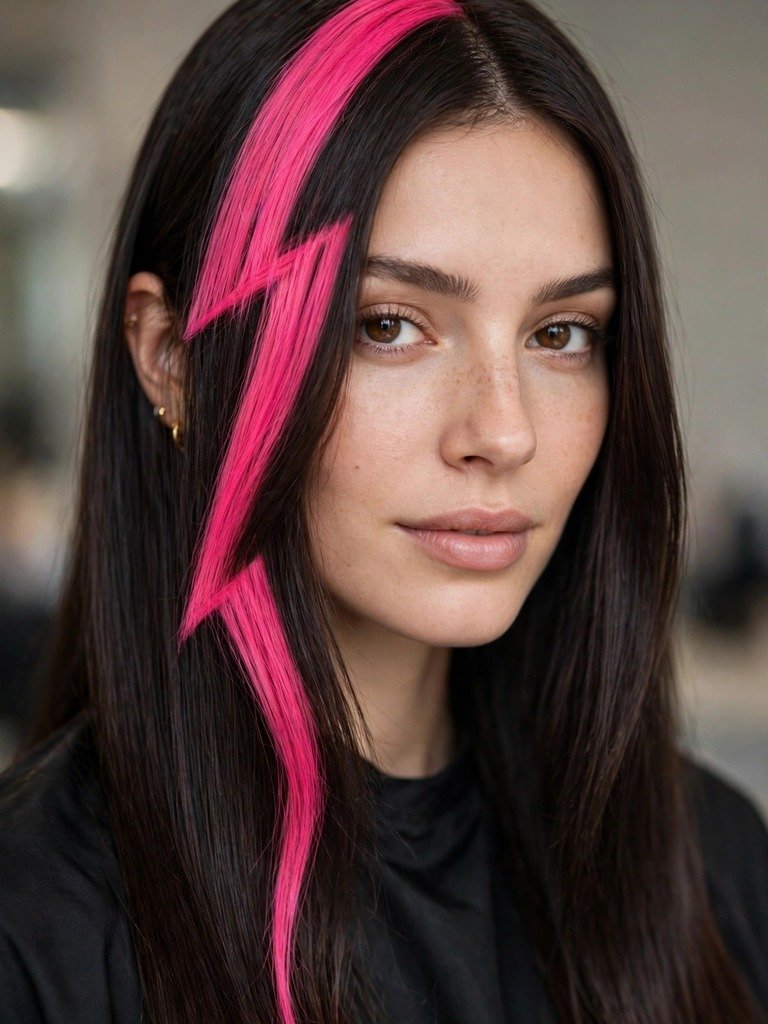
If you only try one idea from this list, make it this one. The chunky stripe — one thick panel of hot pink running through the front section of dark brunette hair — is the single most-searched look in the entire Pink-a-Boo wave, and I’ve figured out why: it’s the only dramatic pink that asks nothing of you. The contrast does all the work. On dark hair you don’t even need to bleach the whole head; your colorist lifts one section, tones it, and lays the pink over. Ask for the stripe to start about an inch back from your hairline so it reads as intentional rather than accidental, and keep it on one side — symmetry makes it look like a costume, asymmetry makes it look like a choice. It grows out as a soft pink ribbon for weeks before you need a touch-up. This only works if the pink is saturated enough to pop against your base; a washed-out pastel stripe on dark hair just looks like a mistake.
2. Dark Pink Peekaboo Panel
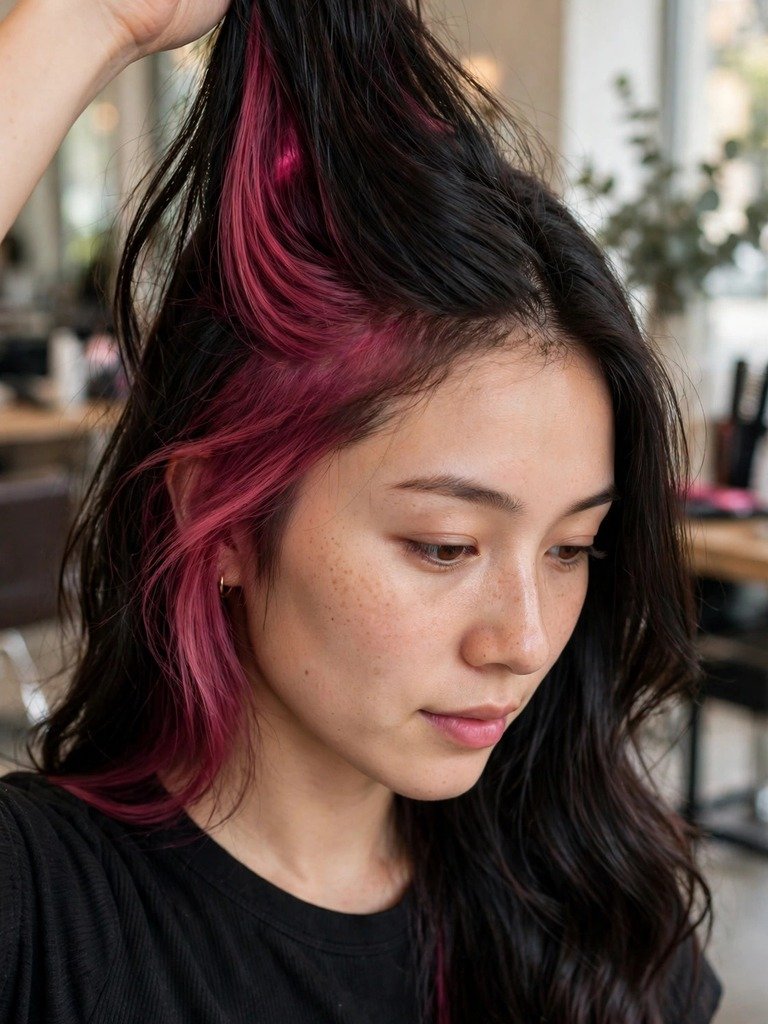
The peekaboo is the introvert’s pink — and with searches up 481%, apparently a lot of us are introverts this fall. Here’s how it works: the entire underlayer of your hair gets dyed a deep, rich pink, while the top layer stays your natural color. Worn down, you look completely normal. Hair up, wind in it, head tilted — suddenly there’s a flash of pink. I love this one because it solves the two biggest objections to fun color in one move: regrowth is invisible since the roots are covered by the top layer, and you control exactly when the world sees it. In my experience, dark pink (not pastel, not neon — a deep berry-pink) is the shade that ages best here, because as it fades it melts into a dusty mauve instead of going brassy. Ask your colorist to keep the panel one shade deeper than you think you want. One practical note: you’ll see the pink most in updos, so if you live in a ponytail, this is basically a full-time pink with a part-time commitment.
3. Dusty Rose Pieces
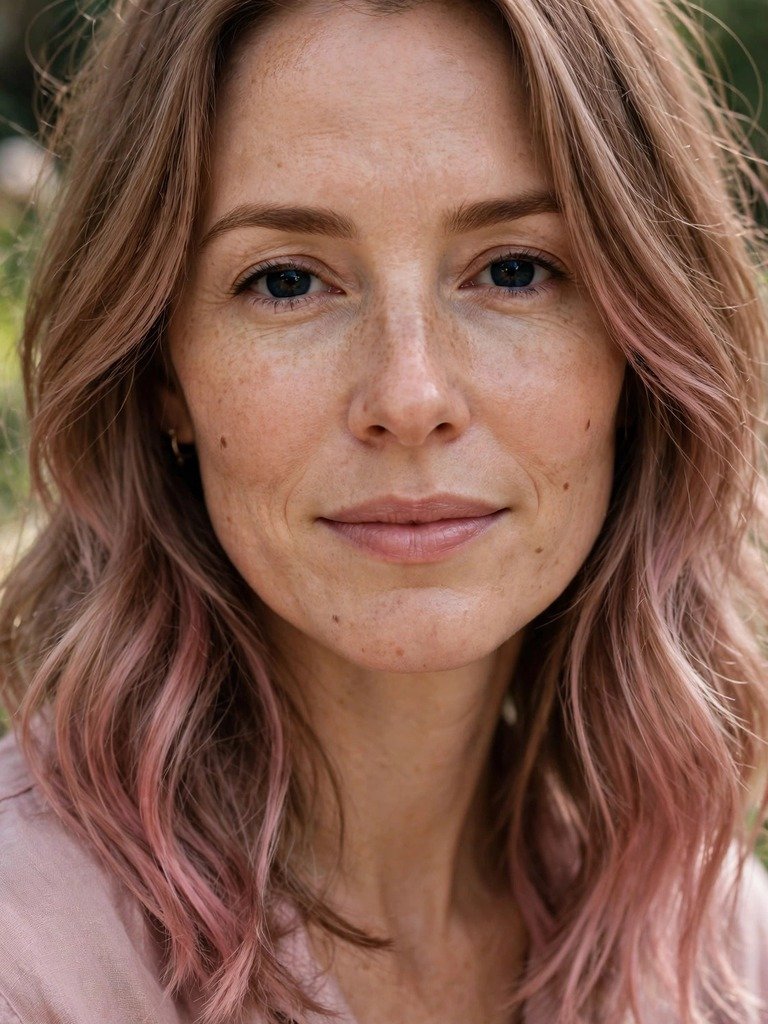
Dusty rose is the grown-up entry point, and honestly, it’s the one I’d point my own sister toward. These are soft, muted pink pieces — think balayage ribbons, not chunks — woven through the mid-lengths and ends of light brown or dark blonde hair. The reason it works so well for fall is the undertone: dusty rose has a beige-mauve base that sits comfortably next to camel coats, cream knits, and brown boots, all the staples already hanging in your closet. Up 198% in searches, and I think the appeal is that it doesn’t read as “pink hair” at all — it reads as expensive hair with a secret. Maintenance is the easiest on this list: the pieces are painted, not foiled to the root, so you can go twelve weeks between appointments. Here’s what I’d do — bring your colorist a photo of actual dried roses, not a neon pink swatch, because half the bad dusty-rose jobs I’ve seen went wrong when the stylist reached for too bright a tube.
4. Teal-and-Pink Pairing
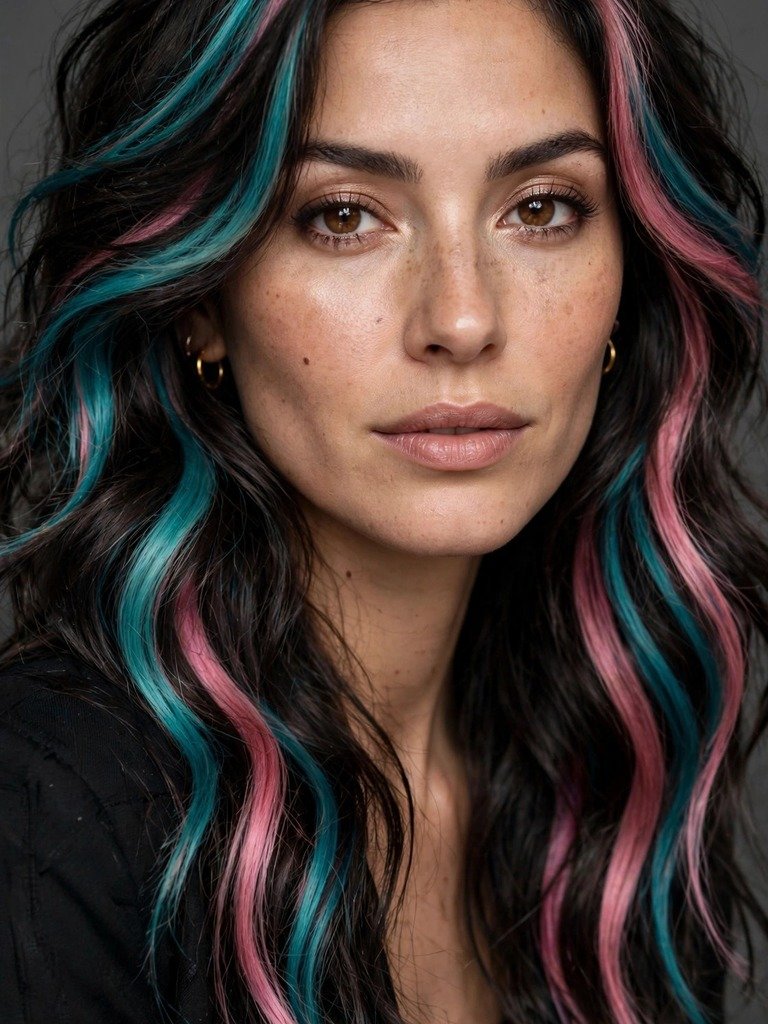
Okay, this is the wild card, and I’m including it because the data demands it — “teal and pink hair” searches are up 273%, so this pairing is genuinely having a moment. Teal and pink are opposites on the color wheel, which is exactly why they vibrate against each other so beautifully; each one makes the other look more electric. I’ve seen this done two ways, and I have a strong opinion about which is better: the all-over mermaid version is a summer look that will fight your fall wardrobe. The fall version is streaks — alternating teal and pink ribbons through dark hair, mostly toward the ends. It reads edgy without reading costumey, and here’s the practical magic: teal fades to a dusty blue-green and pink fades to blush, so the grow-out phase is a whole second look you didn’t pay for. This only works if you commit to color-safe, sulfate-free shampoo and cold washes, because fashion shades bleed fast. Skip this if you wash your hair daily — the maintenance will eat you alive.
5. Pink Money Piece on Brunette
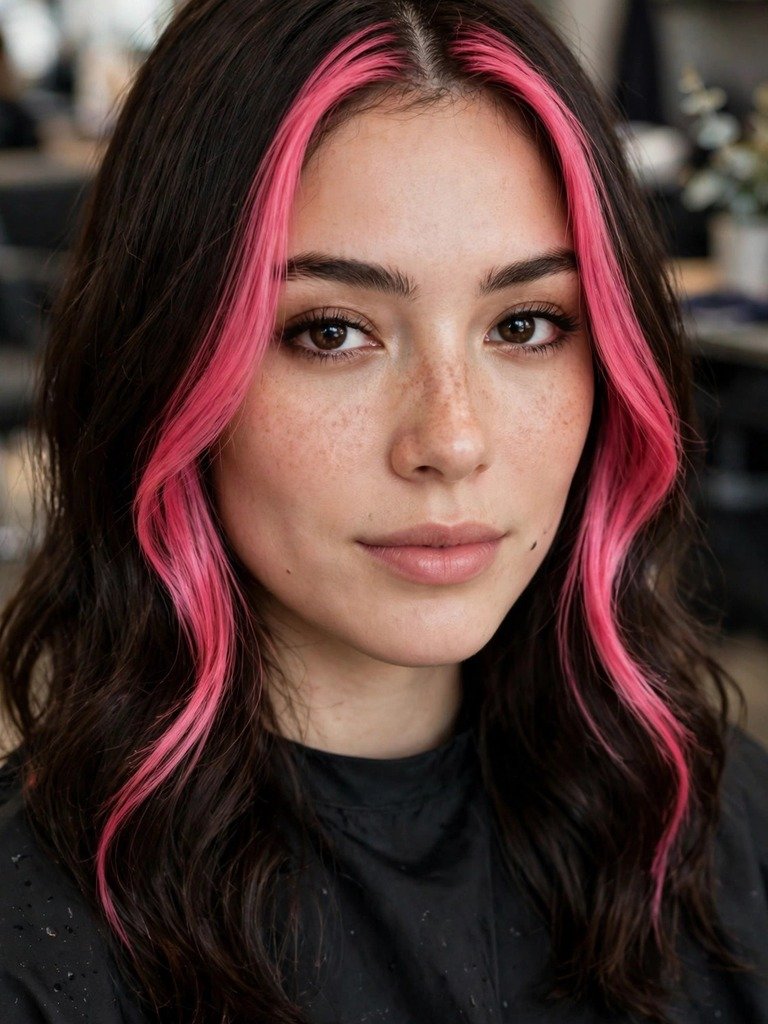
The money piece — those two face-framing front strands — has been around for years, but the pink version on brunette is new, and searches for “pink money piece hair brunette” are climbing (+33% and rising fast). Here’s my take: this is the smartest low-commitment pink on the entire list. It’s two thin sections of hair. That’s it. A touch-up takes twenty minutes and costs a fraction of a full color service. It frames your face in pink light, which is genuinely flattering — pink reflects a warm glow onto the skin that blonde money pieces don’t. In my experience, the trick is placement: the pink should start right at the temple and angle forward, hugging the cheekbones, not hang straight down like curtains. Go vivid here, not pastel — a soft pink money piece washes out against brunette and just looks like faded blonde. This is the one I’d try first if I’d never done fashion color before, because if you hate it, it disappears into a ponytail in one second flat.
6. Bedazzled-Claw-Clip Pink Updo
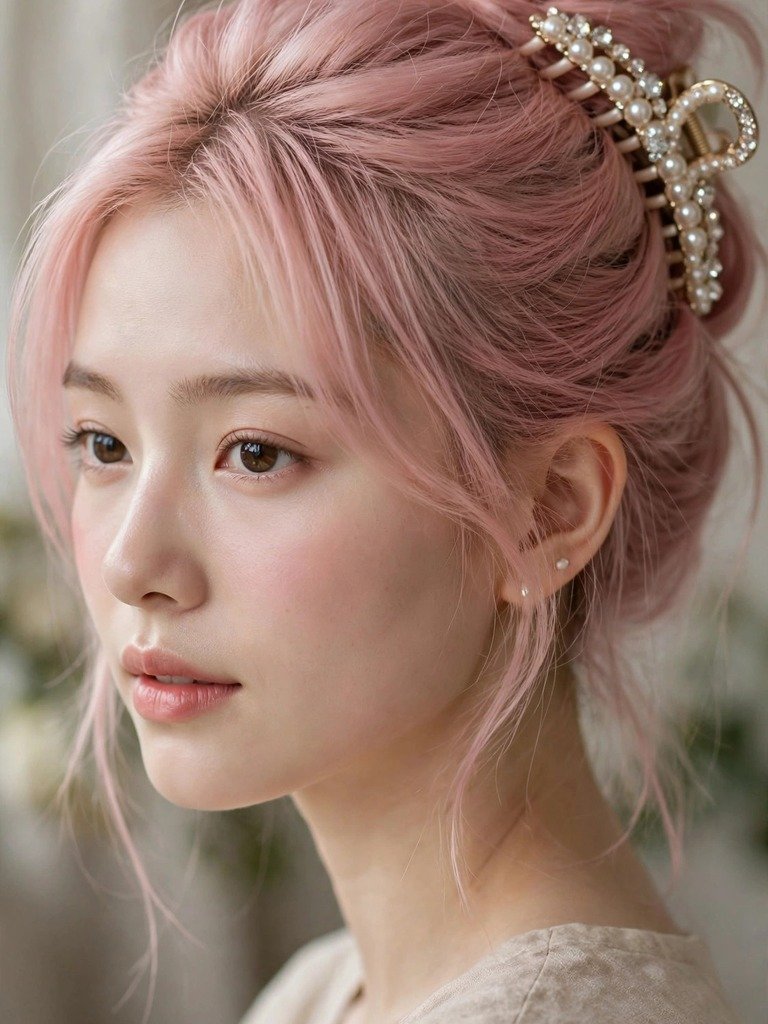
This is my favorite zero-dye idea on the list, and the search data backs me up — “bedazzled claw clip” is up an absurd 749%, the biggest spike in the whole beauty report. The concept: tint your hair a soft blush pink (or use a temporary color spray for one night), sweep it into a claw clip, and let a rhinestone-and-pearl clip do the talking. I’ve come to believe the accessory is doing more work than the color here — the bedazzled clip catches light and draws the eye, so the pink reads as deliberate styling rather than a dye experiment. It’s also the only idea here with literally no regrowth problem, because there’s barely any color to grow out. Here’s what I’d do for a wedding or dinner: curl the pink-tinted lengths loosely, twist them up, and anchor with the clip slightly off-center. Off-center reads modern; dead-center reads 2003. One honest warning: cheap rhinestone clips shed stones into your hair, so spend the extra few dollars on one with set stones.
7. Wine-Pink Balayage
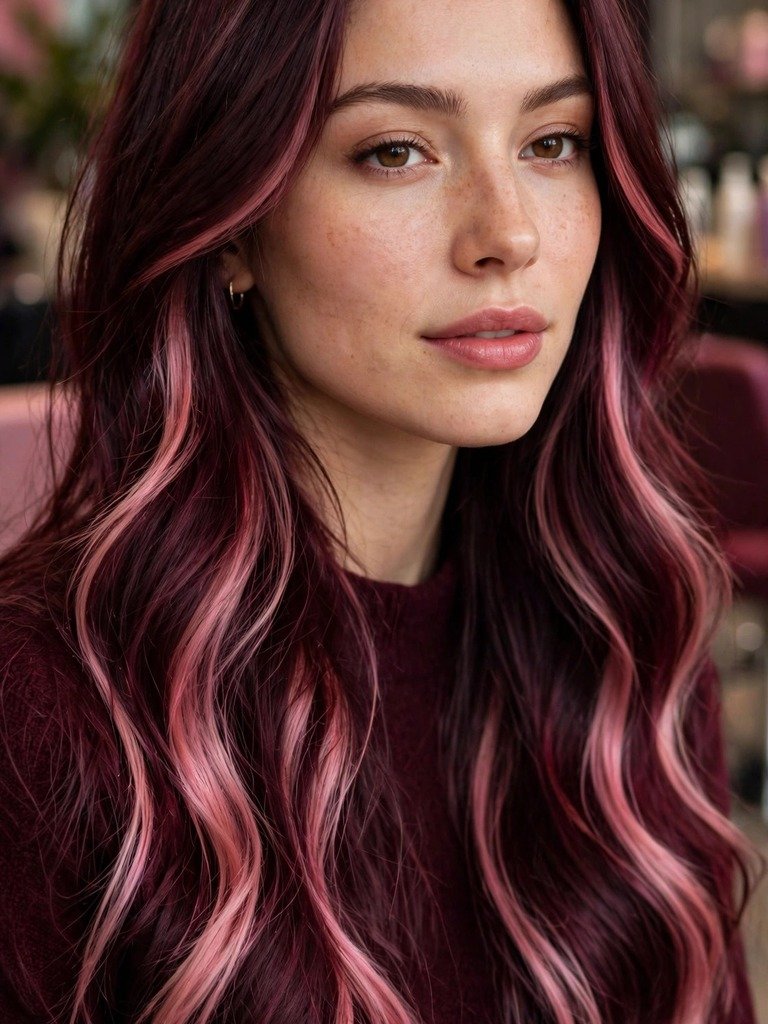
If the Pink-a-Boo trend has a most-fall look, this is it. Wine-pink balayage keeps your base deep — burgundy, black-cherry, dark chocolate — and melts pink ribbons through the lengths so the whole head glows pink in sunlight and reads nearly natural indoors. This is where my “small doses” angle becomes a full philosophy: the pink never touches your roots, so regrowth is a non-issue for months, and the wine base is already one of fall’s defining shades (see the copper and cherry-cola wave for proof). In my experience, this is the version that gets mistaken for expensive natural color — I’ve seen people assume it’s just really good brunette. Ask for the pink to concentrate from the ears down, keeping the top six inches dark; that gradient is what makes it look grown-out on purpose from day one. It photographs beautifully in golden-hour light, which, let’s be honest, is half the reason any of us get our hair done in October.
8. Blush-Pink Bob
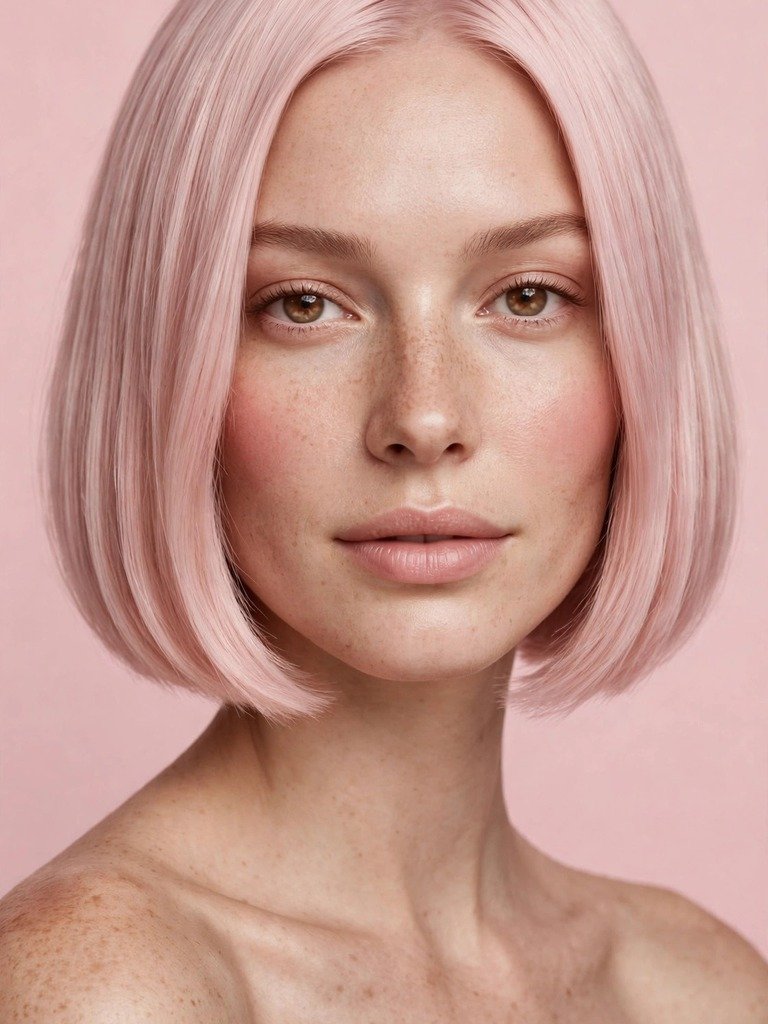
Now for the commitment look. A chin-length bob in blush pink is the boldest idea here — full-head color, no hiding — but the bob cut is what makes it work for fall instead of reading like a summer festival leftover. Short hair in an unexpected color looks editorial; long hair in the same color looks like a statement you’re still explaining. I’ve noticed the blush-pink bob works best when the cut is razor-sharp — blunt ends, clean lines — because the precision of the cut balances the playfulness of the color. In my experience, this shade needs a gloss refresh every three to four weeks or it goes chalky, so budget for toners, not just the initial appointment. My honest judgment: this is the one I’d only try if I already wear short hair. Going from long natural hair to a pink bob in one appointment is two shocks at once, and most people regret at least one of them. But if the bob is already your cut? The pink is pure fun.
9. Copper-Pink Melt
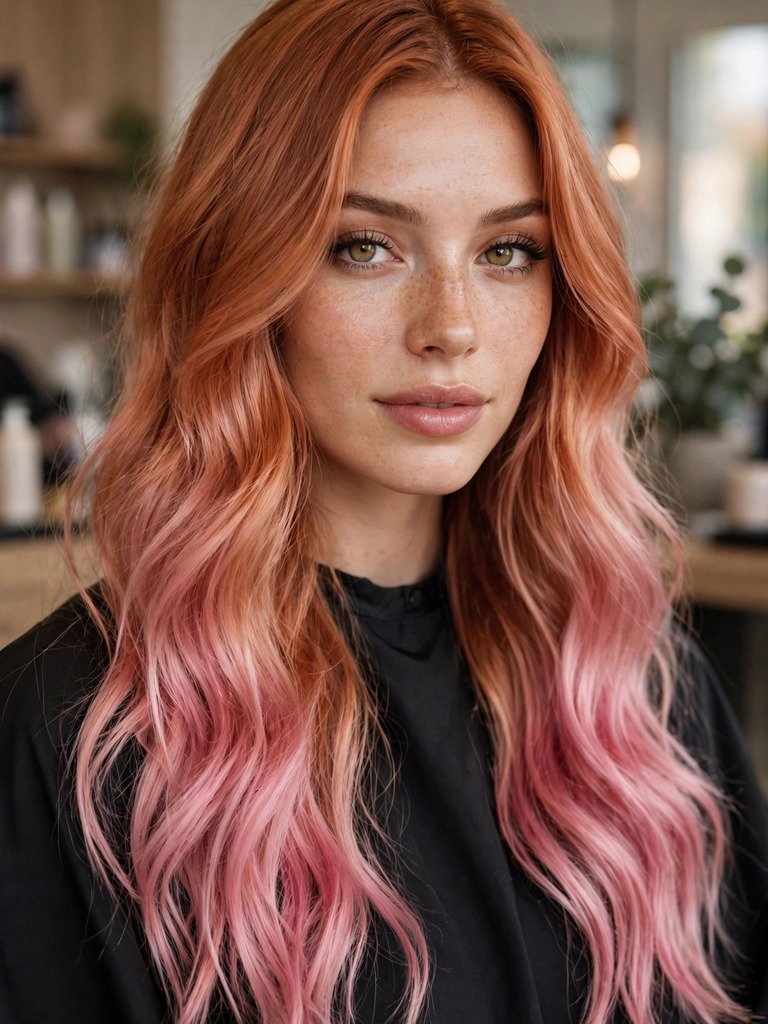
This one sits right at the intersection of two massive fall trends — copper hair and Pink-a-Boo — and I think it’s the sleeper hit of the season. A copper-pink melt starts with warm copper at the roots and dissolves into soft pink at the ends, so there’s no line anywhere; it’s one continuous gradient. Here’s why I’m high on it: copper is already the “safe” fall color everyone approves of, which means the pink ends get a free pass from people who’d side-eye a pink stripe. It also fades gracefully — copper melts into strawberry blonde, pink melts into blush, and the in-between weeks genuinely look intentional. For more on fall’s copper moment, I broke down the copper-versus-cherry-cola decision in detail in my cherry cola vs copper hair comparison. Practical note: melts need a colorist who actually understands gradient work, not just foils — ask to see their melt portfolio before you book, because a bad melt is just uneven color with a fancy name.
10. Subtle Pink Dip-Dye
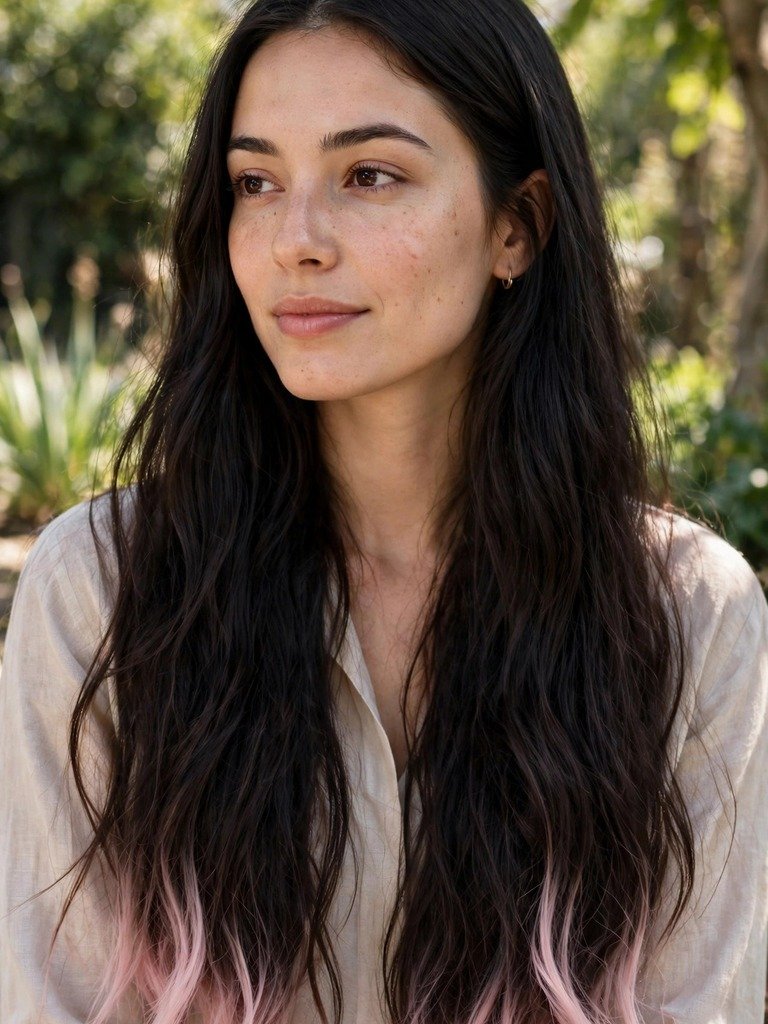
Last but not least: the dip-dye, back from 2015 and better than ever. Only the last few inches of very long dark hair get tinted pastel pink, like you dipped your ends in paint. I’m ending with this one because it’s the purest expression of the whole Pink-a-Boo philosophy — maximum pink visibility, minimum pink commitment. The color lives entirely on the oldest, most expendable part of your hair; when you’re done with it, a trim removes the evidence completely. No root touch-ups exist because the roots were never touched. In my experience, this looks best on genuinely long hair — past the shoulder blades — because you need enough dark length above the pink for the contrast to register. On shorter hair it just looks like faded ends. Pair it with the icy makeup trend for a full cool-toned moment — I covered exactly how to wear frosted lids without looking washed out in my Arctic Frost makeup guide.
My Verdict: What I’d Actually Do
After writing this guide and staring at pink hair for longer than I’d care to admit, here’s where I landed. If I were booking the appointment tomorrow, I’d get the chunky stripe (idea #1) — it’s the highest impact for the lowest commitment, it photographs incredibly, and the search data says it’s what everyone wants anyway. If I worked somewhere with a strict dress code, I’d get the peekaboo panel (idea #2) without a second thought. And if I were color-shy but curious, dusty rose pieces (idea #3) are the gateway that doesn’t feel like a gateway. The full pink bob is gorgeous but it’s a lifestyle, not a hairstyle — only go there if you’re ready for the upkeep. One thing I tested in the research that surprised me: temporary pink color-depositing conditioners have gotten genuinely good. You can trial any of the subtle ideas here for two weeks with a $15 bottle before committing to the salon chair. That’s what I’d do first, honestly.
✨ View this as a Web Story — all 10 looks in swipeable slides.
Frequently Asked Questions
Does pink hair work for fall, or is it just a summer trend?
It works for fall — but the fall version is different. Summer pink is full-head neon; fall pink is partial and muted: stripes, peekaboo panels, and dusty-rose pieces that harmonize with wine, burgundy, and chocolate tones already in your wardrobe. Pinterest’s Beauty Trend Report specifically frames Pink-a-Boo as a fall 2026 trend, with “pink hair stripe” searches up 463%.
Which pink hair idea is best for a strict office dress code?
The dark pink peekaboo panel. Worn down, your hair looks completely natural; the pink only shows in updos or when hair moves. It has no visible regrowth since the roots stay covered by your top layer, and you control exactly when the color is seen.
How long does pink hair dye last?
Pink is a fashion shade, so it fades faster than natural colors — typically 4 to 6 weeks for vivid pinks, a bit longer for deeper berry tones. Partial techniques like stripes and peekaboo panels look good far longer than full dye jobs because there’s no harsh regrowth line. Color-safe shampoo and cold washes extend the life noticeably.
Will pink hair damage my dark hair?
Any section dyed pink on dark hair needs lightening first, which causes some damage to that section — but that’s the beauty of partial techniques. You’re only bleaching a stripe or an underlayer, not your whole head, so the vast majority of your hair stays untouched. A good bond-builder treatment during the service minimizes the rest.
What’s the difference between dusty rose and regular pink hair?
Dusty rose has a muted, beige-mauve undertone — think dried roses, not bubblegum. It’s softer, more wearable, and pairs with fall neutrals like camel and cream. Regular or hot pink is vivid and high-contrast, which makes a bigger statement but needs more upkeep to stay saturated.
Can I try pink hair without dyeing it?
Yes. Temporary color sprays and color-depositing conditioners give you one-night or two-week pink with zero commitment — perfect for trialing the bedazzled-claw-clip updo or dip-dye looks. Clip-in pink extensions are another option for stripes and money pieces that wash out in one shampoo.
What makeup goes with pink hair in fall?
Keep the rest of your look warm and grounded: soft brown eyeliner, a berry or nude lip, and glowing skin. The icy Arctic Frost trend (silver liner, frosted lids) also pairs beautifully with cool pink tones if you want a full statement — I explain the wearable version in my Arctic Frost guide.
How do I ask my colorist for a Pink-a-Boo look?
Bring reference photos of the exact technique you want (stripe, peekaboo, money piece), not just the color. Specify placement — where the pink starts and ends — and ask for one shade deeper or more saturated than you think, since pink fades fast. For melts and balayage, ask to see the colorist’s gradient work before booking.
About the Author
By Mehboob Hussain — Mehboob Hussain is the founder and editor of MubStyle, where he covers fashion, beauty, home decor and wellness. He researches and writes every article himself — testing each idea for real life before it makes the list — and creates original visuals for every guide. Based in Multan, Pakistan.

Mehboob Hussain is the founder and editor of MubStyle, where he covers fashion, beauty, home decor and wellness. He researches and writes every article himself — testing each idea for real life before it makes the list — and creates original visuals for every guide. Based in Multan, Pakistan.