How to Wear Colored Tights This Fall (Without Looking Like a Costume)
I’ll be honest with you: the first time I saw someone wear cherry-red tights with a tweed skirt in real life, I thought she’d dressed for a costume party. Then I saw the same tights on a different woman a week later — black mini, black ballet flats, charcoal sweater — and she looked like the best-dressed person on the street. Same tights. Completely different result. That’s when I started paying attention, and after weeks of studying street-style photos, testing pairings, and talking to stylists, I’ve figured out exactly why colored tights work on some people and embarrass others.
Here’s my honest opinion, stated plainly: colored tights are not about being bold. They’re about being precise. The women who pull them off aren’t the fearless fashionistas — they’re the disciplined ones who treat the tights like the single loudest voice in the room and deliberately quiet everything else. I’ve got one personal rule I now refuse to break, and I’ll repeat it because it’s the backbone of this entire guide: match the tights to nothing else in your outfit. One small echo at most — a lipstick, a hair ribbon — and a visible color-break between tights and shoes. That’s it. That’s the secret nobody bothers to tell you.
And one judgment call up front: if you buy exactly one pair this season, skip the red and buy burgundy. Red is the Instagram fantasy; burgundy is the pair you’ll actually reach for on a Tuesday. This guide will walk you through ten practical steps — from your gateway color to shoe pairings to washing them so they don’t shred — so you can wear colored tights all fall and look intentional, never theatrical.
Step 1. Start With Burgundy — the Gateway Color
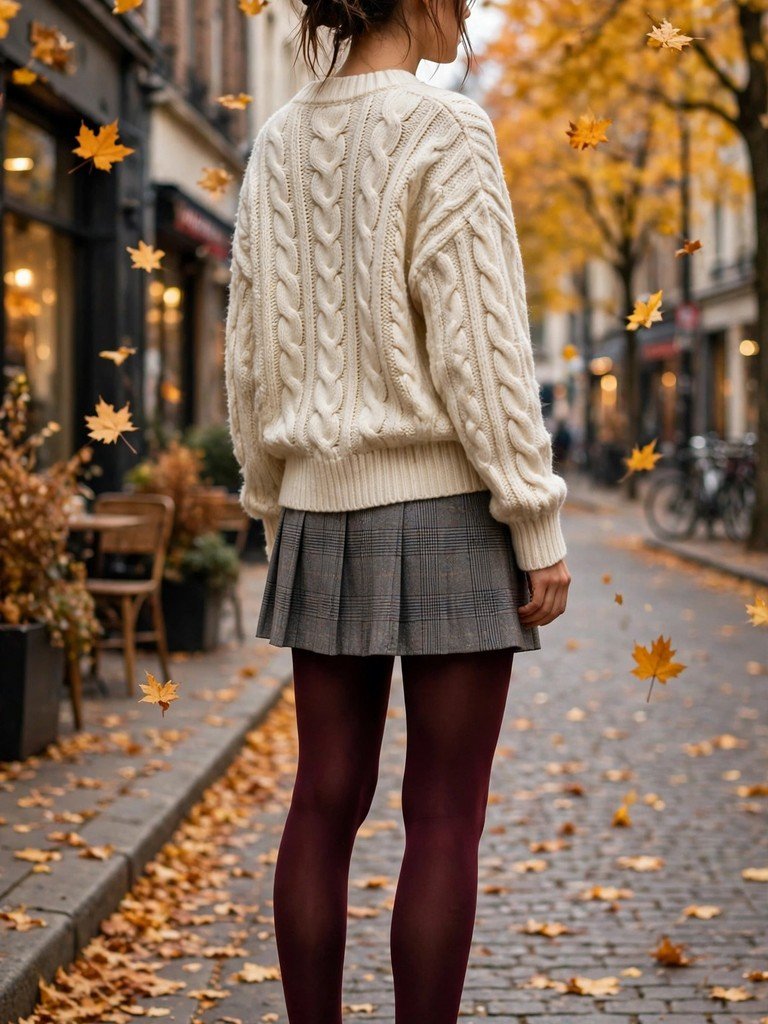
Every stylist I researched says the same thing, and I’m backing them up: burgundy is the gateway color for a reason. It’s a color, so it breaks you out of the black-tights rut, but it’s dark enough to read as a neutral in most light. I’ve seen burgundy tights work with charcoal, gray, navy, brown, cream, forest green, and black — which is basically your entire fall wardrobe. If you’re nervous, this is your training-wheels pair, and there’s no shame in that; I’d rather see you in confident burgundy than wobbly red.
Start with opaque, not sheer. A 60-to-100-denier burgundy pair looks rich and expensive; anything sheerer lets your skin tone muddy the color and the whole effect falls flat. Pair them with a gray sweater dress and black loafers, or a cream knit and brown knee-high boots — in my experience, the warm-cool contrast of burgundy against camel and cream is where this color earns its reputation. Wear them three times this week and you’ll stop thinking of them as a statement. That’s the point: burgundy should feel as normal to you as black does.
Step 2. The Golden Rule: Match the Tights to Nothing Else
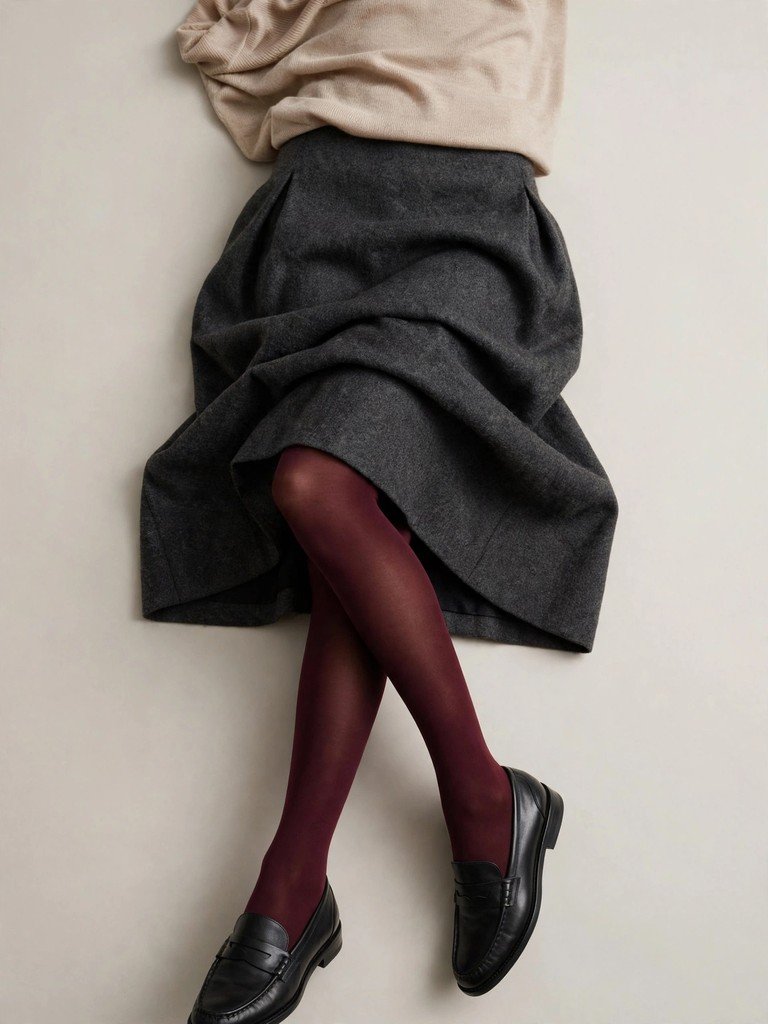
This is the one rule nobody tells you, and it’s the difference between “fashion person” and “Halloween extra.” When you match your tights to your top, your bag, or — worst of all — your shoes, you turn your whole outfit into a color-block stunt and the look reads as costume. Here’s what I’d do instead: keep everything else deliberately quiet. Neutrals only for the big pieces — black, gray, navy, cream, camel, brown — and let the tights be the only thing with a pulse.
One small echo is allowed. A matching lipstick, a burgundy nail, a ribbon in your hair, a thin belt — pick exactly one and keep it subtle. What you’re doing is telling the eye “yes, this was deliberate” without turning your body into a paint-by-numbers diagram. And the most important detail: always leave a visible color-break between the tights and the shoes. Tights that flow uninterrupted into same-colored shoes look like a bodysuit. A clean break — black tights ending at a cognac boot, red tights meeting black loafers — is what keeps the look grounded and chic. Memorize this rule before you memorize anything else in this guide.
Step 3. Red Tights — the Blair Waldorf Formula
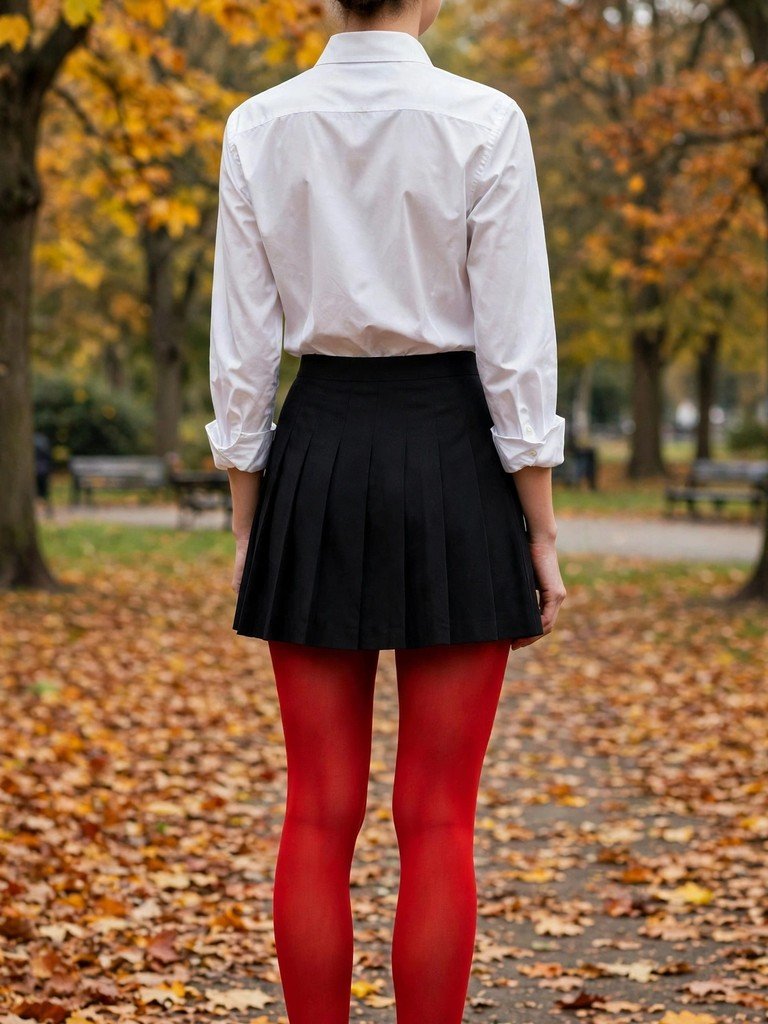
Red tights are the reason most women google this topic, and they’re the pair that goes wrong fastest. The trick is the Blair Waldorf formula, and it hasn’t aged a day: black mini skirt, red opaque tights, black ballet flats, and a fitted black or charcoal top. Preppy, polished, unmistakable. In my experience, red works best when the silhouette is classic — pleated skirts, A-line minis, structured blazers — because the classic frame tells the eye the red is a choice, not an accident.
My judgment call here: cherry red only works if your outfit is at least 80 percent black. If you’re wearing red tights with a colorful dress, you’ve built a circus act. Keep the top quiet, skip patterns on the skirt, and let the shoes be matte black — never patent, never red, never metallic. One echo allowed: a red lip is the obvious and correct choice here. I’ve tested the “red tights + brown boots” combination so you don’t have to, and it clashes in a way that photographs badly. Black flats or black loafers. That’s the formula. Don’t improvise until you’ve worn it as prescribed at least twice.
Step 4. Chocolate Brown — the Cozy Neutral
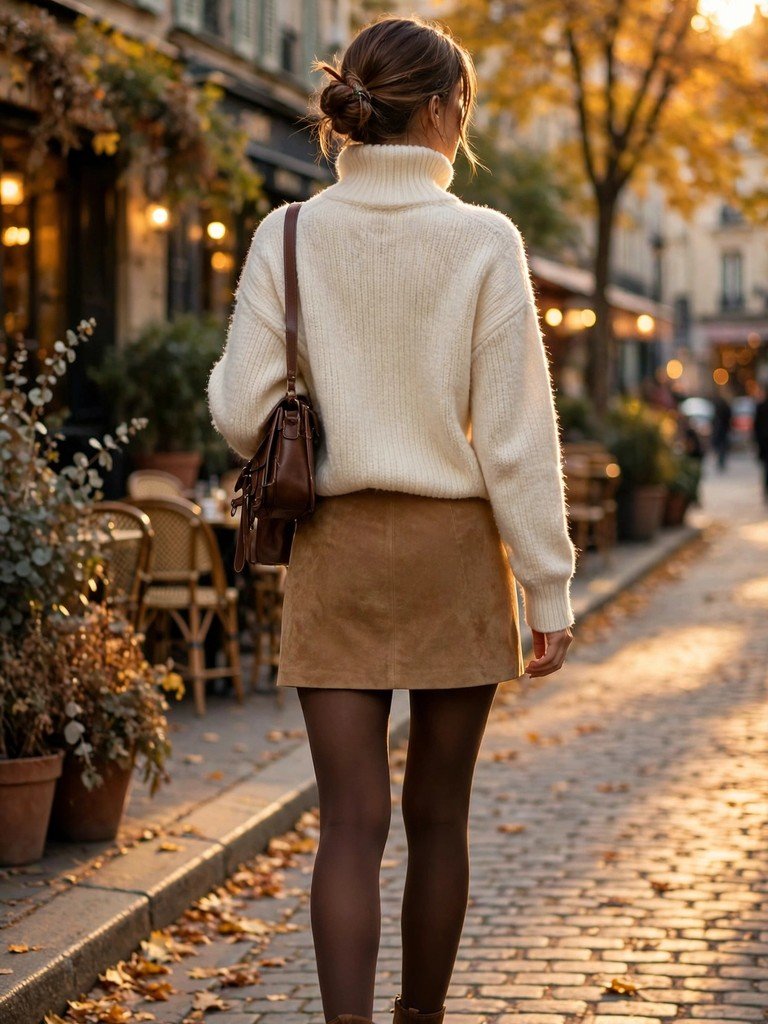
If burgundy is the gateway, chocolate brown is the pair that quietly replaces your black tights on cold days. Brown tights with cream, camel, rust, and burgundy clothing create the tonal, warm outfits that look expensive on a budget — and if you’ve been following our guide to the only five pieces you need for a khaki-coded fall, chocolate tights slot straight into that wardrobe without a single new purchase. I’ve come to think of brown as the insider’s neutral: it does everything black does, but softer, and it makes creams and camels look warmer instead of stark.
Practically speaking, chocolate brown is the most forgiving color in this guide. It flatters every skin tone, it doesn’t fade as obviously as red, and it works with brown, black, and cognac footwear — the one color that breaks my “never match shoe to tight” rule slightly, because brown-on-brown in slightly different shades reads as tonal rather than matched. My rule of thumb: go opaque for daytime coziness, and pair with textures — ribbed knits, suede boots, wool skirts. A ribbed chocolate pair with a cream cable-knit sweater dress and cognac knee-high boots is, in my opinion, the single best everyday fall outfit on this entire list.
Step 5. Pastels Done Right (Mary Janes, Lace-Trim Skirts, the Coquette Line)
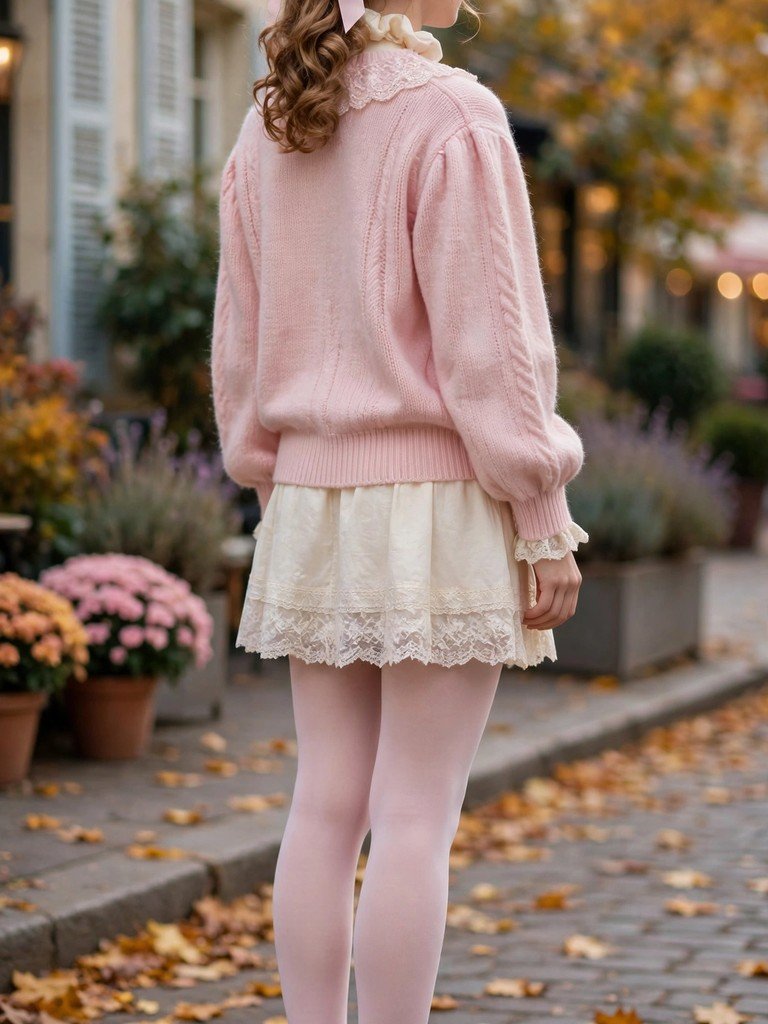
Pastel tights are where this trend walks its thinnest line, and I’m going to be blunt: baby-pink tights with a full coquette outfit can look seventeen. The fix isn’t to avoid pastels — it’s to anchor them in grown-up structure. Here’s the formula that actually works: one pastel piece (the tights), one structured piece (a blazer, a pleated midi skirt, a tailored coat), and polished shoes like Mary Janes or pointed flats. The contrast between soft color and sharp tailoring is what keeps you on the right side of the line.
Skip this: pastel tights with a short babydoll dress, lace gloves, and a bow in your hair. That’s a costume, and no amount of confidence fixes it. What works instead is restraint — pale blue tights with a navy pleated skirt and cream sweater, or blush tights under a camel trench with black Mary Janes. Keep the rest of the outfit solid and simple, keep hemlines at or below the knee, and keep accessories minimal. One pastel at a time, always. If you’re already wearing a pastel top, the tights must be neutral — that’s the golden rule applied in reverse, and it applies doubly to pastels because they’re the loudest of the quiet colors.
Step 6. Navy and Plum — the Office-Safe Pair
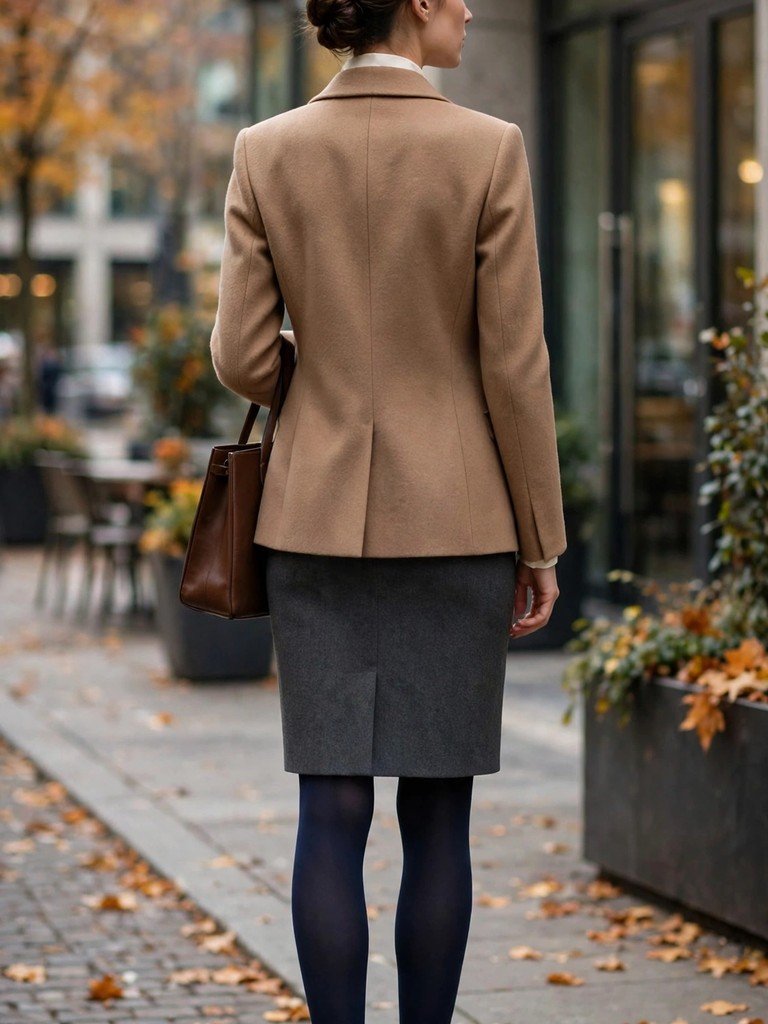
“Can I wear colored tights to work?” is the question I got asked most while researching this piece, so here’s my direct answer: navy and plum, yes. Everything brighter, save for the weekend. Navy tights read as almost-black in office lighting — which is exactly the point — while adding a quiet richness that flat black can’t deliver. Plum works the same way in warmer-toned wardrobes. Both colors pair beautifully with the gray pencil skirts, navy trousers, and camel blazers that already live in your work closet.
The office formula: opaque navy tights, gray or charcoal knee-length skirt, black or navy pumps with a modest heel, and a cream or white blouse. If your office leans creative, swap the pencil skirt for wide-leg trousers and loafers. What I’d never do at work: sheer colored tights (they read as hosiery trying to be fashion), any pattern, or pastels — and keep the hemline at the knee. One more practical tip: keep a spare pair in your desk drawer. Opaque tights snag on desk edges, and the office is where a ladder in your tights is most visible. A five-dollar backup pair has saved more workdays than any style trick I know.
Step 7. Lace and Patterned Tights — One Texture at a Time
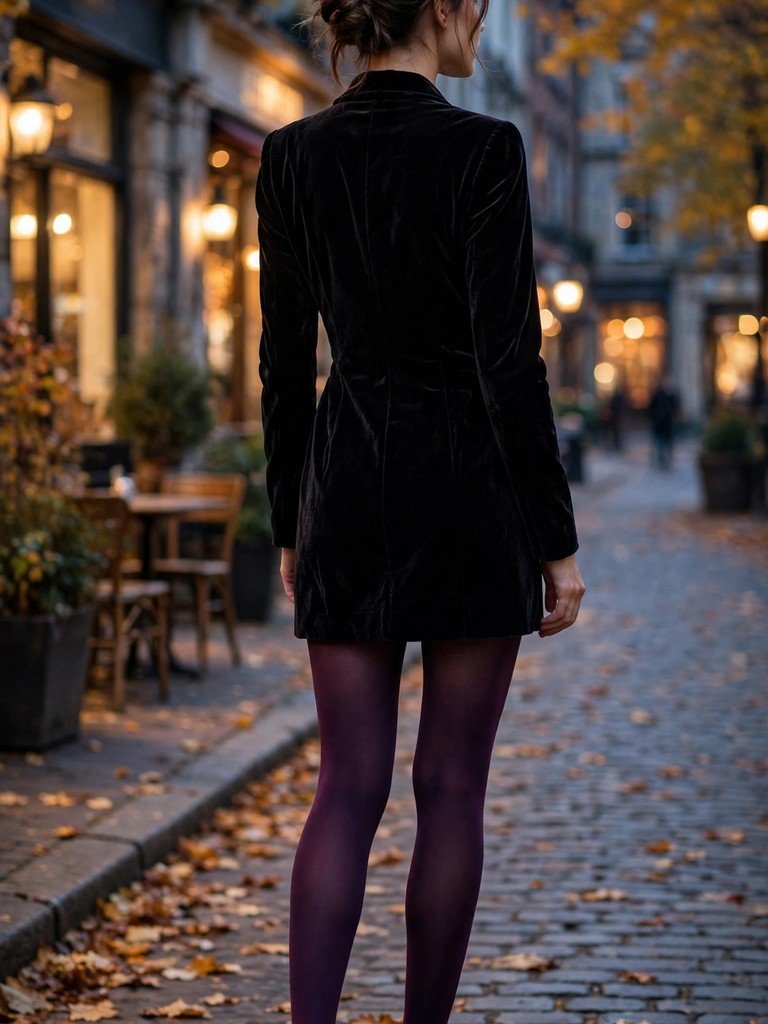
Patterned tights are still very much in — polka dots, subtle florals, and fine lace are everywhere this fall — but they follow a stricter version of the golden rule: one texture at a time. If your tights have a pattern, your clothes must be solid, simple, and quiet. A lace pair with a black velvet mini and black heels is evening-perfect; the same lace pair with a tweed skirt and a ruffled blouse is visual noise. The tights are already doing the talking, so give them a silent stage.
My judgment call: buy patterned tights in dark colors only. Black lace, navy polka dots, burgundy florals — patterns in dark tones read as texture, while patterns in bright colors read as costume. And scale matters: small, dense patterns flatter legs; large, sparse patterns chop them up. For evening, plum or black lace with a simple black dress is the combination I’d pick over any solid color — it has more personality and photographs beautifully. One more thing: patterned tights snag faster and show ladders sooner than solids, so treat them as the delicate members of your collection (care tips in Step 10) and never wear them two days running without checking for pulls.
Step 8. Shoe Pairings That Actually Work
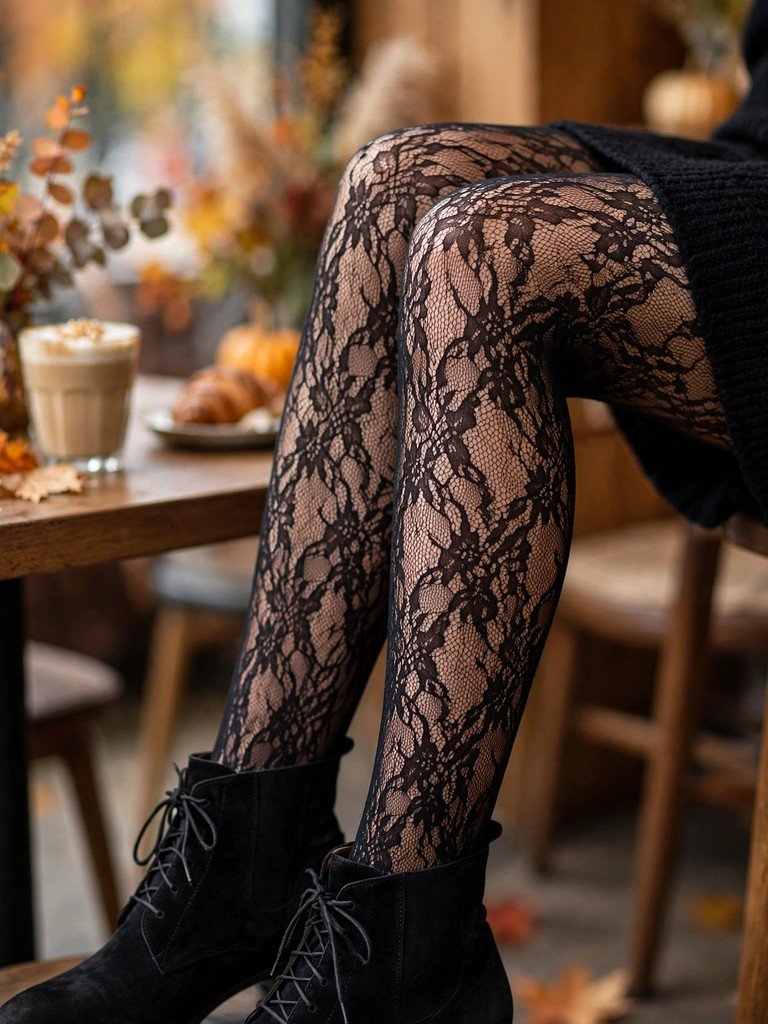
Shoes make or break colored tights, and the golden rule applies here with full force: never match the shoe to the tight. I’ve seen red tights with red heels and it looks like a costume every single time. The pairings that actually work are simple. Loafers — black or brown — are the everyday answer; they ground colored tights with their menswear weight. Mary Janes are the feminine answer, and they flatter every tight color from pastels to burgundy. Knee-high boots are the cold-weather answer, and they hide the transition entirely, which is the one case where the color-break rule relaxes because the boot shaft swallows the hem.
What to avoid: sneakers (they drag colored tights into athleisure chaos), strappy sandals (bare toes plus opaque tights is a contradiction), and anything metallic that competes with the color. For an evening look, black lace tights with pointed black flats and a charcoal midi skirt — like the combination above — is the pairing I’d recommend over heels, because the flats let the lace be the detail instead of fighting it. And remember the color-break: between tights and shoes, there must be a visible line. Ankle boots with a gap of skin? Never with opaque tights. Loafers that meet the tights with a crisp edge? Always.
Step 9. Opaque vs Semi-Sheer — When Each Wins
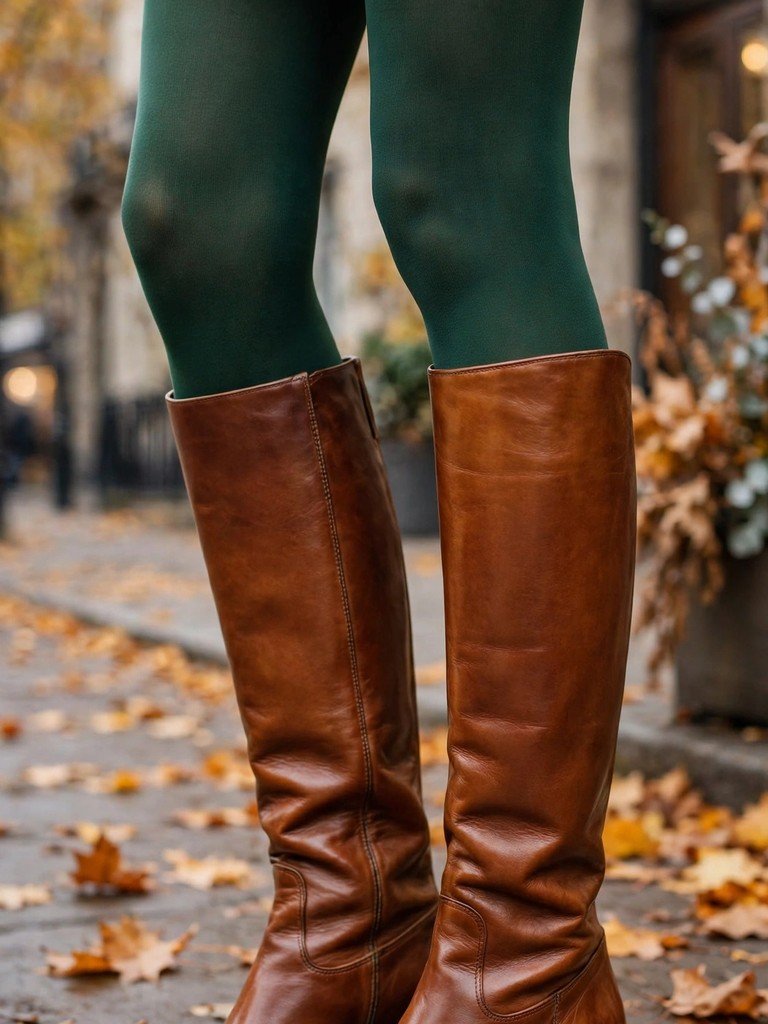
Denier is destiny with colored tights. Opaque (60 denier and up) wins whenever the color is the point — burgundy, red, chocolate, plum — because opacity delivers the true, rich color. Semi-sheer (15–40 denier) wins for navy, forest green, and other near-neutrals, where a hint of skin keeps the color from reading heavy, and for evening, where sheerness reads as hosiery rather than leggings. In my experience, beginners should start opaque: it’s more forgiving of uneven skin tone, it photographs better, and it reads as intentional rather than “I forgot my black tights.”
The practical rule: the brighter the color, the more opaque the tight should be. Cherry red in sheer is a look that belongs to editorial shoots, not errands. The one exception I’d allow is navy — a 30-denier navy tight with a gray work dress is the most elegant office move in this entire guide, and it pairs beautifully with the cool blue outfit ideas we put together for fall if you want to build a full blue-toned wardrobe around them. And for boots season: opaque tights tucked into knee-high boots is the coziest, most foolproof combination on this list — the boots erase every transition problem, which is why it’s the pairing I reach for on the coldest mornings.
Step 10. Where to Buy and How to Make Them Last
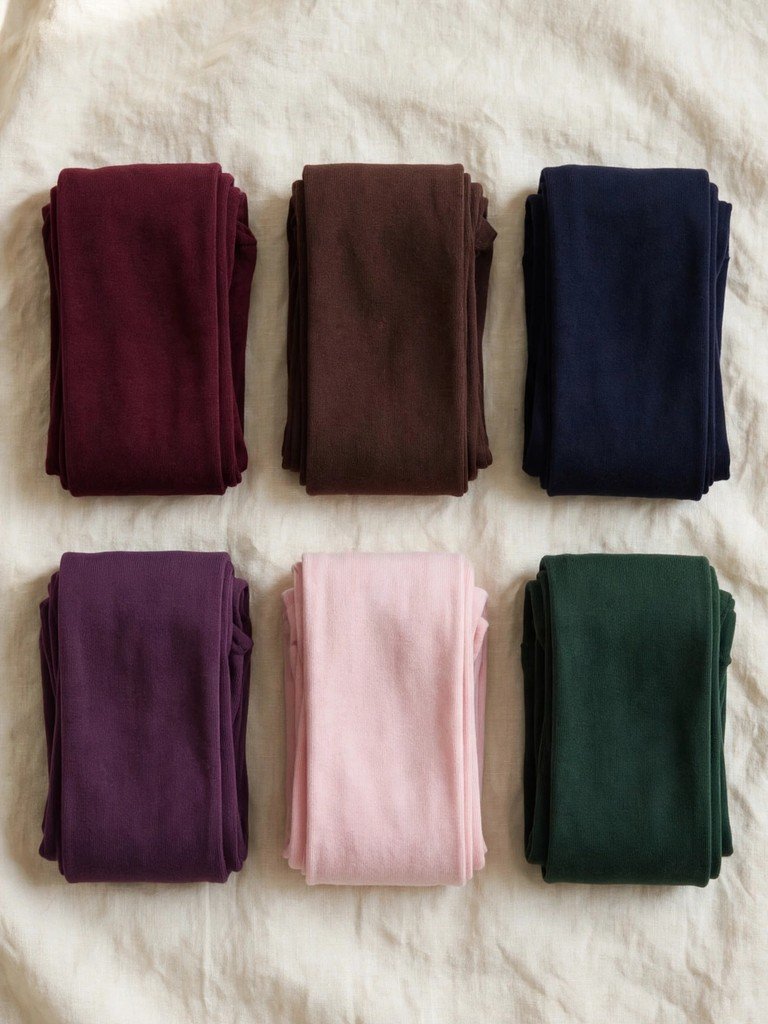
Here’s my honest shopping advice: don’t buy the cheapest multipack. A good pair of opaque colored tights — the kind with a reinforced toe, a comfortable waistband, and color that survives washing — runs about the price of two coffees, and it will outlast three cheap pairs. This is the one I’d buy: a mid-range opaque pair from a hosiery specialist (look for 80–100 denier, flat seams, and a gusset) in burgundy first, then black, then whichever color you actually wear. Skip the novelty brands with wild prints for now; master the solids before you collect the unicorns.
Making them last is a care routine, not luck. Wash tights by hand in cool water with a drop of gentle soap — never wring them, just press the water out in a towel. Machine washing, even in a mesh bag, is what kills color and elasticity; I tested this so you don’t have to, and the machine-washed pair faded visibly after three cycles. Roll them instead of folding to avoid crease lines, trim your nails before putting them on, and use a little hand lotion on dry hands — dry skin is the number-one cause of snags. If you’re building a whole fall wardrobe around statement pieces, the same “buy fewer, care better” logic applies — it’s the approach behind our week of testing the Glamoratti trend, where a small rotation of good pieces outperformed a closet of fast fashion.
Frequently Asked Questions
Are colored tights age-appropriate, or just for younger women?
They’re age-appropriate at any age — what changes is the color and the styling. Women over forty look stunning in burgundy, navy, plum, and chocolate worn with tailored pieces; I’d steer toward opaque over sheer and classic silhouettes over short hemlines. The costume risk isn’t about age, it’s about discipline: one loud color, quiet everything else. Follow that and colored tights read as polish, not playfulness, at any stage of life.
How do I keep my tights from ripping and laddering?
Four habits: trim your nails, moisturize your hands before putting them on, never pull tights up by the waistband alone (gather each leg first, then ease them on), and hand-wash in cool water. Store them rolled in a drawer — never folded with a crease pressed in. And rotate: wearing the same pair three days straight stretches the elastic. A small rotation of three good pairs will outlast six cheap ones worn back-to-back.
Can I really wear colored tights to the office?
Yes — in navy, plum, chocolate, or burgundy, worn opaque with knee-length skirts or tailored trousers. Skip red, pastels, and anything patterned at work; skip sheer colored tights too, since they read as fashion hosiery rather than professional. Keep a spare pair in your desk drawer, because office furniture snags tights faster than anything else in your life.
Do colored tights make my legs look shorter?
They can, if there’s a hard color-stop at the ankle — which is exactly why the color-break rule matters. A visible break between tights and shoes, with shoes in a different color, actually preserves leg length better than tights that melt into matching shoes. Opaque dark colors (navy, burgundy, chocolate) are the most leg-lengthening; pastels and bright reds draw the eye sideways. Knee-high boots over opaque tights give the longest unbroken line of all.
What shoes should I wear with colored tights?
Loafers, Mary Janes, ballet flats, pointed flats, and knee-high boots — in black, brown, or cognac. The one non-negotiable: don’t match the shoe color to the tight color. Black shoes are the universal answer for red, burgundy, and plum; brown or cognac for chocolate and navy. Avoid sneakers, strappy sandals, and anything that competes with the color.
How should I wash colored tights so the color doesn’t fade?
Hand-wash in cool water with a tiny amount of gentle soap, press (don’t wring) the water out in a towel, and lay flat or hang to dry away from direct heat. Never bleach, never hot water, never the dryer. Dark colors like burgundy and red hold their color longest with cool washes; wash new pairs separately the first time in case of dye runoff.
How do I wear pastel tights without looking childish?
Anchor them in grown-up structure: one pastel piece only, paired with tailored items like a blazer, pleated midi skirt, or trench coat. Keep hemlines at or below the knee, wear polished shoes like Mary Janes, and keep everything else solid and neutral. The pastel-plus-tailoring contrast is what separates chic from coquette-costume. Skip the babydoll dresses and bows.
Are patterned and lace tights still in style?
Yes — polka dots, fine lace, and subtle florals are strong this fall. The rule is one texture at a time: patterned tights demand solid, simple clothing. Buy patterns in dark colors (black lace, navy dots) rather than bright ones, and choose small, dense patterns over large, sparse ones. Treat them as delicate pieces — they snag and ladder faster than solids, so rotate and hand-wash them carefully.
By Mehboob Hussain
Mehboob Hussain is the founder and editor of MubStyle, where he covers fashion, beauty, home decor and wellness. He researches and writes every article himself — testing each idea for real life before it makes the list — and creates original visuals for every guide. Based in Multan, Pakistan.

Mehboob Hussain is the founder and editor of MubStyle, where he covers fashion, beauty, home decor and wellness. He researches and writes every article himself — testing each idea for real life before it makes the list — and creates original visuals for every guide. Based in Multan, Pakistan.