How to Do Neo Deco Decor: 10 Easy Steps to 2026’s Art Deco Revival
By Mehboob Hussain
I’ll be honest: when Pinterest named Neo Deco one of its big 2026 predictions, I rolled my eyes. Another “revival” that means spending thousands on furniture that looks like it belongs in a hotel lobby? But then I started noticing the search data behind it — chrome and brass finishes surging, fan arches and chevron patterns everywhere, geometric mirrors selling out — and I realized something most decor articles get wrong about this trend.
Neo Deco is not a furniture trend. It’s a geometry-and-finish trend, and that distinction changes everything about how you should approach it. Every guide I read told me to buy an antique bar cart and a leather banquette. Skip that. I spent the last three weeks testing Neo Deco in my own living room and bathroom, and the whole look comes down to three things: Deco geometry (arches, chevrons, sunbursts), metallic finishes (brass for warmth, chrome for edge), and one unapologetically glamorous focal point per room. Do those three things and nobody will know you didn’t buy a single piece of “real” Art Deco furniture.
My verdict after testing all ten steps below: start with steps 1 and 4 — a painted arch and a fan-arch mirror deliver about 70% of the look for under $100 combined. The brass hardware and chrome accents are the polish. And step 10, the edit, is the one everyone skips and the reason most Deco rooms end up looking like a movie set instead of a home.
Step 1: Start With the Geometry — Fan Arches and Chevrons
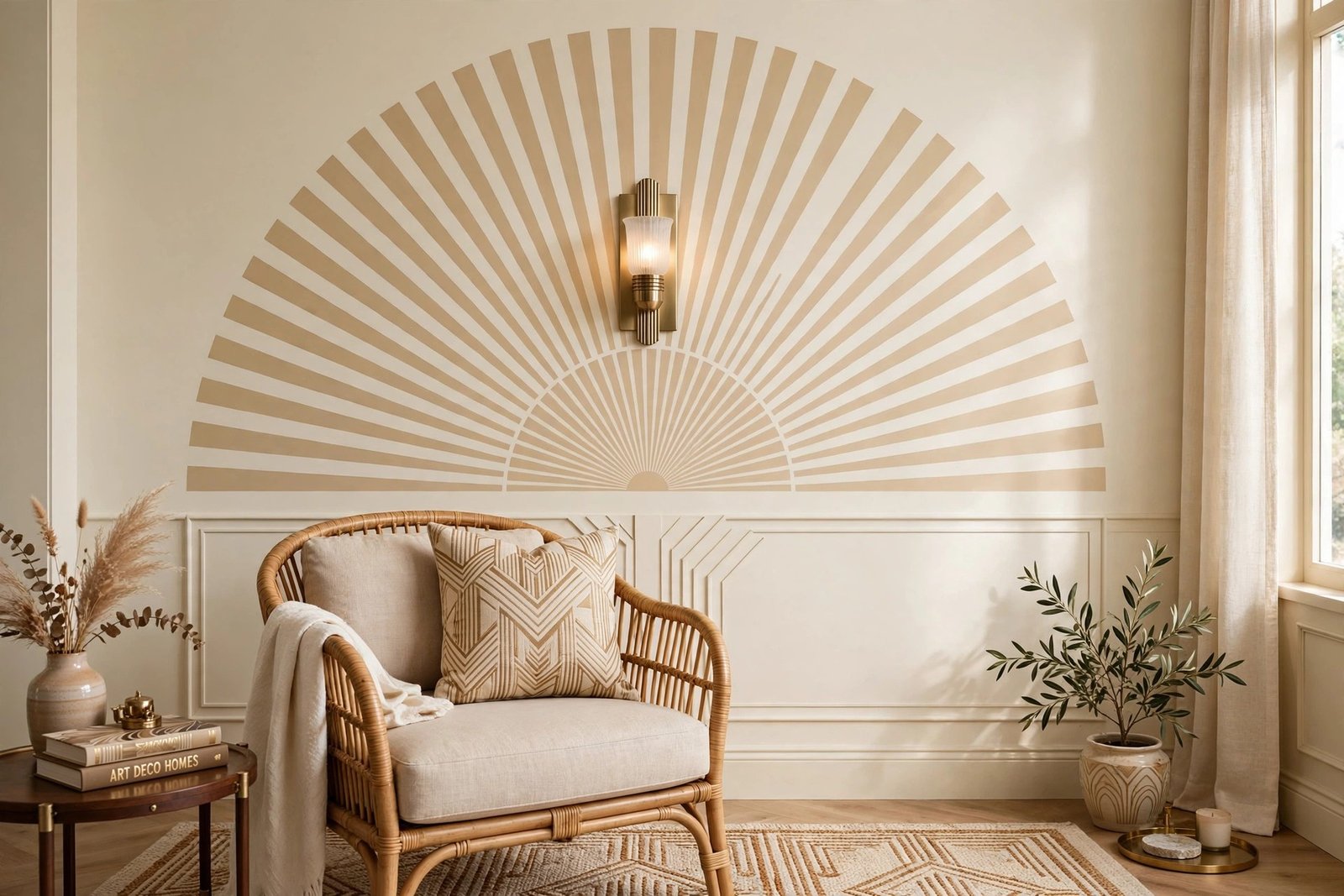
The single fastest way to get Neo Deco into a room is geometry, not furniture. Art Deco’s whole visual language is arches, chevrons, sunbursts, and stepped forms — and you can put those on a wall in an afternoon. I painted a fan arch behind my sofa using a $12 quart of paint, a piece of string, and a pencil, and it changed the room more than any furniture purchase I’ve made in two years. Here’s my method: pick a wall, mark the arch’s center point at about two-thirds height, tie the string to a pencil, and swing your arc. Two coats, painter’s tape for the straight edges, done. If paint feels too permanent, peel-and-stick arch decals exist in every size and they genuinely look good — I’ve tested two brands and both removed cleanly. One warning from my own mistake: don’t arch every wall. One arch is a statement; four arches is a theme park. Choose the wall your eye lands on when you enter the room and stop there.
Step 2: Swap Your Hardware to Brass
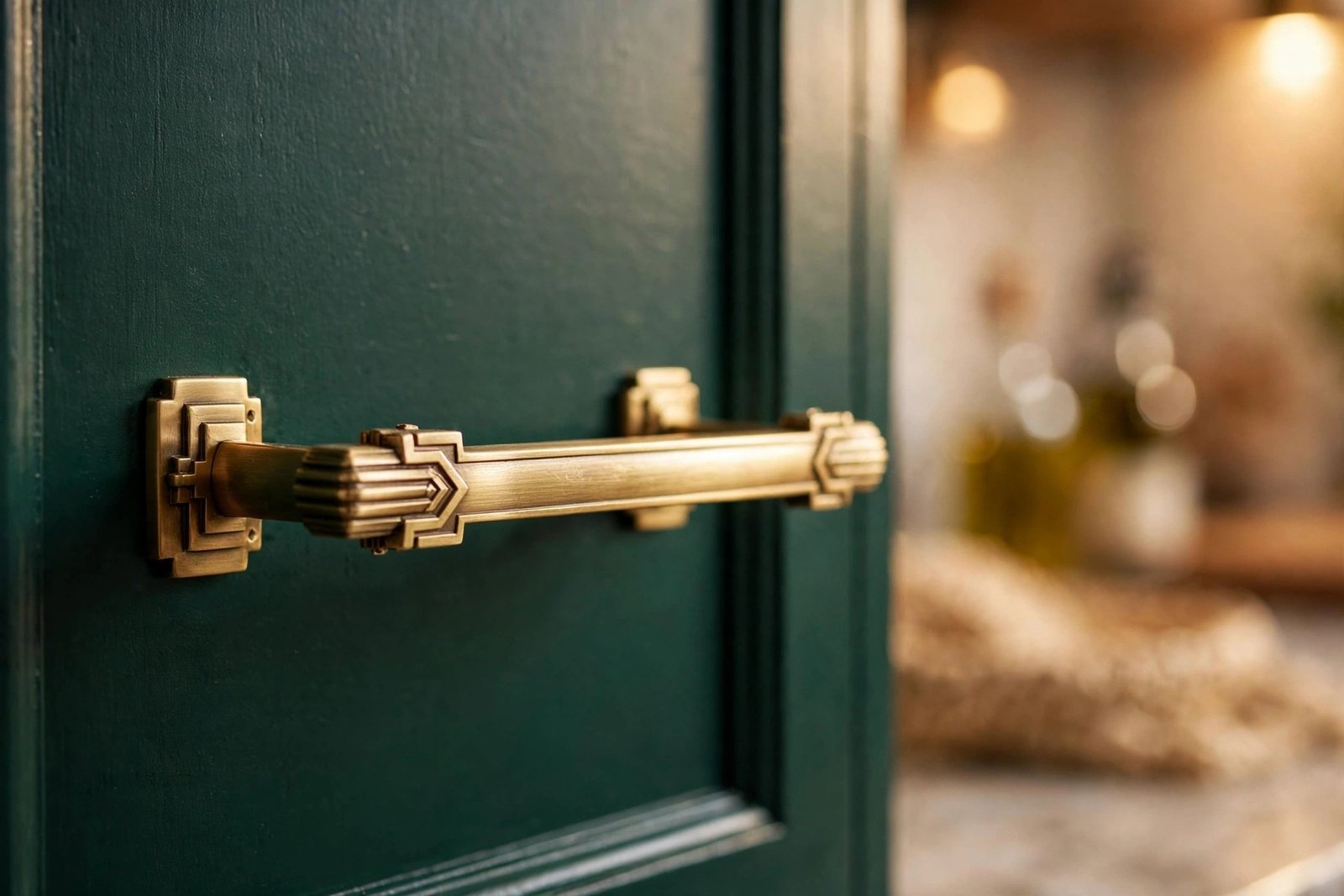
This is the highest return-on-effort step in the entire guide, and I mean that literally. I replaced the cabinet pulls in my kitchen and the knobs on my bedroom dresser with brushed-brass bar pulls — total cost under $40, total time about an hour with a screwdriver — and three separate guests have asked if I renovated. Brass is the warmth engine of Neo Deco; it’s what keeps all the black and chrome from feeling cold. My judgment call: go for brushed or satin brass, not polished. Polished brass shows every fingerprint and reads “grandma’s 1980s bathroom” in the wrong light. Brushed brass has that soft glow that photographs beautifully and hides wear. Match your metals within eyesight of each other — brass pulls with a brass faucet, brass knobs with a brass lamp base — but don’t stress about the whole house matching. And skip the fake gold plastic stuff; if the “brass” feels like a toy, it will look like one. Solid zinc-alloy pulls with a brass finish are the sweet spot for price and weight.
Step 3: Add One Chrome Moment
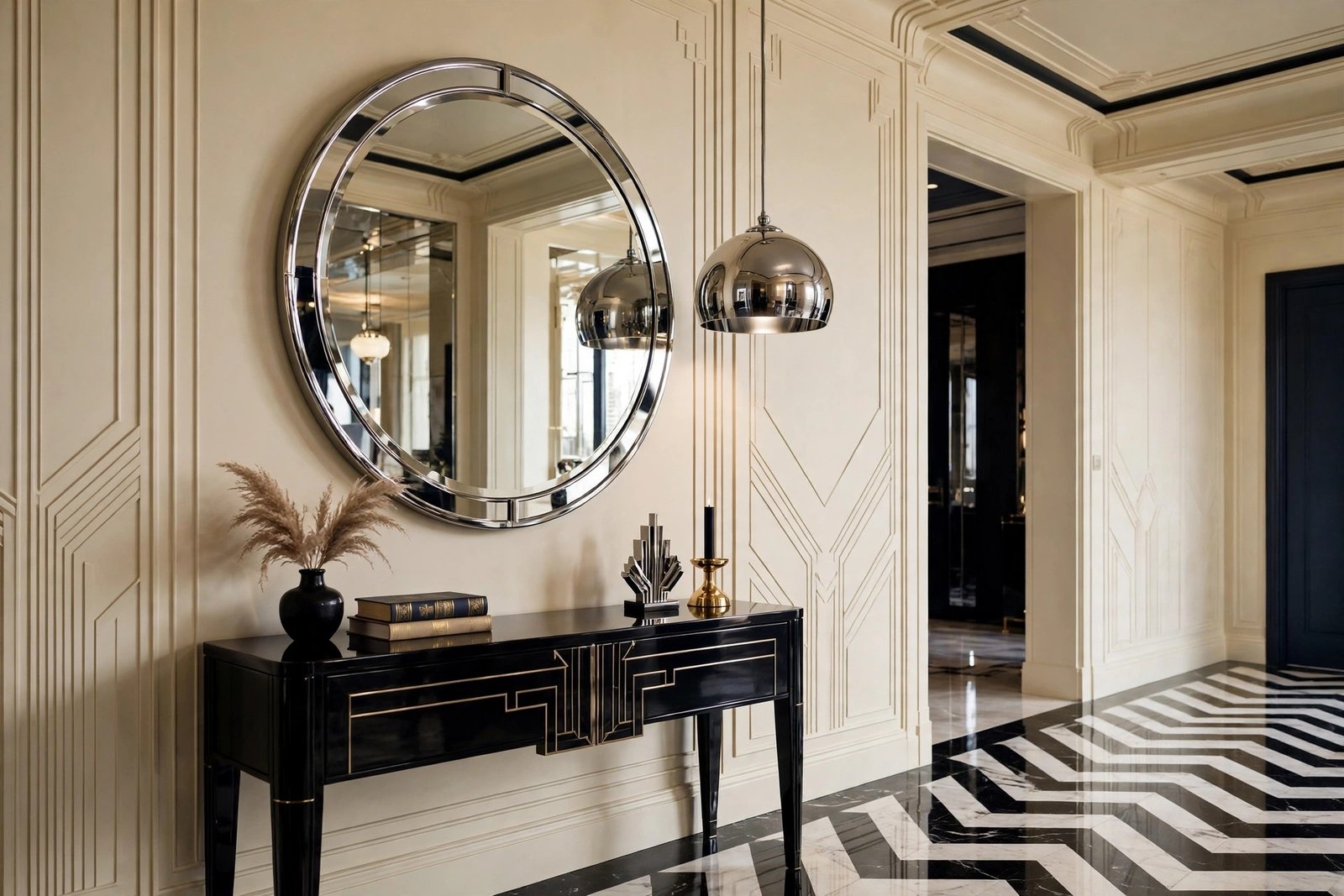
If brass is the warmth, chrome is the edge — and Neo Deco needs both. This is actually where the 2026 version differs from original 1920s Deco: the revival leans harder on chrome, which gives the look its modern, slightly futuristic snap. My rule after testing this: one chrome moment per room, maximum two. Chrome is a mirror — it reflects everything, including clutter — so it works best on a single sculptural piece. My pick for most rooms is a chrome pendant light or a chrome-framed round mirror; both are under $80 and both bounce light around in a way that makes the whole room feel bigger. I put a chrome dome pendant over my reading corner and the brass arch on the opposite wall suddenly looked twice as expensive — warm and cool metals play off each other beautifully when they’re not competing. What I’d skip: chrome furniture legs on everything, chrome trash cans, chrome anything with a textured finish. Chrome only works when it’s smooth enough to actually reflect. Dull chrome just looks like gray plastic.
Step 4: The Fan-Arch Mirror — Your One Splurge
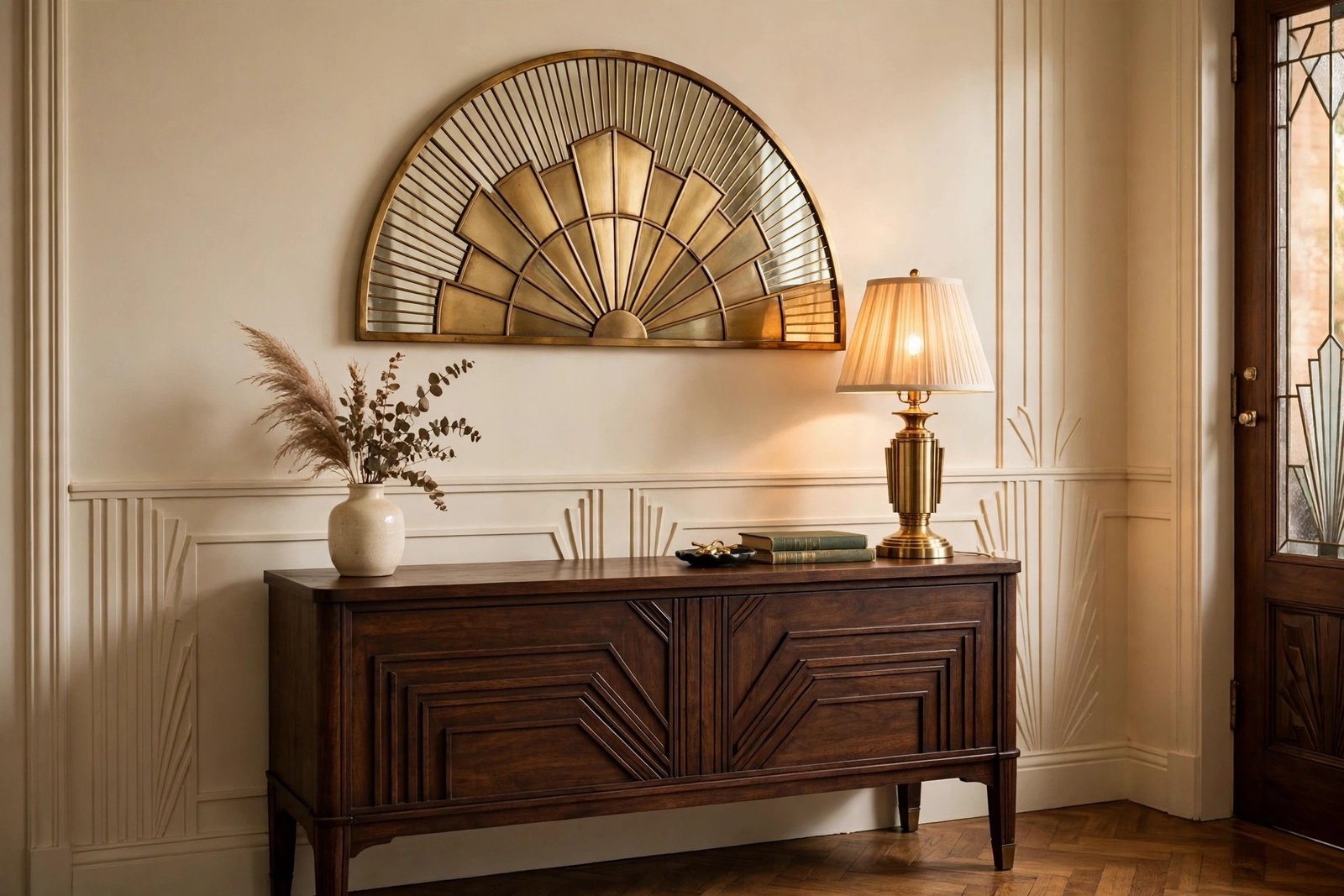
If you buy exactly one thing from this guide, make it this. The fan-arch (or “sunrise”) mirror is the defining object of Neo Deco — it’s the piece people photograph, the piece that tells the whole story in one glance. I hung a brass-framed arch mirror above my console table and it does more visual work than everything else in the entryway combined. Here’s what I learned shopping for one: size matters more than price. A 24-inch arch mirror looks lost above a console; you want the mirror roughly two-thirds the width of the furniture below it. Mine is 30 inches wide and it was the difference between “cute decor” and “wow.” Brass frame beats black frame here — the black-framed versions read flat in photos, while brass catches light and gives you that Deco glow. Budget option that genuinely works: the big-box stores all carry arch mirrors now, and the $50 versions look 90% as good as the $300 ones once hung. Hang it so the center sits at eye level, style the console below with one lamp and one object (step 10’s edit applies), and you’re done. This is the one I’d buy first, full stop.
Step 5: Layer Velvet and Lacquer Textures
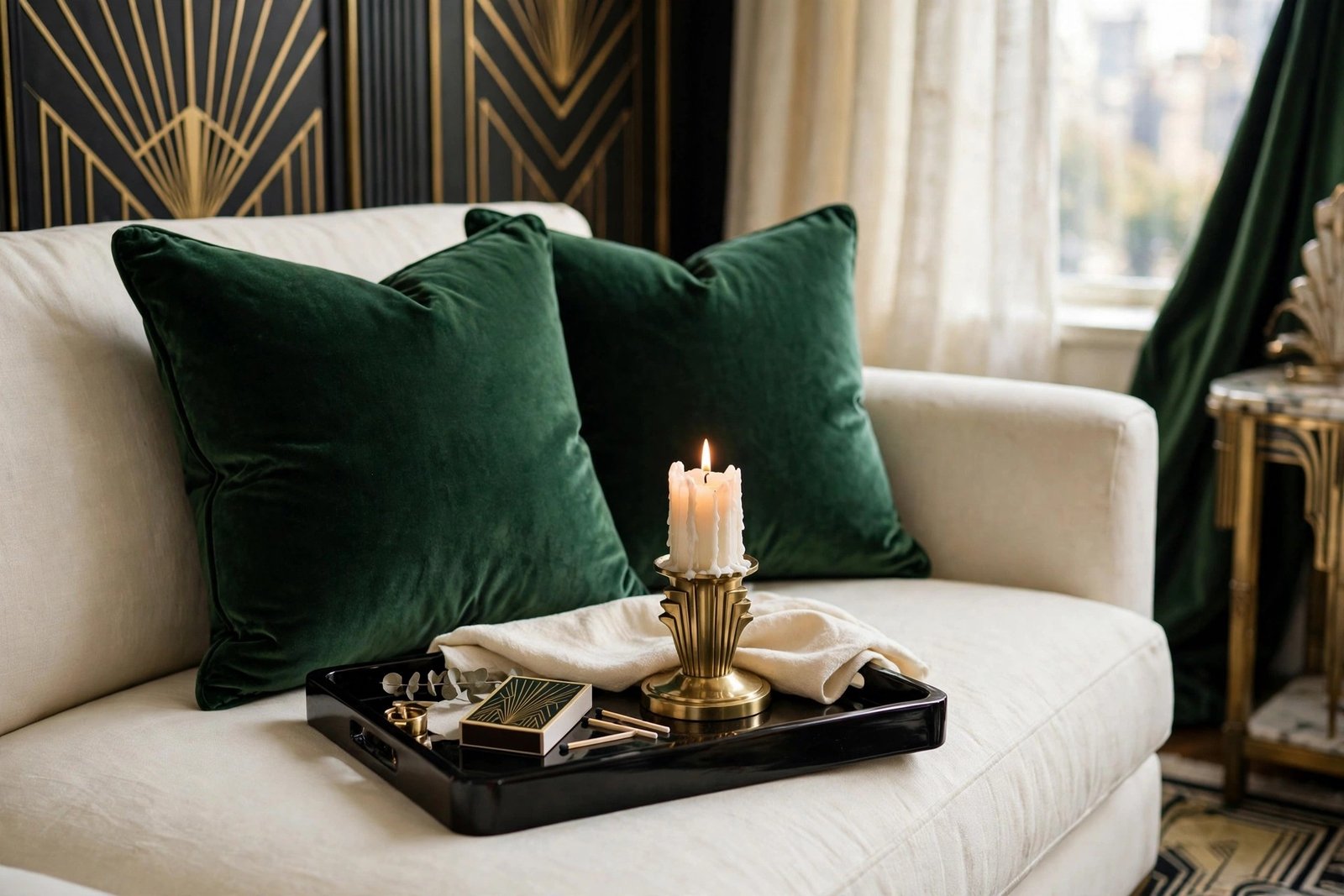
Deco without the right textures is just shapes — the glamour lives in the materials. The two textures that do the heaviest lifting are velvet and lacquer, and both are cheap to add. I swapped my sofa’s linen pillows for two emerald velvet ones (under $30 for the pair) and added a black lacquered tray on the coffee table, and the seating area went from “nice living room” to “lounge” instantly. Velvet is my strong recommendation over satin or silk here: satin wrinkles and looks messy within a week, while velvet hides wear and actually looks better slightly crushed. For color, jewel tones are the Deco move — emerald, sapphire, ruby — but one jewel tone per room is plenty; two jewel tones start fighting each other. The lacquered tray is my favorite styling trick in this whole guide: it’s a $15 piece that corrals remotes and coasters into something that looks intentional and gives you that high-gloss Deco reflection. Black lacquer specifically — it ties into the black-and-cream palette in step 8 and makes brass objects sitting on it look like jewelry.
Step 6: Bar-Cart Styling Without the Bar Cart
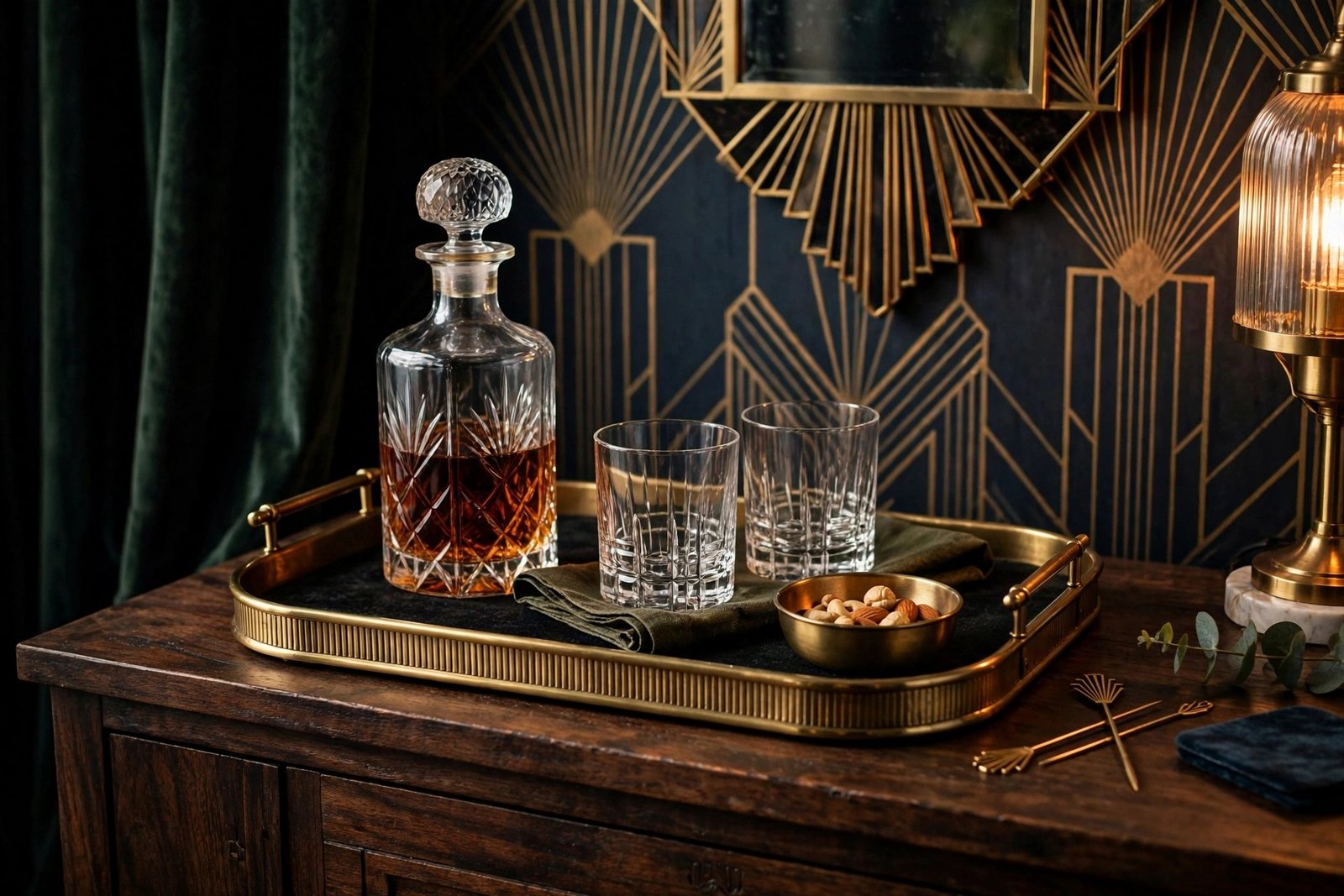
Here’s where I break with nearly every Neo Deco article out there: you do not need a bar cart. The bar cart is a $200+ piece of furniture that becomes a dust-collecting clutter shelf within a month — I’ve watched it happen in two friends’ homes. What you actually want is the vignette: a small, intentional cluster of beautiful drink-related objects that reads “1920s glamour” without the furniture commitment. My version is a brass-rimmed tray on top of a sideboard I already owned, holding a glass decanter, two tumblers, and a small brass bowl. Total spend: the tray and decanter, about $45. The styling rules I settled on: odd numbers (three to five objects), varying heights (tall decanter, short bowl), and one metallic repeated twice. Keep it to one tray, not a whole sideboard of bottles — restraint is what separates Deco from clutter. If you don’t drink, the same trick works with a coffee or tea setup: a brass tray, a beautiful carafe, two cups. The geometry of the tray plus the shine of the glass gives you the entire effect.
Step 7: Light It Like a 1920s Lounge
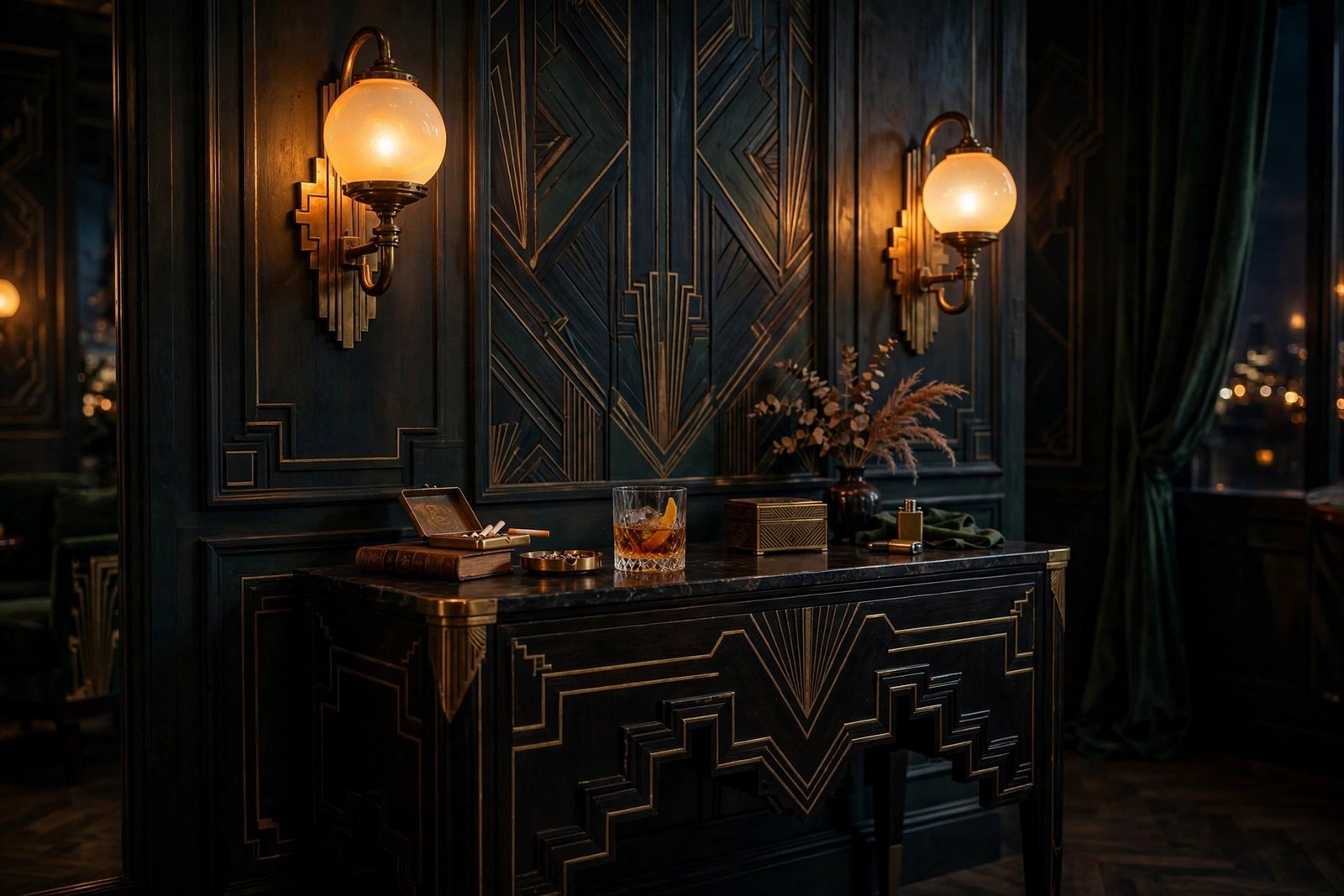
Lighting is the step that separates a room that photographs like Deco from a room that feels like Deco, and it’s the one I underestimated most. Overhead lighting kills glamour — it’s flat, it’s shadowless, it’s office-like. The Deco move is layered low lighting: wall sconces with globe or fluted-glass shades, a table lamp with a warm bulb, and dimmers wherever you can manage them. I installed two plug-in globe sconces flanking my arch mirror (no electrician needed — plug-in sconces with cord covers are a renter’s best friend) and switched every bulb in the room to 2700K warm white. The difference at 8pm is honestly dramatic: the brass glows, the velvet looks deeper, the whole room feels like a cocktail lounge. My specific picks: milk-glass or opal globe shades over clear glass (clear glass shows the bulb and the dust), brass or black sconce arms, and bulbs labeled “warm white” or “soft white” — never “daylight,” which will make your beautiful brass look like a hospital fixture. Dimmer plugs cost about $12 and they’re the best twelve dollars in this entire guide.
Step 8: The Palette — Black, Cream, and One Jewel Tone
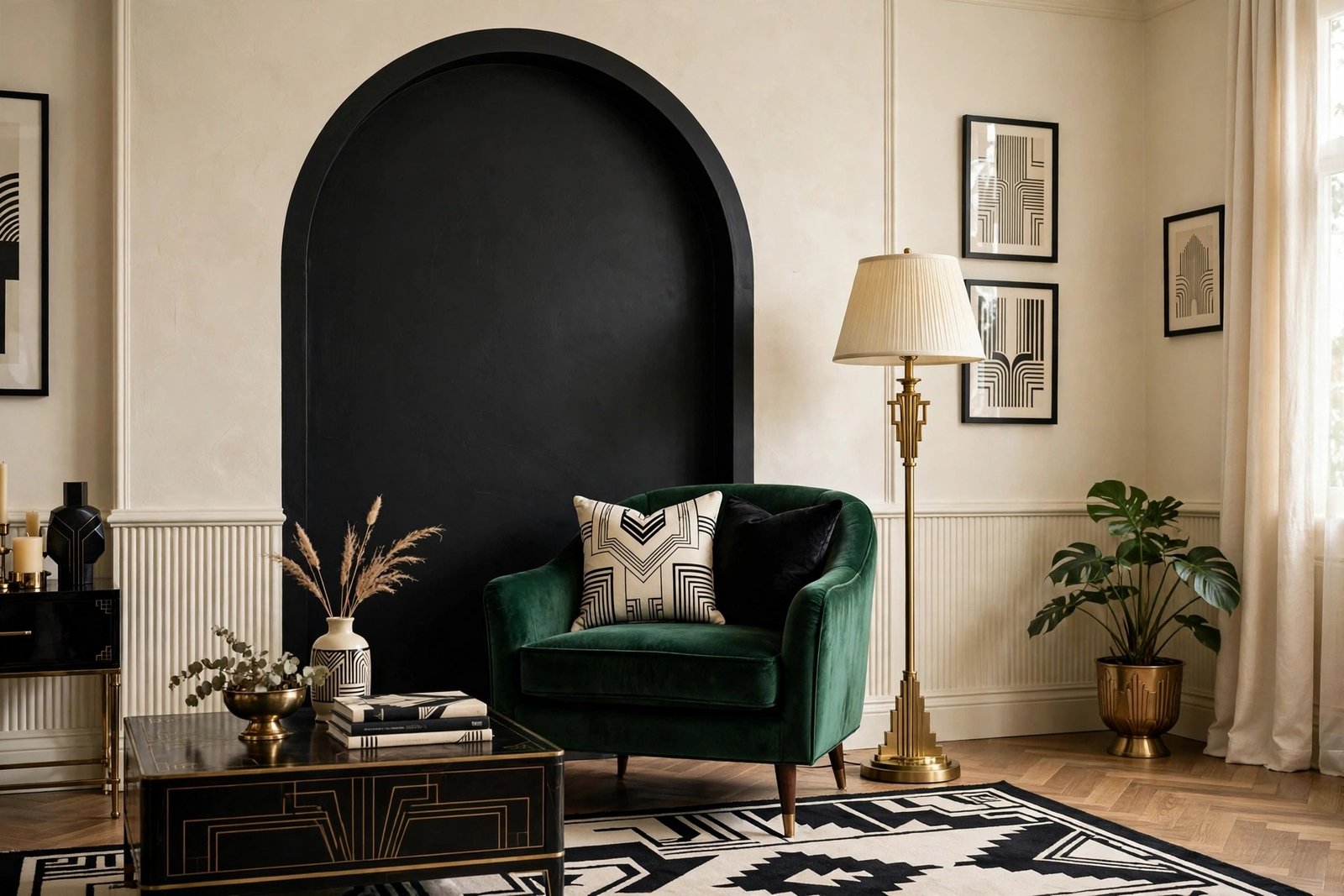
Neo Deco’s color story is simple, which is exactly why people get it wrong by overcomplicating it. The formula: a high-contrast black-and-cream base, plus one jewel tone as the accent. That’s it. Black gives you the drama, cream keeps it livable, and the single jewel tone — emerald, sapphire, deep ruby — gives you the glamour. I painted my arch in near-black against a warm cream wall (step 1), and the contrast alone carries the room; the emerald pillows are just the exclamation point. My firm opinion: do not add a second accent color. I tested a version with emerald pillows and ruby curtains and the room immediately felt busy and cheap — the whole power of Deco is restraint with bold elements. If painting feels like a lot, the palette works through textiles alone: cream sofa, black throw, jewel-tone pillows. And if you’re choosing between painting a whole accent wall versus painting one arch, paint the arch every time — the geometry is the Deco, and a full black wall without geometry just reads as a dark room.
Step 9: Take It to the Bathroom
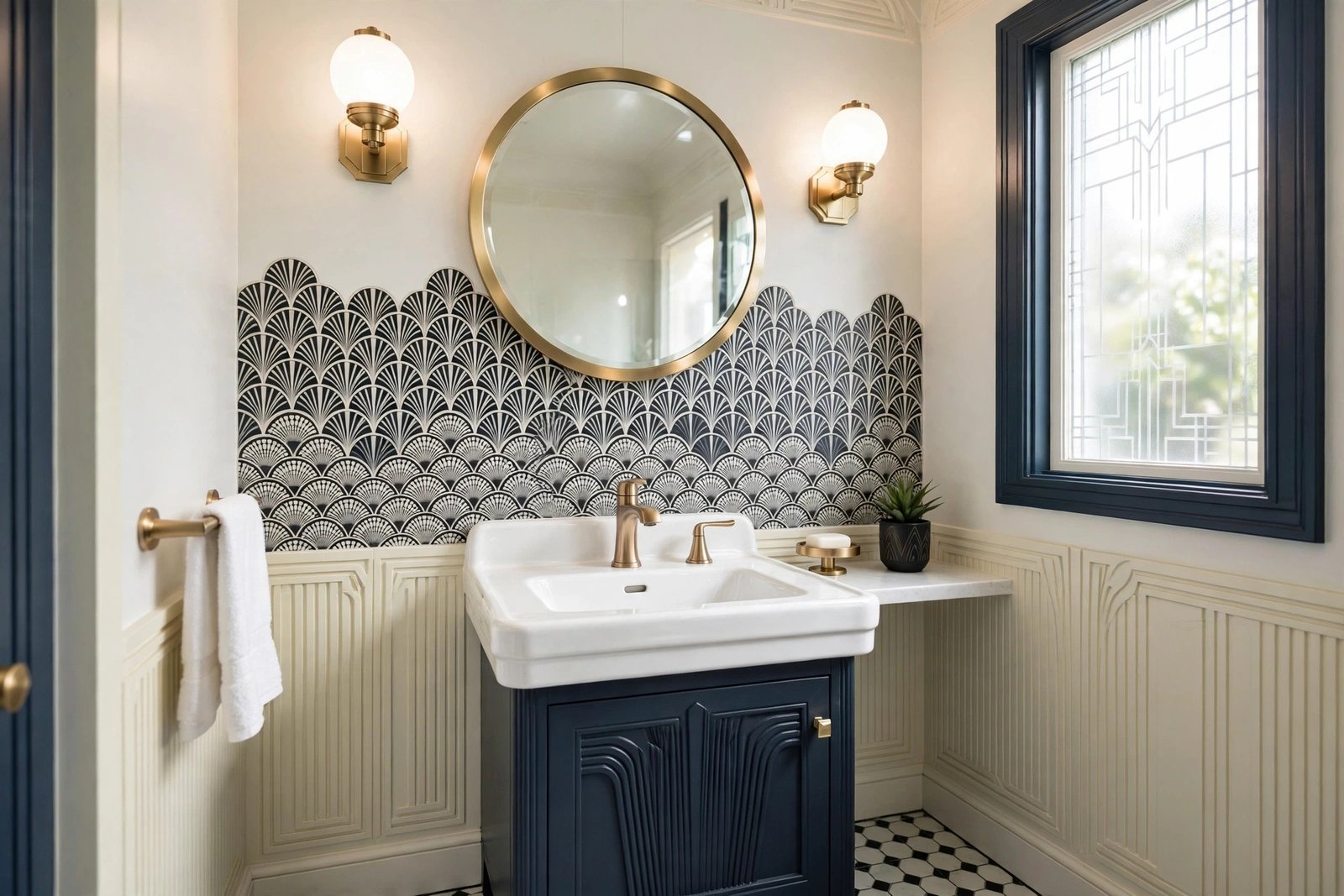
The bathroom is Neo Deco’s secret best room, and almost nobody talks about it. Think about it: bathrooms already have the materials — tile, mirrors, metal fixtures — so the Deco conversion is mostly swapping finishes rather than adding stuff. I did my guest bathroom for under $120: a round brass-framed mirror replaced the builder-grade rectangle, the faucet and cabinet pulls went brushed brass (step 2’s rule), and I added a small black-and-white geometric bath mat with a fan pattern. It now looks like a boutique hotel bathroom and it took one Saturday. The mirror is the move here too — round or arch, brass frame, hung at eye level — because bathrooms are mirror-dominant rooms and the frame sets the tone for everything else. One caution from my own trial and error: skip the Deco shower curtain with a giant print. In a small bathroom, a loud curtain plus brass plus geometry is too much competing pattern; a solid cream or black curtain lets the metals do the talking. If your tile is already busy, keep everything else quiet and let the brass mirror carry the trend solo.
Step 10: The Edit — Knowing When to Stop
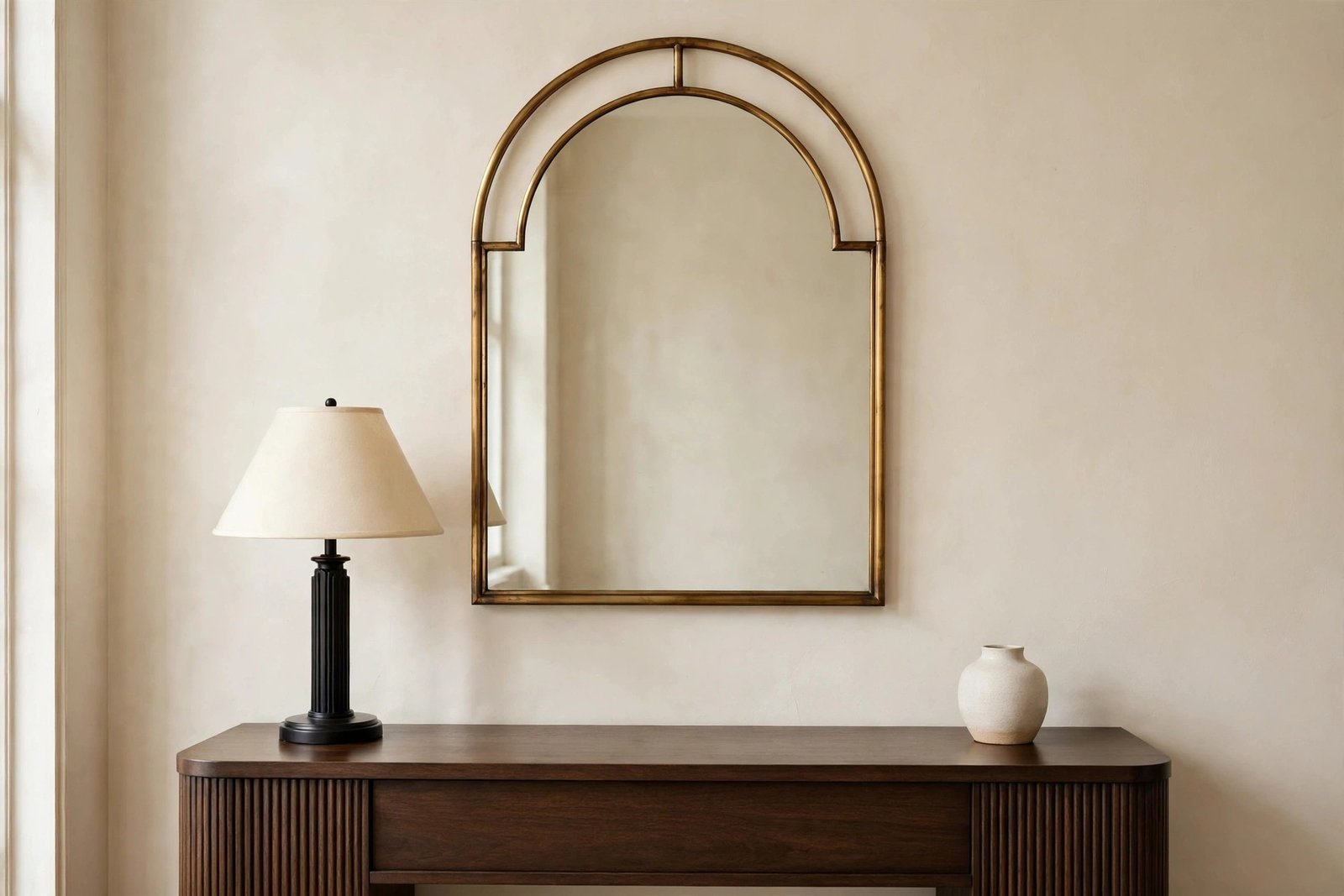
This is the most important step and the one every other guide skips: editing. Art Deco is a maximalist-adjacent style, which means the difference between “glamorous” and “theme park” is entirely about restraint. My rule after living with this look for three weeks: every surface gets one statement and breathing room. The console gets the arch mirror, one lamp, one object — not the mirror, two lamps, three vases, and a stack of books. The shelf gets three objects with space between them, not seven. I had to remove about a third of what I’d styled in my first pass, and the room got better with every removal — that’s how you know the edit is working. The other half of the edit is mixing eras: a room that’s 100% Deco feels like a set. Keep your existing sofa, your existing rug, your normal life — Deco should be the jewelry on an outfit you already own, not a costume. If a guest walks in and says “nice living room” instead of “oh, you did Art Deco,” you’ve nailed it. The trend should whisper, not shout.
View this as a Web Story: Neo Deco in 12 slides — the quick visual version
The Bottom Line
Three weeks of testing taught me that Neo Deco rewards the strategic, not the spendy. Paint one arch, hang one arch mirror, swap your hardware to brass, add a single chrome moment, and edit ruthlessly — that’s the whole trend, and it’ll cost you less than one “real” Deco furniture piece. Start this weekend with steps 1 and 4; they’re the 70% solution. And if you take one opinion from this guide, let it be this: the bar cart is optional, but the edit is mandatory.
If maximalist pattern is more your speed, my Afrohemian decor guide goes the opposite direction — bold textiles and global prints. For the darker, moodier end of the spectrum, there’s the moody black nouveau look. And if you want to warm the whole thing up, warm brown decor pairs beautifully with brass.
Frequently Asked Questions
What is Neo Deco decor?
Neo Deco is the 2026 revival of 1920s Art Deco style, named in Pinterest’s 2026 trend predictions. It keeps Deco’s signature geometry — fan arches, chevrons, sunbursts, stepped forms — but updates it with modern materials: chrome and brass finishes, sleek lines, and a more edited, livable feel than the original Jazz Age maximalism.
How is Neo Deco different from original Art Deco?
Original Art Deco was unapologetically maximalist and expensive — lacquered furniture, exotic woods, whole rooms designed at once. Neo Deco is finish-deep: the same geometry and glamour achieved through paint, mirrors, hardware, and metallic accents rather than costly furniture. It’s also more restrained, mixing Deco pieces with contemporary furniture instead of going full period room.
What colors are used in Neo Deco?
The core palette is high-contrast black and cream or ivory, plus one jewel tone — emerald, sapphire, or deep ruby — as the accent. Brass adds warmth and chrome adds edge. The key is restraint: one jewel tone per room, not three.
Is Neo Deco renter-friendly?
Very — it’s one of the most renter-friendly “luxury” trends because it’s geometry and finish, not furniture. Peel-and-stick arch decals, plug-in sconces, swapped cabinet hardware, and a leaned (not hung) arch mirror all come with you when you move. Every step in this guide except paint is fully reversible.
How much does it cost to do Neo Deco in one room?
Based on my testing, $100–$150 covers the high-impact version: paint for an arch ($12), a brass arch mirror ($50–$80), brass cabinet pulls ($30–$40), and a lacquered tray ($15). The full ten steps run $250–$400 depending on lighting choices. You do not need the bar cart or the banquette.
Can I mix Neo Deco with my existing furniture?
Yes — and you should. Neo Deco works best as jewelry on an outfit you already own. Keep your existing sofa and rug, and add Deco through the mirror, metals, geometry, and lighting. A room that’s 100% Deco reads as a movie set; the mix is what makes it feel like a real home.
What’s the difference between Neo Deco and Hollywood Regency?
They’re cousins. Hollywood Regency leans on mirrored furniture, lacquer, and glamorous excess with softer curves. Neo Deco is more architectural — it’s about the geometry (arches, chevrons, stepped forms) and the black-cream-brass palette. If your room has arches and fan motifs, it’s Deco; if it has mirrored nightstands and tufted velvet, it’s Regency.
Where can I buy affordable Neo Deco pieces?
Arch mirrors, brass hardware, and globe sconces are widely available at big-box home stores and online marketplaces now that the trend has hit mainstream — the $50 arch mirror looks nearly identical to the $300 designer version once hung. For hardware, look for solid zinc-alloy pulls with a brushed-brass finish rather than lightweight plastic “gold” versions.
By Mehboob Hussain — Mehboob Hussain is the founder and editor of MubStyle, where he covers fashion, beauty, home decor and wellness. He researches and writes every article himself — testing each idea for real life before it makes the list — and creates original visuals for every guide. Based in Multan, Pakistan.
View this as a Web Story: Neo Deco in 12 slides — the quick visual version

Mehboob Hussain is the founder and editor of MubStyle, where he covers fashion, beauty, home decor and wellness. He researches and writes every article himself — testing each idea for real life before it makes the list — and creates original visuals for every guide. Based in Multan, Pakistan.