Brooched: How to Wear the 2026 Brooch Trend (and Where to Pin It)
By Mehboob Hussain
Brooches were the accessory nobody expected to come back — and then Pinterest named ‘Brooched’ one of its 2026 trends, with searches for ‘brooch aesthetic‘ up 110%, ‘brooch for men suit’ up 90% and ‘heirloom jewelry’ up 45% (Pinterest Predicts 2026). The prediction also had an unusual detail: Pinterest says the early adopters are boomer and millennial men, accessorising with vintage pins, crystal clip-ons and heirloom brooches. The runways followed: brooches were a standout jewellery story at the fall/winter 2026 shows, appearing at Giorgio Armani in Milan and at Ralph Lauren and Tory Burch in New York (British Vogue, via NILE1). Search interest for “brooch outfit ideas” climbed from June and peaked at an interest score of 92 out of 100 in early October 2026.
So the trend is real, and the question is practical: where do you actually pin one? A brooch on a lapel is the safe answer and also the least interesting one. The placements that make the trend work are the unexpected ones — a scarf knot, a waistband, a bag strap, a collar point — where the pin does a job (holds something, cinches something, changes a silhouette) instead of just sitting there. This guide ranks all seven placements, says what kind of pin each one needs, and gives you the three rules that keep one pin from looking like costume. No new collection required: one good thrifted pin is the whole budget.
What it costs in Pakistan: a vintage brooch typically costs Rs. 199–999 (checked on Daraz, Nov 2026).
1. The lapel — the safe classic
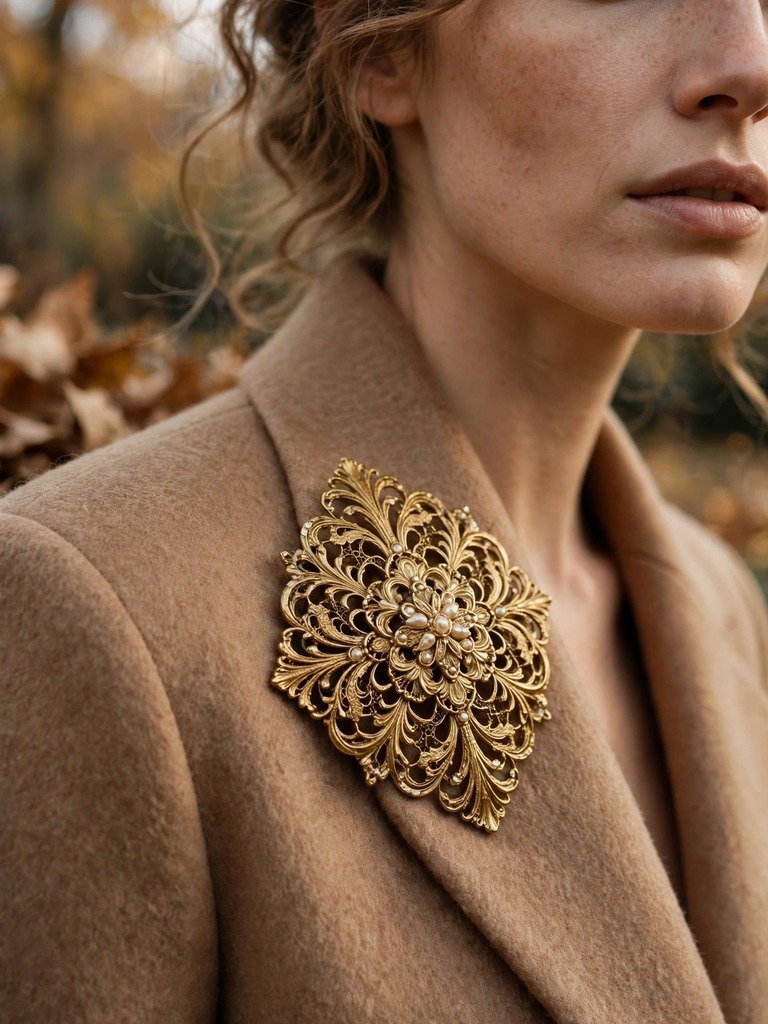
The lapel is where everyone starts: a camel blazer, a gold filigree pin, nothing else competing. It works — the pin catches the light and the outfit looks finished — but it is pure decoration: it does not hold, cinch or close anything, and it is the safest placement and also the least interesting one. A lapel pin teaches you nothing about what a brooch can do, because it asks nothing of the pin. Keep it for the days you want to look deliberately classic, and do not let it be your only placement. Almost any pin suits it, with a secure clasp so it sits flat on the lapel. This is the runway’s default placement: brooches were a standout jewellery story at the fall/winter 2026 shows, appearing at Giorgio Armani in Milan and at Ralph Lauren and Tory Burch in New York.
2. The scarf knot — the placement that does a job
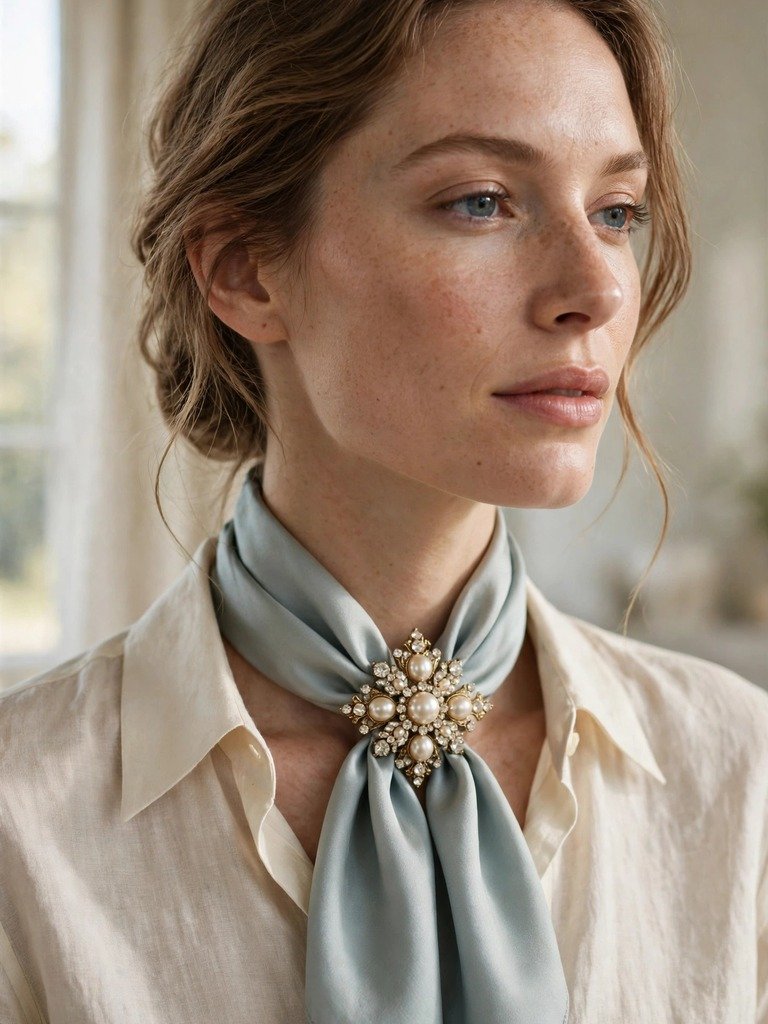
A silk scarf slips, shifts and needs retying all day; a pin at the knot solves a real problem while looking intentional, which is the combination that makes a styling trick stick. Use a pearl, crystal or medium-weight vintage pin with a secure clasp, fastened through both layers of the scarf at the hollow of the throat — it frames the face and holds the knot in place. This is the placement to try first if you own exactly one brooch: it is visible, it is useful, and it works on a coat, a blazer or a knit. Skip lightweight pins with weak clasps here — a scarf moves all day, and a pin that cannot grip two layers of fabric will migrate by lunchtime.
3. The waistband cinch — tailoring without a belt
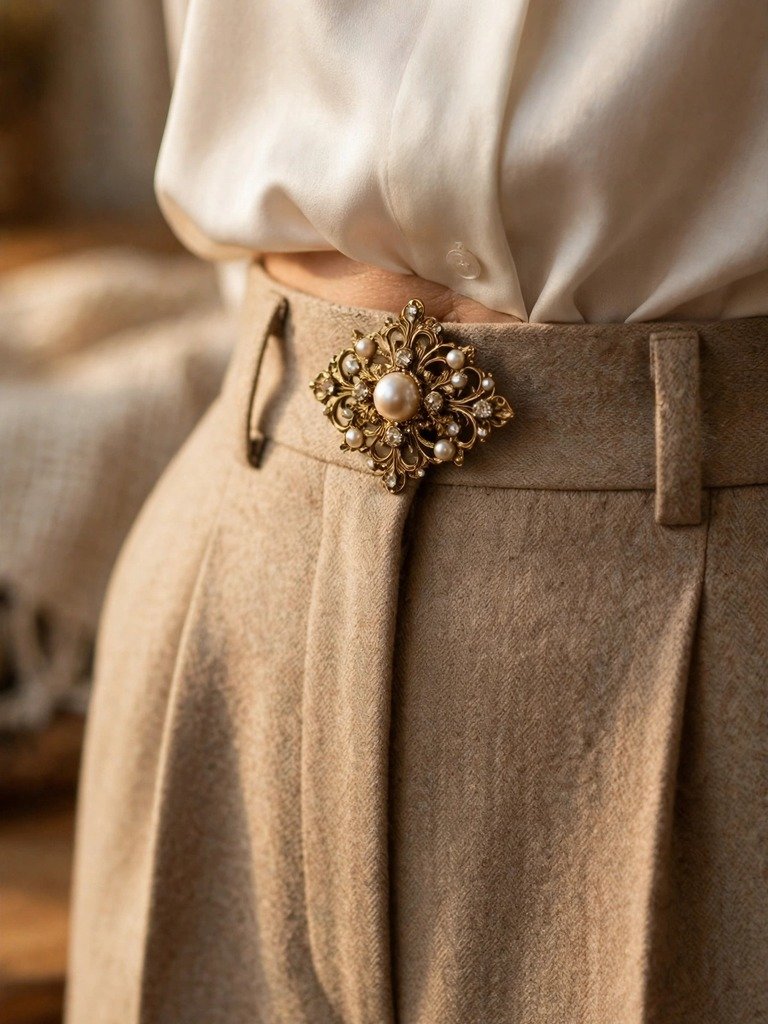
Pinning a brooch at the waistband of high-waisted trousers gathers a slightly loose blouse into a soft cinch: it pulls the eye to the narrowest point of the outfit and gives a boxy blouse a shape, and for trousers that gap slightly at the waist it genuinely beats a belt, because a belt adds a horizontal line while the pin adds a single point of interest. Choose a flat-backed pin for this spot — a domed, heavily jewelled brooch digs in when you sit down — and make sure the clasp grips two layers of fabric firmly. On the street this is the placement that makes the trend feel modern rather than heirloom-only.
4. The hat band — small pin, big payoff
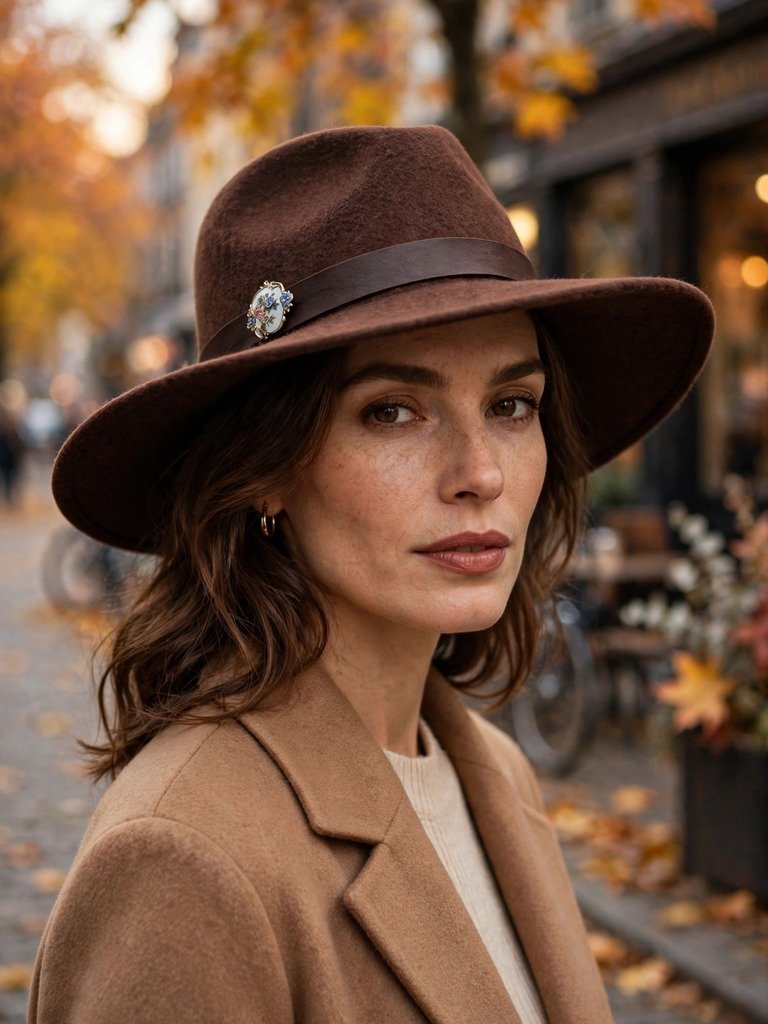
One small enamel pin on the band of a wide-brim felt hat is pure decoration, but decoration that rewards a second look: a hat already frames the face, and the pin gives people a second detail to notice without shouting. Its job is restraint — a quiet detail rather than a statement — and it works precisely because it is small. Use a pin with a secure locking clasp here, because a hat gets bumped, taken on and off, and hung up, and a loose pin will vanish. A large pin on a hat band tips the look into costume; a small one sits like it was always meant to be there.
5. The bag strap — a second pin, for the bag
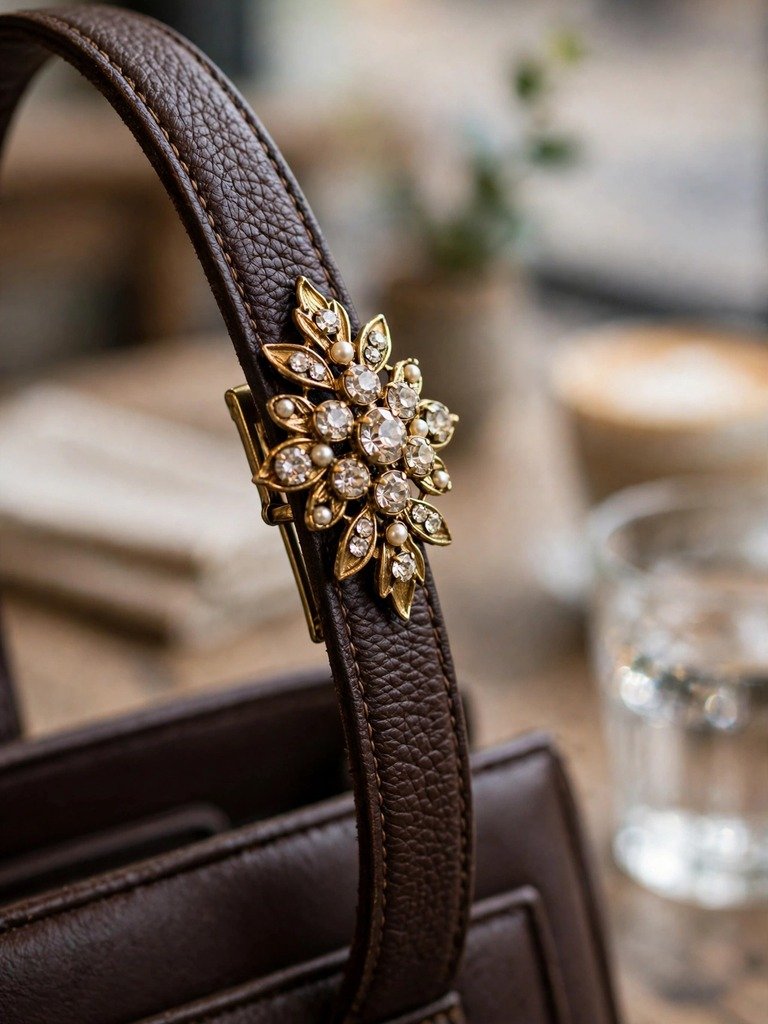
A rhinestone pin clipped to the strap of a structured handbag, near the top where the strap meets the bag, changes the bag’s personality for an afternoon without committing to anything — it solves the “my bag looks like everyone else’s bag” problem that comes with popular styles. A good bag is an investment piece carried for years, and a brooch lets you refresh it, which makes this the placement worth a second pin for, purely for bags. Use a pin with a secure clasp, on a bag carried by hand or on the shoulder with the pin facing outward. Skip it on a crossbody strap: the pin rubs against a coat and snags knitwear, so move it to the bag’s front loop instead.
6. The collar point — the detail that styles a plain shirt
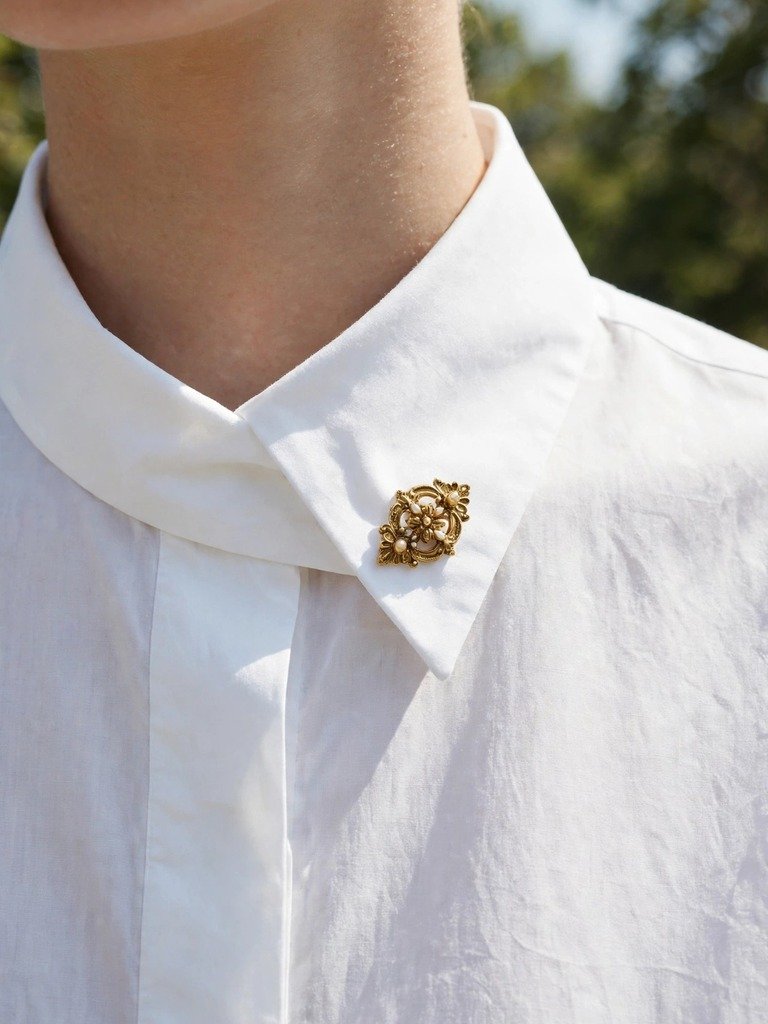
A crisp white shirt with one collar point pinned closed by a small gold brooch, the other side left open, is asymmetrical, slightly undone and completely deliberate — the kind of detail that makes a plain shirt look styled rather than just worn. The pin does a job here: it closes the collar, draws the eye upward to the face instead of down to a busy neckline, and no necklace is needed. It costs nothing beyond a pin you probably already own or can thrift for very little, and it works with shirts you already have. Keep the pin small and flat here: a big statement brooch on a collar point pulls the collar down and looks heavy, while a small, flat one sits like it was always meant to be there.
7. The coat — the grand finale, scaled up
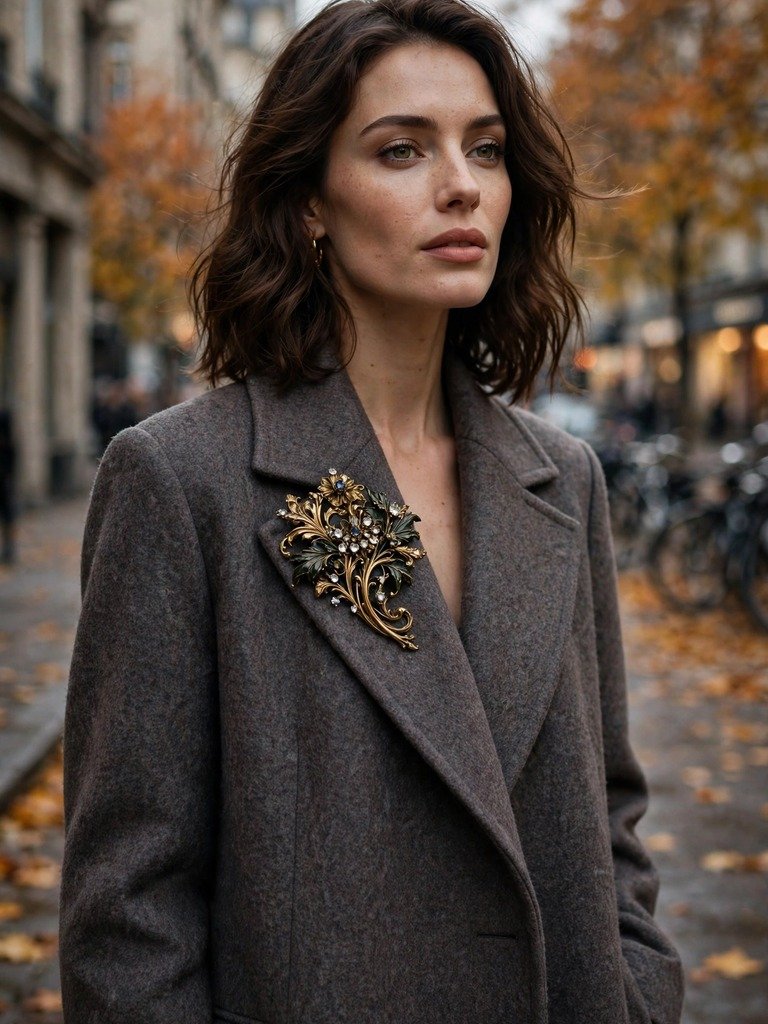
A long wool coat with the largest pin worn high on the chest is the runway version of the trend — the Armani and Ralph Lauren energy, translated to a real coat on a real street. A coat is a large, plain surface, and one strong brooch gives it a focal point the way a belt gives a dress a waist. This is pure decoration at scale, and scale is the rule: match the pin to the surface. Big coat, big pin. Small collar, small pin. Get that ratio wrong and the whole thing looks off; get it right and a ten-minute outfit looks like a stylist planned it.
What to buy: one pin, chosen well
Start with one thrifted vintage pin rather than a small set or a new collection — one good pin worn in seven places does more work than a box of pins worn the same way. Thrifted pins have the patina, unusual stones and craftsmanship that new mass-made pins often lack, and they cost far less. Before buying, check three things: clasp strength (it must grip two layers of fabric and stay shut), weight (a heavy pin pulls collars and waistbands down), and backing (flat-backed pins sit comfortably where you sit or lean; domed pins dig in). Check that the stones are secure, and clean gold-tone pins gently with a soft cloth. A small set only makes sense if you want different pins for different jobs — a pearl or crystal pin for scarves, a small flat gold pin for collars, a large statement pin for coats.
What to skip
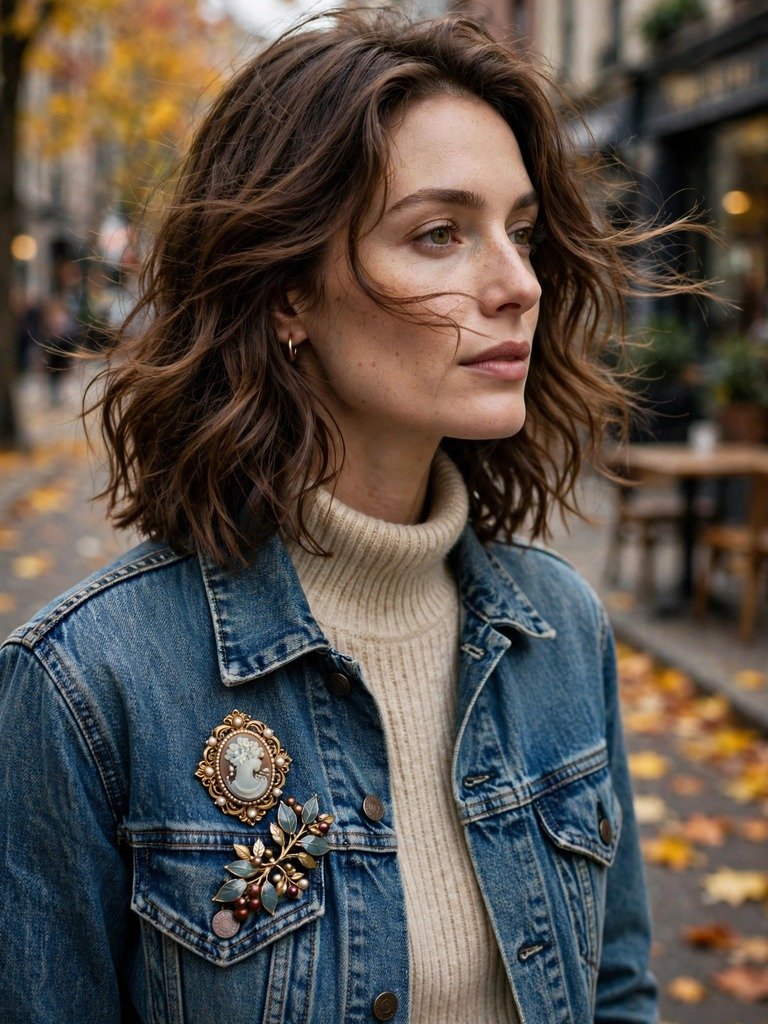
Skip clustering two or three brooches together on a denim jacket: each pin cancels the others out, and the look reads as a badge collection rather than a styling choice — one pin on denim works beautifully, while a cluster fights the fabric’s simplicity. Skip wearing a brooch on a very busy print, too: the pin disappears into the pattern, which is the worst outcome — an accessory that adds nothing but weight. The rule behind both is one focal point per outfit. If the print is loud, let it be the star. If the outfit is plain, let the pin be the star. Never make them compete.
The 3 Rules That Make It Work
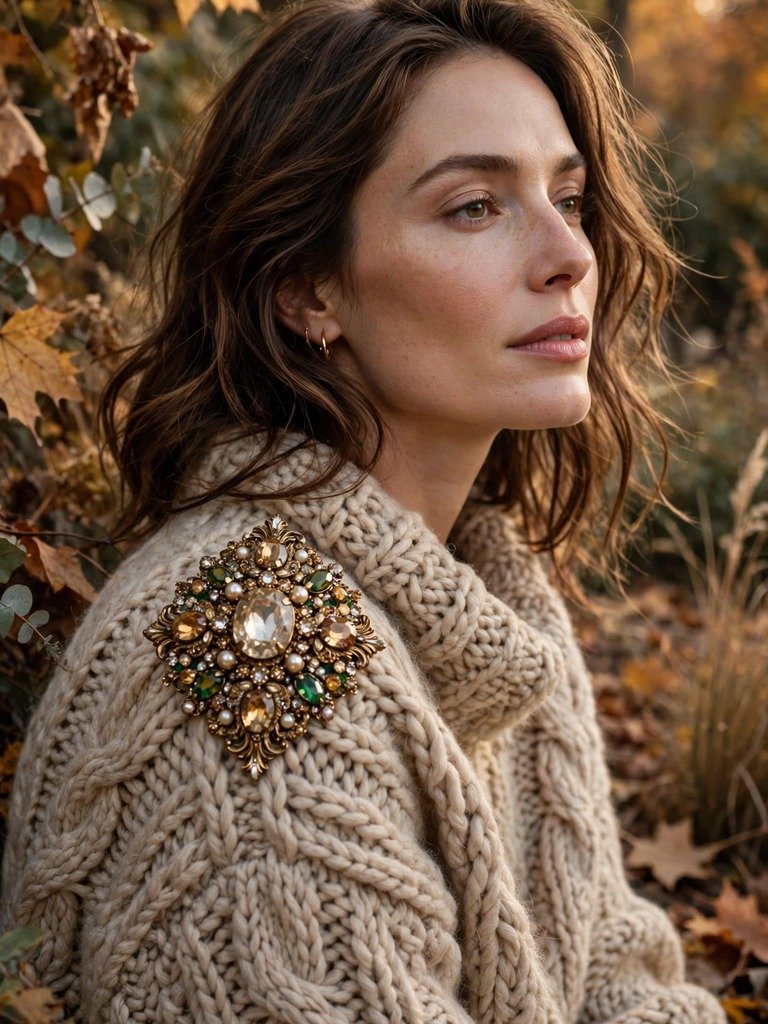
Rule one: one pin, as punctuation. A single pin forces you to be deliberate; the moment you add a second pin, the look collapses into clutter. Rule two: the placement must do a job or change a silhouette — hold a scarf, cinch a waist, close a collar, change a bag — or, if it is pure decoration, it must be the single focal point of a plain surface. Match the pin’s scale to its surface: small pins for collars and hat bands, big pins for coats and sweaters, flat pins for waistbands you will sit in. Rule three: one statement at a time — the pin is the only statement in the outfit, never one of several competing for attention. Follow these three rules and you do not need a stylist or a big budget, just one pin and a willingness to move it around. Thrifting is the smart way in: for more on thrifting well, my guide to the only 5 thrifted finds worth hunting for covers exactly how to spot quality in seconds.
Final Verdict: Is the Brooched Trend Worth Your Money?
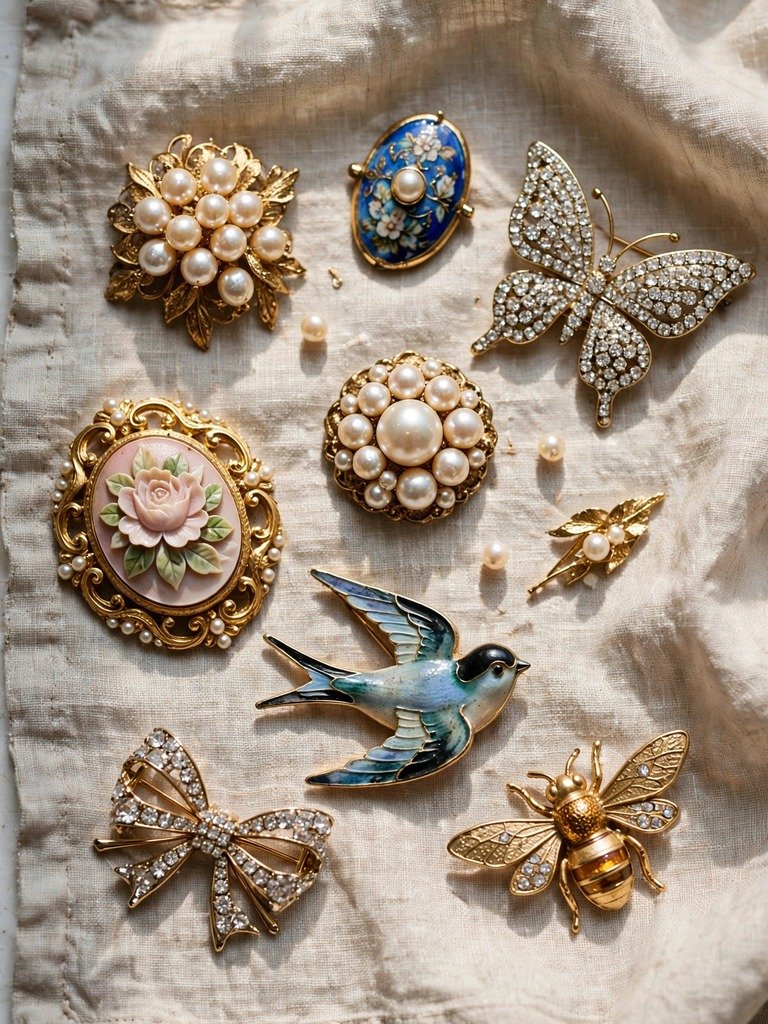
Yes — with one condition. The Brooched trend is worth your money only if you wear the pin in unexpected spots instead of defaulting to the lapel. Worn the old way, a brooch is a nice heirloom you forget. Worn as punctuation — scarf knot, waistband, collar point, bag strap — a single thrifted pin does more work than most of a jewellery box. The data backs the enthusiasm: “brooch for men suit” searches are up 90% and “heirloom jewelry” up 45%, which tells you this is a return to pieces with history, not a one-season joke. Start with one pin, thrifted, and wear it somewhere new. For bolder fall styling generally, my comparison of Makeup Maximalism vs Romantic Reverie and my guide to the chunky-gold cousin trend in Glamoratti: The 2026 ’80s Power-Glamour Trend, Piece by Piece — What to Buy and What to Skip will help you decide where a brooch fits your style. My verdict: buy the pin, skip the collection.
Frequently Asked Questions
What is the Brooched trend?
Brooched is Pinterest Predicts’ 2026 name for the brooch revival: vintage and heirloom-style pins worn as a visible styling detail rather than hidden jewellery. Searches for “brooch outfit ideas” peaked at an interest score of 92 out of 100 in early October 2026, and the trend appeared across the fall and winter 2026 runways.
Are brooches actually in style in 2026?
Yes. Beyond the Pinterest data, brooches were a standout jewellery story on the fall 2026 runways at Giorgio Armani, Ralph Lauren, and Tory Burch, and “brooch for men suit” searches rose 90%. The trend works because it is cheap to enter through thrifting and instantly personal.
Can I wear a brooch on a sweater or coat?
Absolutely — these are ideal surfaces. Use a larger, sturdier pin on a coat and a medium pin on a chunky knit sweater, pinned at the shoulder or chest. Make sure the clasp is strong enough to grip thick fabric, and check the back after sitting down.
How do I style a brooch without looking old-fashioned?
Wear it somewhere unexpected: a waistband, a scarf knot, a bag strap, or one collar point. Pair it with modern, simple clothes — a white shirt, straight trousers, a plain coat — so the pin reads as a deliberate detail rather than a costume piece.
Are vintage or thrifted brooches better than new ones?
For this trend, yes. Thrifted pins have the patina, unusual stones, and craftsmanship that new mass-made pins often lack, and they cost far less. Check the clasp, look for secure stones, and clean gold-tone pins gently with a soft cloth before wearing.
Can men wear brooches?
Yes, and the search data proves it: “brooch for men suit” is up 90%. A single restrained pin on a suit lapel, coat, or scarf is the easiest entry point, and it reads as confident rather than costume when the rest of the outfit stays simple.
How many brooches should I wear at once?
One. A single pin with a clear focal point beats a cluster every time. Clusters on denim or busy prints look cluttered and cancel each other out. One pin, one focal point, one deliberate placement — that is the whole rule.

Founder and editor of MubStyle, where he covers fashion, beauty, home decor and wellness. Based in Multan, Pakistan.