Pinterest Says Winter Hair Braid Searches Rose 10,000% — Here Are the 10 Braids Worth Trying
By Mehboob Hussain
Winter braids aren’t just pretty — they’re the only hairstyle that actually protects hair from cold, dry air and hat hair. That is the idea I kept coming back to while I looked at what Pinterest trend trackers are reporting for November 2026: searches for “winter hair braid” are up more than 10,000% year over year, and the surge makes complete sense to me. A braid is not decoration in winter. It is armour. Loose hair under a beanie turns into a tangled, static-charged mess by lunchtime, and a scarf rubs the ends raw all day long. A braid keeps everything contained, and the trick — the whole point of this guide — is choosing braids that survive a beanie and a scarf without frizzing out by noon. Not every braid does. Some look lovely in a photo and fall apart the moment you pull a hat over them. The ten below are the ones I would actually recommend, with honest notes on where each one shines and where it lets you down. My pick for most people is the classic French braid, because it is the sturdiest base of the lot, but if you want drama, the fishtail and the milkmaid braid earn their place too. I would skip the bubble braid on a truly windy day, and I will tell you why when we get there.
Before we start, one practical note that applies to every braid here: winter hair is dry hair, and dry hair frizzes the moment it is handled. A pea-sized drop of hair oil or leave-in cream smoothed over the lengths before you braid makes more difference than any technique. Braid on slightly damp or second-day hair rather than freshly washed, bone-dry hair, and always finish with a light-hold spray. If you love winter colour as much as I do, my guide to pink-a-boo hair ideas pairs beautifully with several of these braids — a soft pink tint looks especially good woven through a fishtail.
1. The Classic French Braid — The Beanie-Proof Base
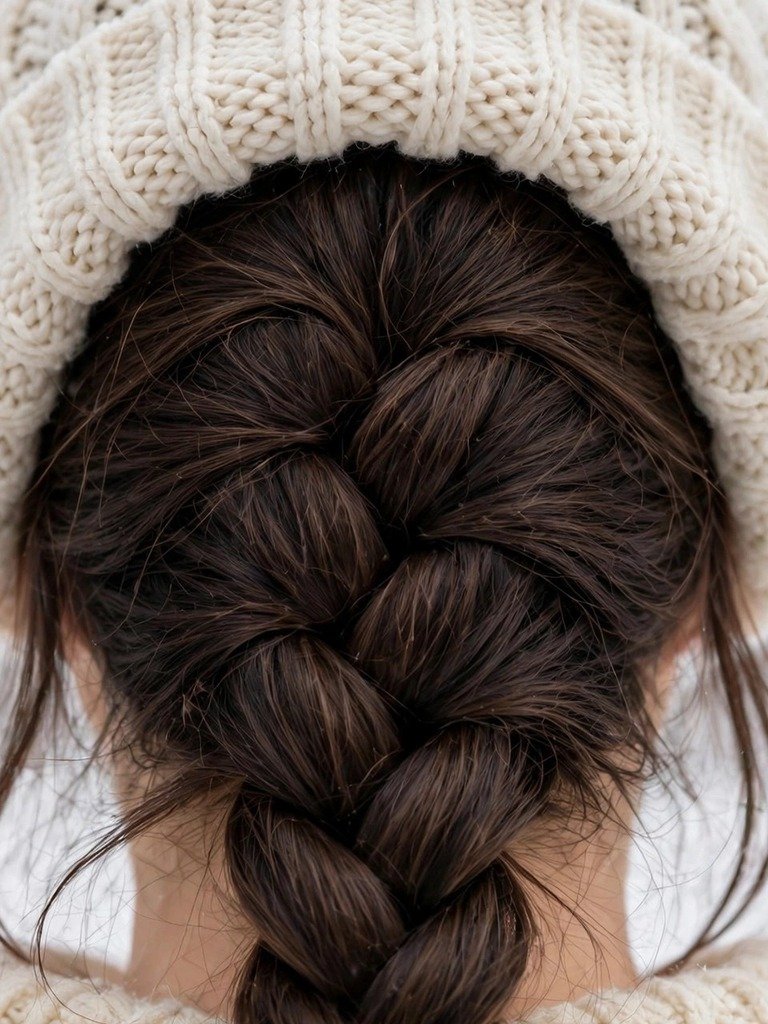
If you learn only one braid this winter, make it this one. The French braid sits flat against the head, which is exactly why it survives a beanie: there is nothing sticking out for the hat to catch on, and nothing to crush. Start at the crown, add small sections as you work down, and keep the tension even — not tight enough to hurt, just firm enough that the braid holds its shape. Keep the braid a little looser at the front, around the hairline, and pull it tight only from the ears down. A French braid also hides a multitude of winter sins. Greasy roots on day three? A French braid makes them invisible. Flyaways from dry air? They get tucked into the braid as you go. Finish the end with a snag-free elastic, tuck the tail under a scarf, and it will still look neat at dinner. This is the braid I would choose for a long commute, a school run, or any day you will be in and out of hats and hoods.
2. The Dutch Braid — The Reverse Braid With Real Drama
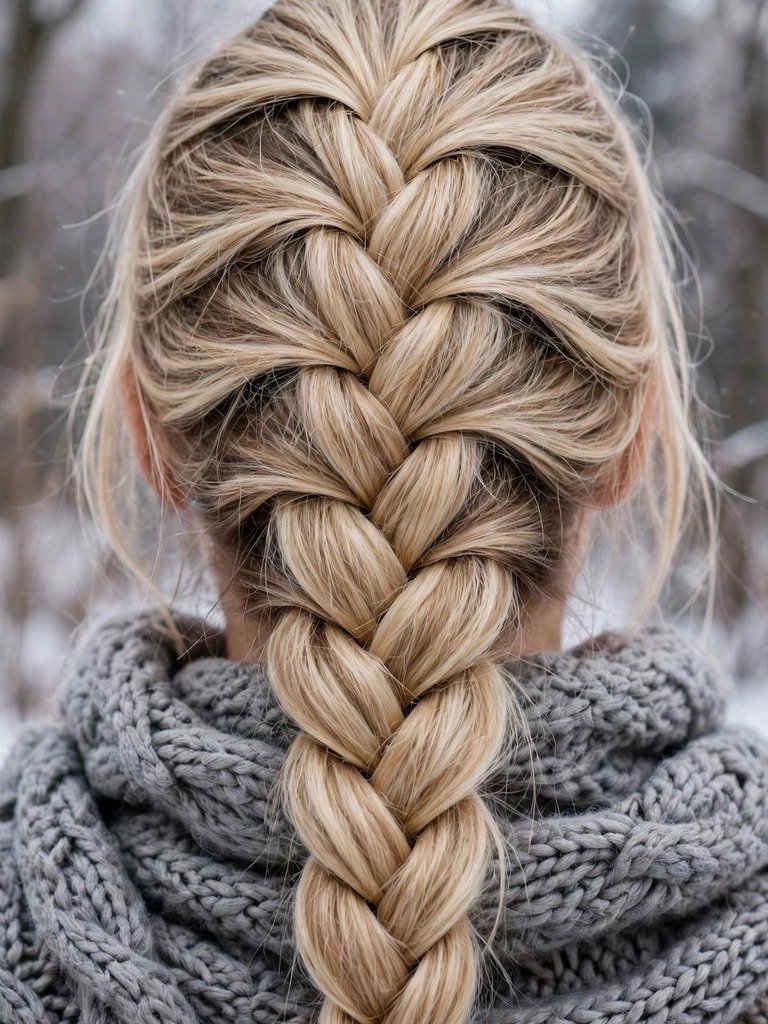
The Dutch braid is the French braid’s bolder sister: instead of crossing strands over the top, you cross them underneath, so the braid sits on top of the hair like a rope. The effect is striking, and in my opinion it photographs better than any other braid on this list — the raised texture catches winter light beautifully. The trade-off is honest: because the braid stands proud of the head, a tight beanie will flatten it, so wear this one mostly indoors, or with a loose beret instead of a snug knit hat. It also takes a little more practice than the French braid, because the underhand motion feels backwards at first. Practise twice on a quiet evening and your hands will learn it. One detail I love: pancake the braid gently — tug the edges outward — and it doubles in width, which looks wonderful with a chunky scarf. Pair it with a cool-toned outfit and the effect is even stronger; if you are building a winter palette, my Arctic Frost makeup guide sits on the same icy wavelength.
3. The Fishtail Braid — The One That Looks Harder Than It Is
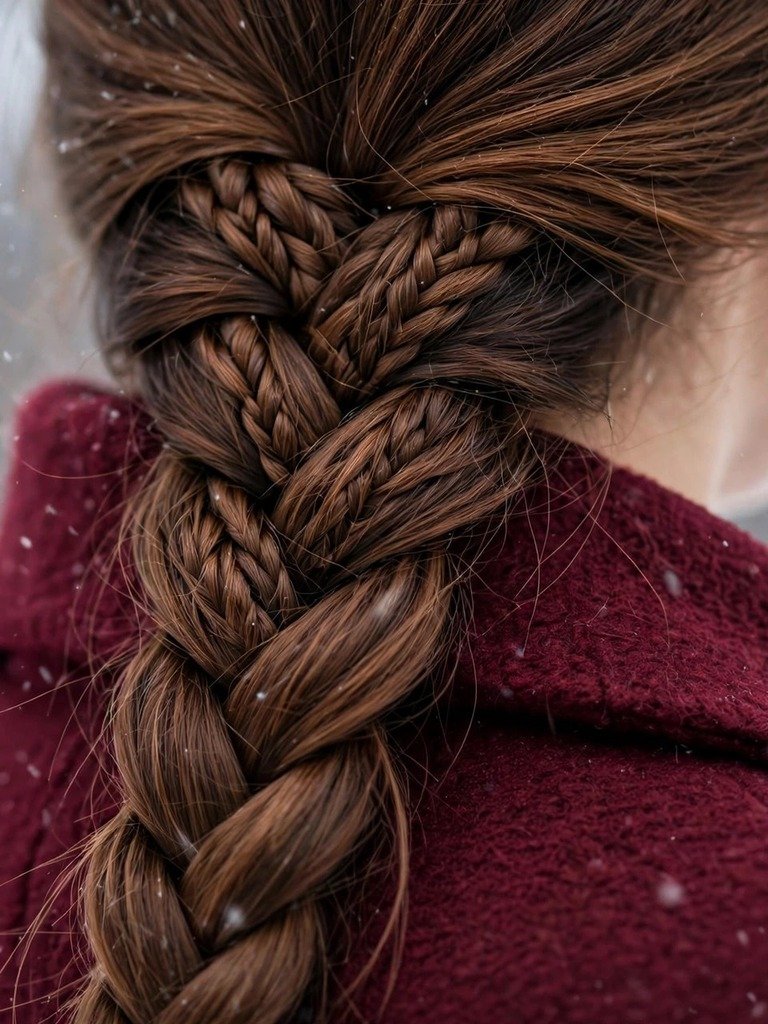
The fishtail has a reputation for being fiddly, and I think that reputation is unfair. You only ever handle two sections, taking a thin strand from the outside of one and crossing it to the other. It is slow, yes — give yourself ten unhurried minutes the first time — but it is not difficult, and the result is the most intricate-looking braid here. The fine weave is also genuinely practical in winter: the small sections grip the hair tightly, so a fishtail rarely unravels, even under a scarf. It works best on long hair, past the shoulders at least, and it looks best slightly messy, so do not aim for perfection. My honest note: a fishtail on very fine hair can look thin, so add a little texture spray first and pancake the finished braid to fatten it up. On thick hair, it is pure luxury. This is the braid I would pick for a winter dinner or a family gathering — it reads as effortful and elegant, even though the technique is just patience.
4. The Bubble Braid — Fun, Fast, and a Little Fragile
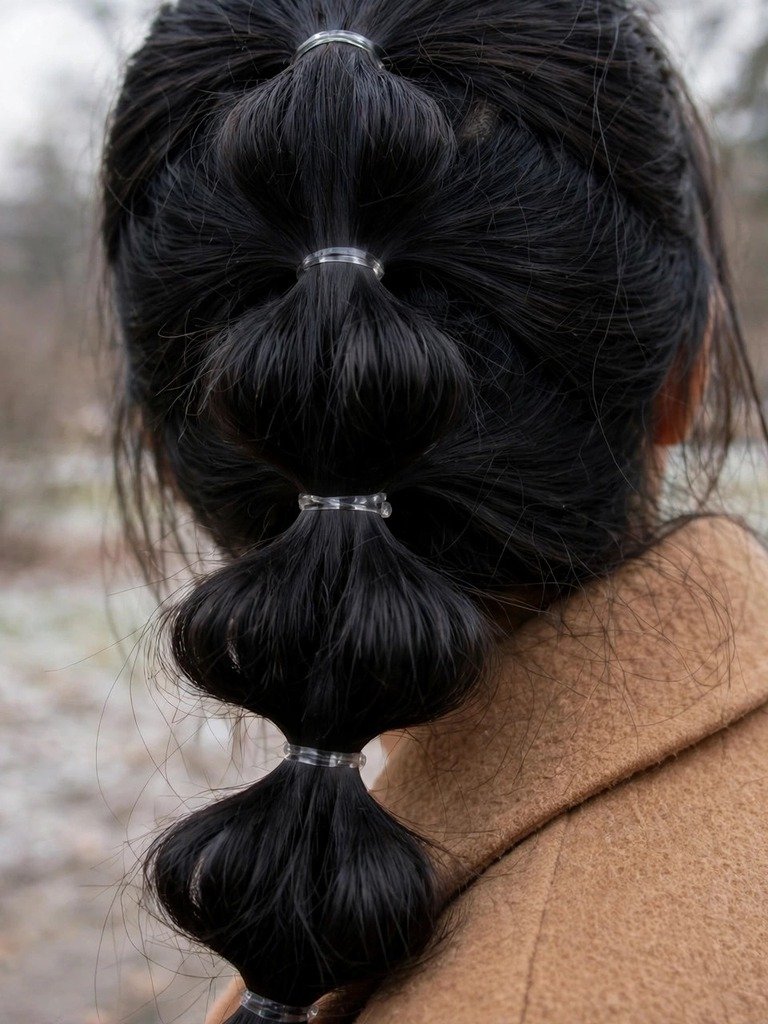
The bubble braid is the easiest style on this list and the most fun: tie a ponytail, add elastics every few inches, and puff out each section into a bubble. No braiding skill required at all, which makes it perfect for busy mornings or for younger girls. I love how playful it looks, especially with a colourful scarf. But here is the honest part I promised: this is the least beanie-proof braid here. A hat crushes the bubbles flat, and a scarf catches on the elastics. So wear it on days when your head stays uncovered, or accept that it is a short-lived look — lovely for a couple of hours, not an all-day style. Keep the bubbles even by measuring the gaps with your fingers, and use clear elastics so nothing distracts from the shape. On fine hair, backcomb each section lightly before puffing it out, or the bubbles will deflate. It is a weekend braid, in my view — charming, cheerful, and best enjoyed without a hat in sight.
5. The Milkmaid Braid — The Crown That Keeps Hair Off Your Neck
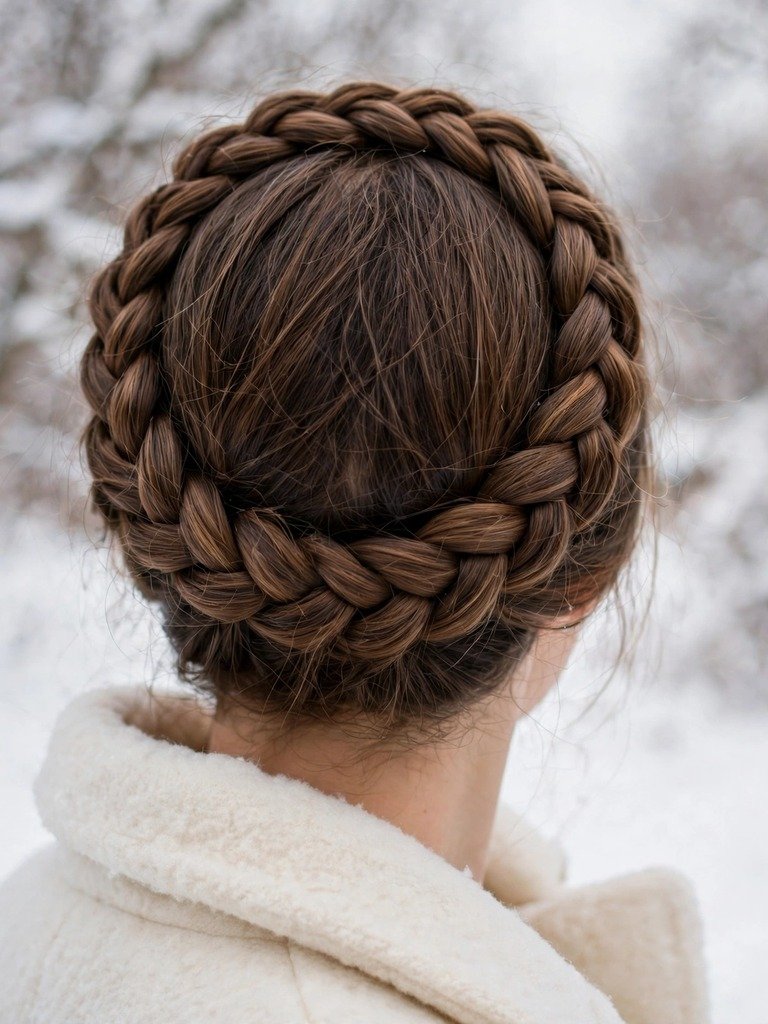
The milkmaid braid — two braids pinned up around the head like a crown — is the most romantic style here, and it solves a problem nobody talks about: scarf rub. When your hair is pinned up off your neck, your scarf cannot tangle in it, and your coat collar cannot chew the ends. Braid two low pigtails, cross them over the top of your head, and pin them flat with bobby pins that match your hair colour. This style only works if the braids are pinned securely, so use more pins than you think you need — six at minimum — crossed in an X so they grip. It suits medium to long hair best, and it looks wonderful with a soft, face-framing wisp left out at each temple. The downside is that it takes time and a mirror, so save it for occasions rather than rushed mornings. But for a winter wedding guest, a festive lunch, or any day you want to feel like the main character, nothing else on this list comes close.
6. The Side-Swept Braid — The Effortless One
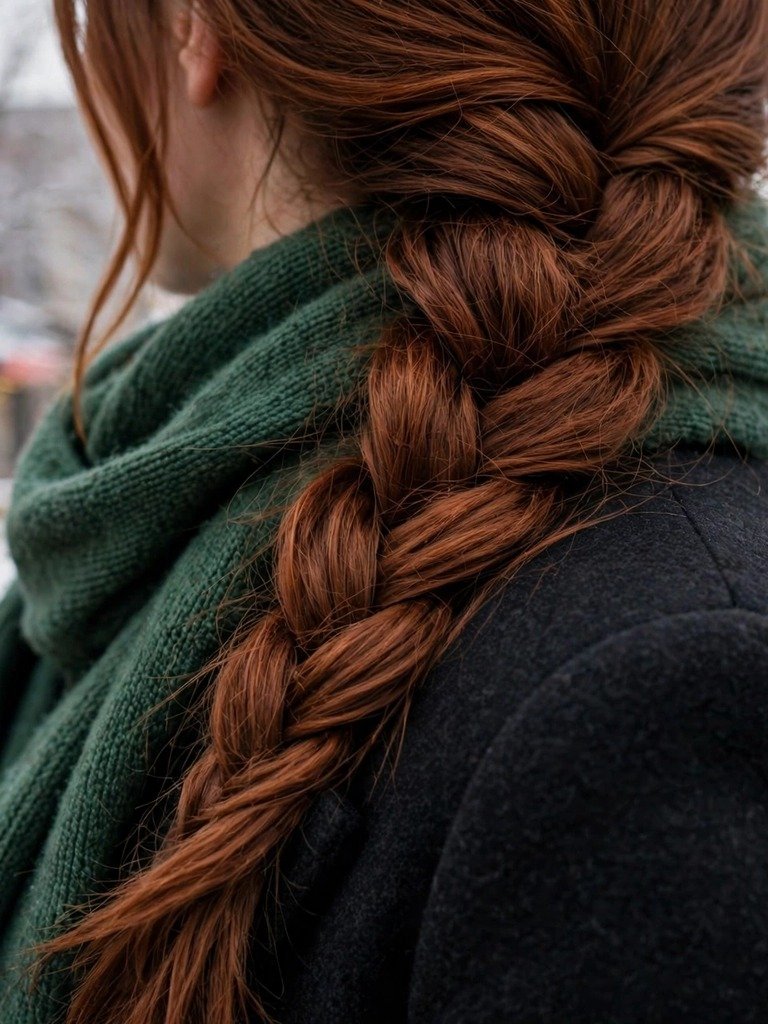
The side-swept braid is what I reach for when I want to look put-together with almost no effort: sweep all the hair to one side and braid loosely over one shoulder. It is soft and forgiving — uneven sections just add to the charm. It also has a practical winter advantage: with the braid in front of your shoulder, you can see it, so you can fix a loose strand without a mirror, and your scarf sits behind it instead of on top of it. On very windy days, a side braid whips around and frizzes at the ends, so keep a small elastic in your coat pocket for a quick rescue. This style flatters almost everyone, and it is especially lovely on auburn or copper hair, where the braid shows off the colour variation. If your winter wardrobe leans warm and earthy, it pairs beautifully with rich tights and boots — see my guide on how to wear colored tights for the full cold-weather outfit picture. Keep the braid loose and low, and let a few face-framing pieces escape.
7. Double Dutch Braids — The Boxer Braids That Do Not Budge
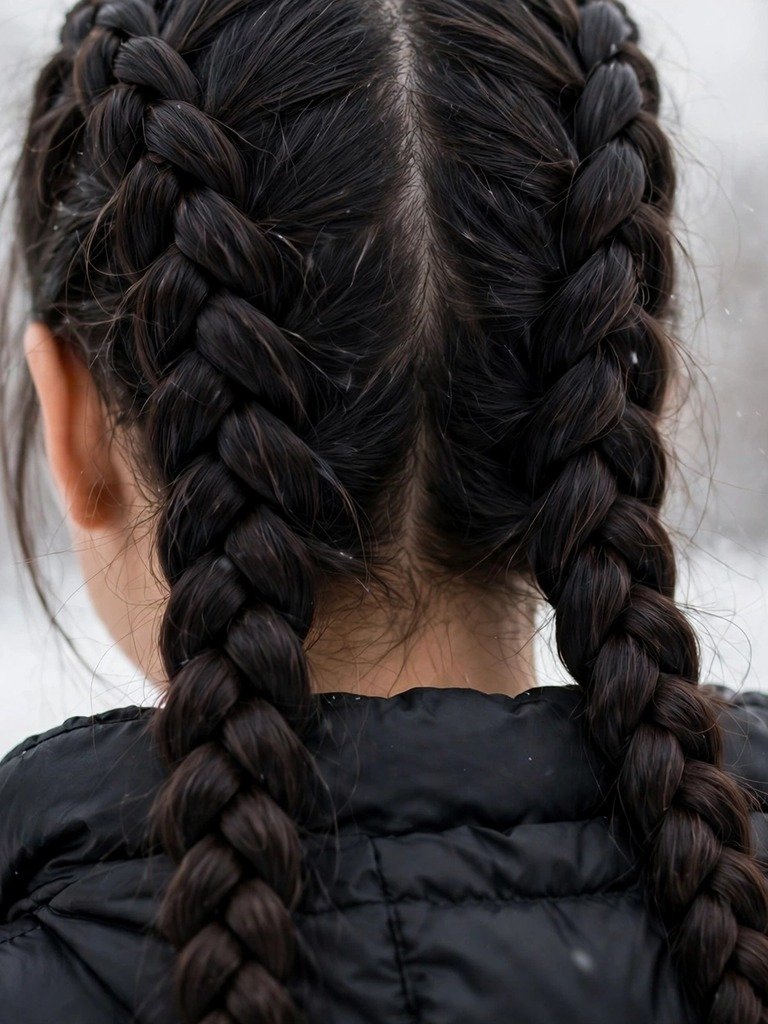
Double Dutch braids — the boxer braids — are the toughest style on this list, and I mean that as a compliment. Two tight Dutch braids, one on each side, lock the hair down completely. Hats, hoods, scarves, wind, a long walk in the cold: none of it moves them. This is the braid for active winter days, for travel, for days when you will be outdoors for hours and do not want to think about your hair at all. The catch is that they are the most time-consuming to do on yourself, because you braid blind at the back of your head and the two sides need to match. Part the hair dead centre, work one side at a time, and do not rush the first section. They also pull the hairline taut, so keep the front sections gentle if you have a sensitive scalp. Done well, they look sporty and sharp, and they last until you take them out — sometimes two days, with a silk scarf at night.
8. The Braided Low Bun — The Elegant Fix for Hat Hair
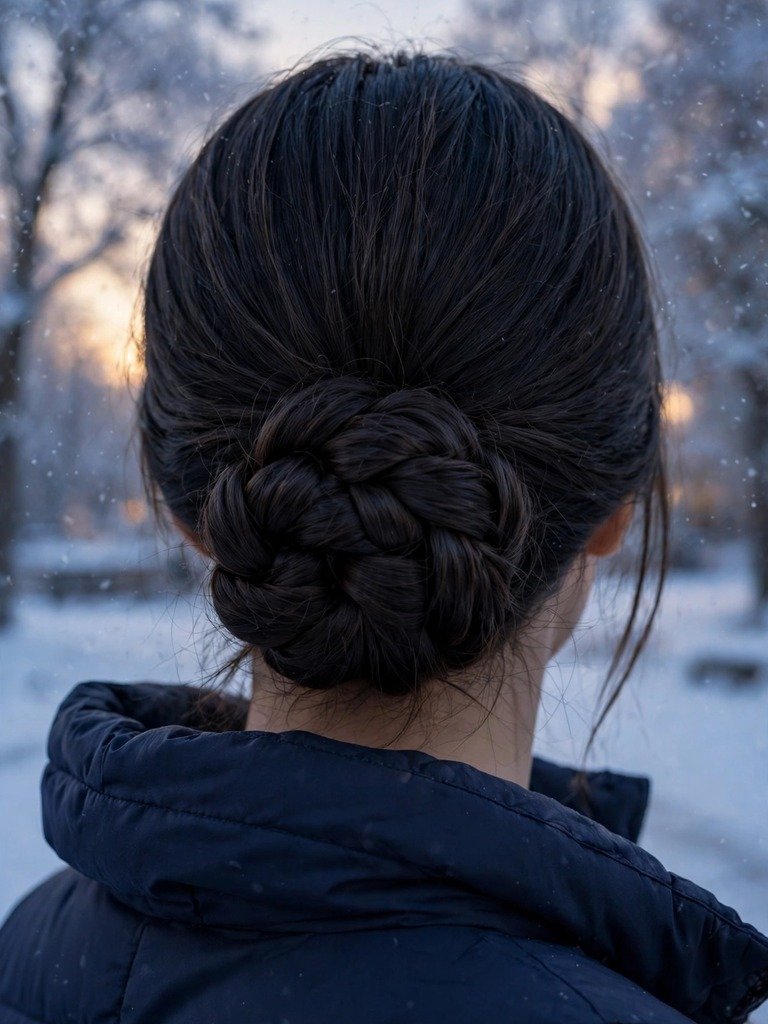
Hat hair is the great winter enemy, and the braided low bun is my favourite answer to it. Braid the hair — a simple three-strand braid is enough — then coil it into a low bun at the nape and pin it. Because everything sits low, a beanie fits over it without squashing anything, and when you take the hat off indoors, the bun is still perfect. There is no flattened crown, no dent across the forehead, no frizz halo. This is the style I would choose for the office, for a formal lunch, or for any day that moves between outdoors and indoors. The braid inside the bun adds texture and grip, so it holds far better than a plain bun, especially on slippery, fine hair. A few pins and a spritz of hairspray are all it needs. If your hair is very long, wrap the braid twice around the base; if it is shorter, a small clear elastic at the braid’s end disappears inside the coil.
9. The Rope Braid — Two Strands, Five Minutes, Zero Fuss
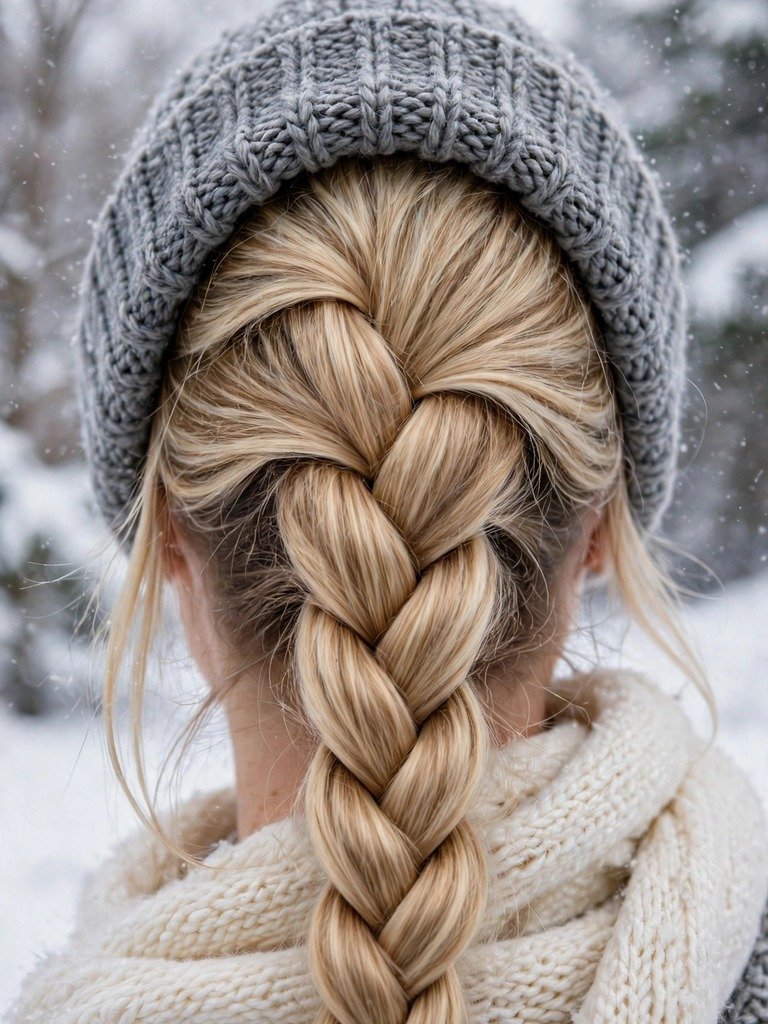
The rope braid — also called a twist braid — uses just two strands twisted around each other, and it is the fastest braid here: five minutes, even on a rushed morning. Split the hair in two, twist each section in the same direction, then wind them around each other in the opposite direction and secure the end. The opposing twist is what locks it in place, so do not skip that detail. I like this one because it is forgiving on dry winter hair: the smooth, rope-like finish hides flyaways rather than showing them, and it looks sleek with almost no product. It also sits flat enough to work under a beanie, though not quite as flat as a French braid. A rope braid can unravel if the end is not secured properly, so use a proper elastic and fold the very tip under before tying. It is a wonderful everyday braid, a great gym braid, and the one I would teach a beginner first — if you can twist, you can rope-braid.
10. The Braided Ponytail — The One That Does Everything
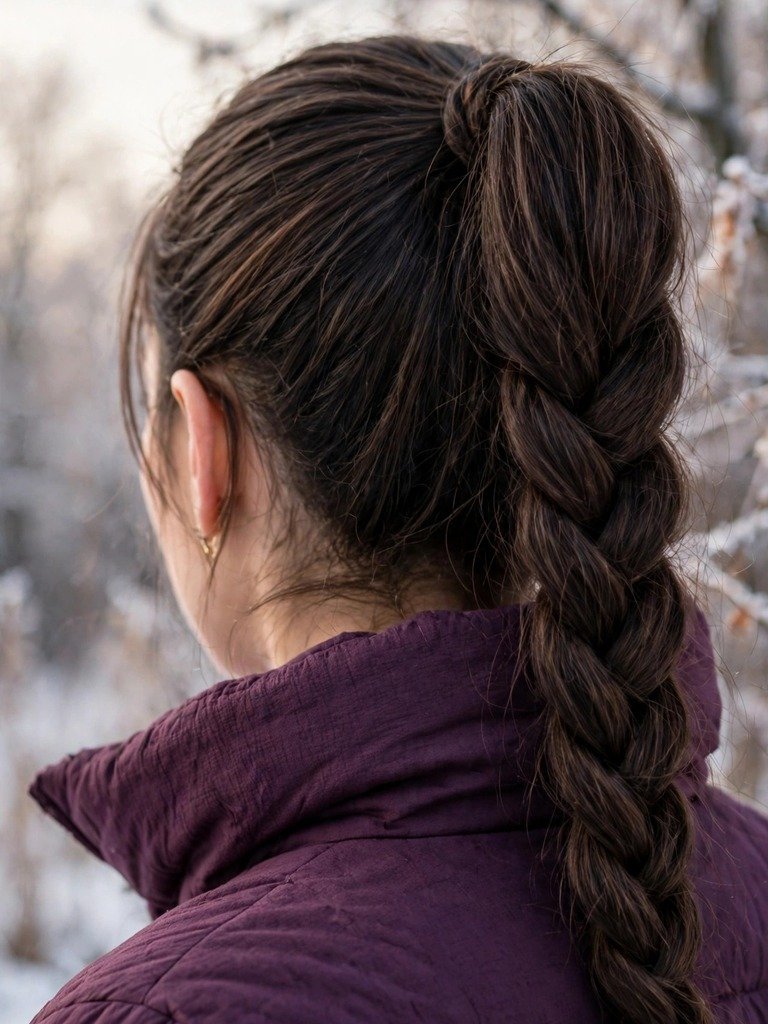
The braided ponytail is the all-rounder that closes this list: a high or mid ponytail with a braid running through it, combining the energy of a ponytail with the control of a braid. It keeps hair off your neck and out of your scarf, it survives a hat better than a loose ponytail ever could, and it looks polished enough for work and relaxed enough for the weekend. Start with a secure ponytail — a tight base is essential, because a loose base sags by noon — then braid the tail and finish with a small elastic. Wrap a thin strand of hair around the elastic to hide it, which instantly makes the whole style look expensive. This is the braid I would pick when I cannot decide — it never looks wrong, it holds all day, and it takes about seven minutes. In a list full of specialists, the braided ponytail is the reliable generalist, and every winter wardrobe needs one.
How I Would Choose: A Quick Cheat Sheet
If you only remember one thing from this guide, remember the beanie test: if a braid sits flat, it survives winter; if it sticks out, save it for hat-free days. French, rope and braided low bun pass the test with flying colours. Double Dutch passes too, and lasts the longest. Dutch and fishtail are the prettiest but need a looser hat or no hat at all. Milkmaid wins on romance and on keeping hair out of your scarf. Side-swept is the fastest way to look elegant, and the bubble braid is the most fun — just know its limits. Whichever you pick, start with a little oil, braid on second-day hair, and finish with light-hold spray. Winter is hard on hair, but a good braid turns the season’s worst habits — hats, scarves, dry air, static — into the very reason your hair looks its best.
Frequently Asked Questions
Why are winter hair braids suddenly so popular?
Pinterest trend trackers report that searches for “winter hair braid” are up more than 10,000% year over year in November 2026. In my view, the surge is practical as much as fashionable: braids protect hair from cold, dry air, hat hair and scarf friction, so they solve real winter problems while looking good.
Which braid is best under a beanie?
The classic French braid is my top pick — it sits flat against the head, so a beanie slides over it without crushing anything. The rope braid and the braided low bun are also strong choices, and double Dutch braids hold up under any hat at all.
Do braids actually protect hair in winter?
Yes, in a real and simple way: a braid keeps the lengths contained, so the ends are not rubbing against coat collars and scarves all day, and the hair is less exposed to cold, dry air. Add a little oil before braiding and the protection is even better.
Can I braid short hair in winter?
You can, with the right styles. A French braid works once hair reaches the chin, and a side-swept braid or a small rope braid works even sooner. The milkmaid braid and the fishtail need more length, so I would skip those until your hair grows out.
How do I stop my braids from frizzing in dry winter air?
Smooth a pea-sized drop of hair oil or leave-in cream over the lengths before you braid, braid on slightly damp or second-day hair rather than freshly washed hair, and finish with a light-hold spray. A silk scarf at night also helps braids last into a second day.
Which braid lasts the longest?
Double Dutch boxer braids last the longest — they are the tightest and most secure style here, and they can hold for two days with a silk scarf at night. The French braid and the fishtail are close behind, while the bubble braid is the shortest-lived.
Are braids bad for your hair if you wear them every day?
Not if you keep them gentle. The risk comes from braiding too tightly at the hairline or pulling the same sections every day. Vary your styles, keep the front loose, never braid soaking-wet hair, and give your hair a loose day between tight styles.
What should I wear with winter braids?
Braids suit almost any winter outfit, but they look especially good with chunky scarves, wool coats and knit hats — the textures play off each other. A side-swept braid pairs beautifully with coloured tights and boots, and a Dutch braid looks striking with cool, icy makeup tones.
By Mehboob Hussain — Mehboob Hussain is the founder and editor of MubStyle, where he covers fashion, beauty, home decor and wellness. He personally reviews and edits every article on MubStyle, and directs the original visuals for each guide. Based in Multan, Pakistan.

Founder and editor of MubStyle, where he covers fashion, beauty, home decor and wellness. Based in Multan, Pakistan.