I Tried Cozy Cardio for 7 Days — the TikTok Trend That’s Actually Worth It
By Mehboob Hussain
My honest starting point: I rolled my eyes at cozy cardio
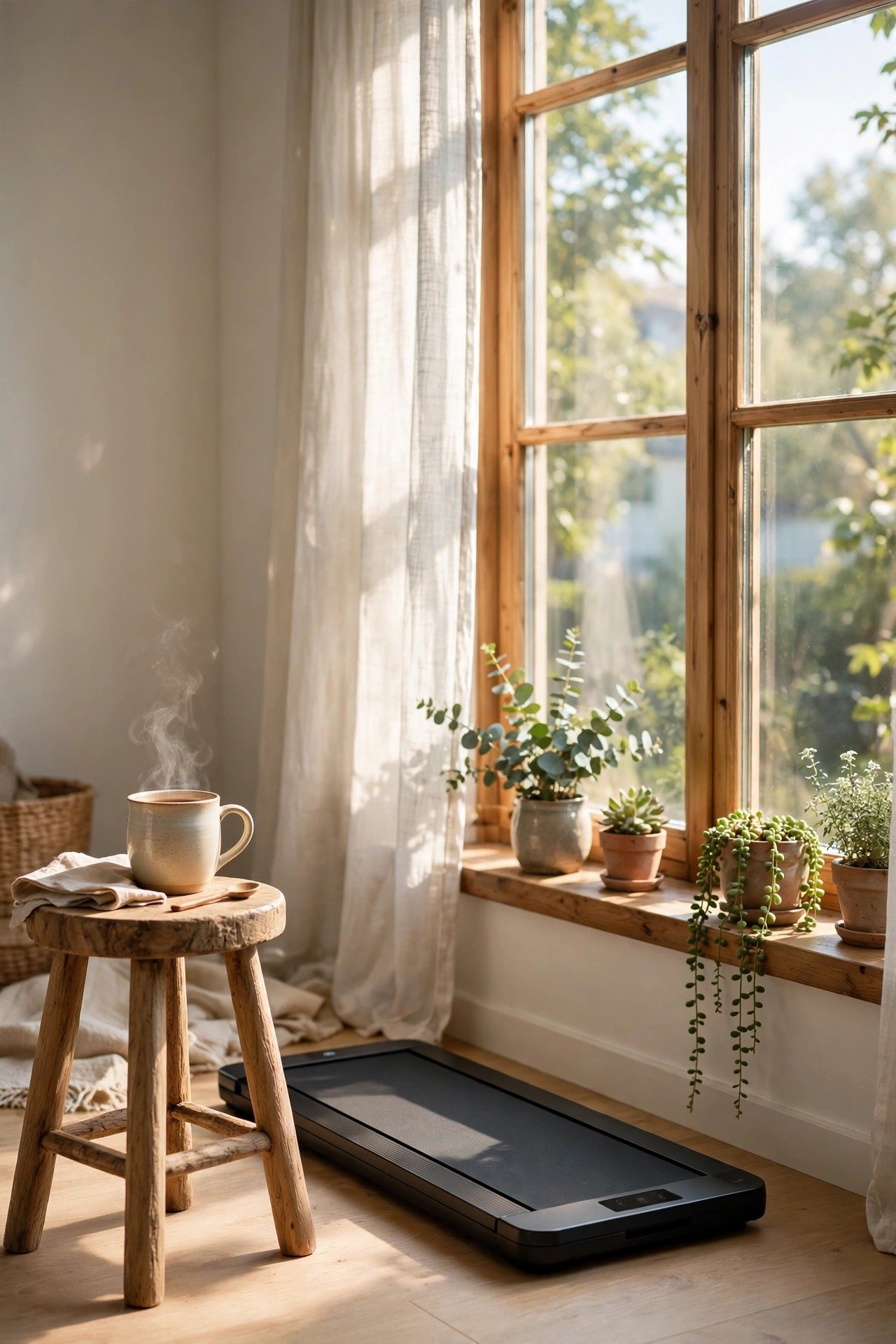
I’ll be straight with you: when cozy cardio first flooded my feed, I dismissed it as another soft-focus TikTok gimmick — fairy lights, a candle, and a slow walk rebranded as a “workout.” I’ve watched enough fitness trends cycle through to know most of them are designed for people who already work out, which makes them useless for the rest of us. But the numbers kept nagging at me. Creator Hope Zuckerbrow’s #cozycardio videos have pulled in millions of views, and the trend refuses to die the way most TikTok fitness fads do. So I made a deal with myself: exactly seven days, thirty minutes a day, in my actual living room, with my actual schedule. If it couldn’t survive one real week of my life, it wasn’t worth a single paragraph. What I found surprised me enough that I’m writing this instead of the eye-roll piece I had planned — and my verdict isn’t what I expected on day one.
What cozy cardio actually is (and isn’t)
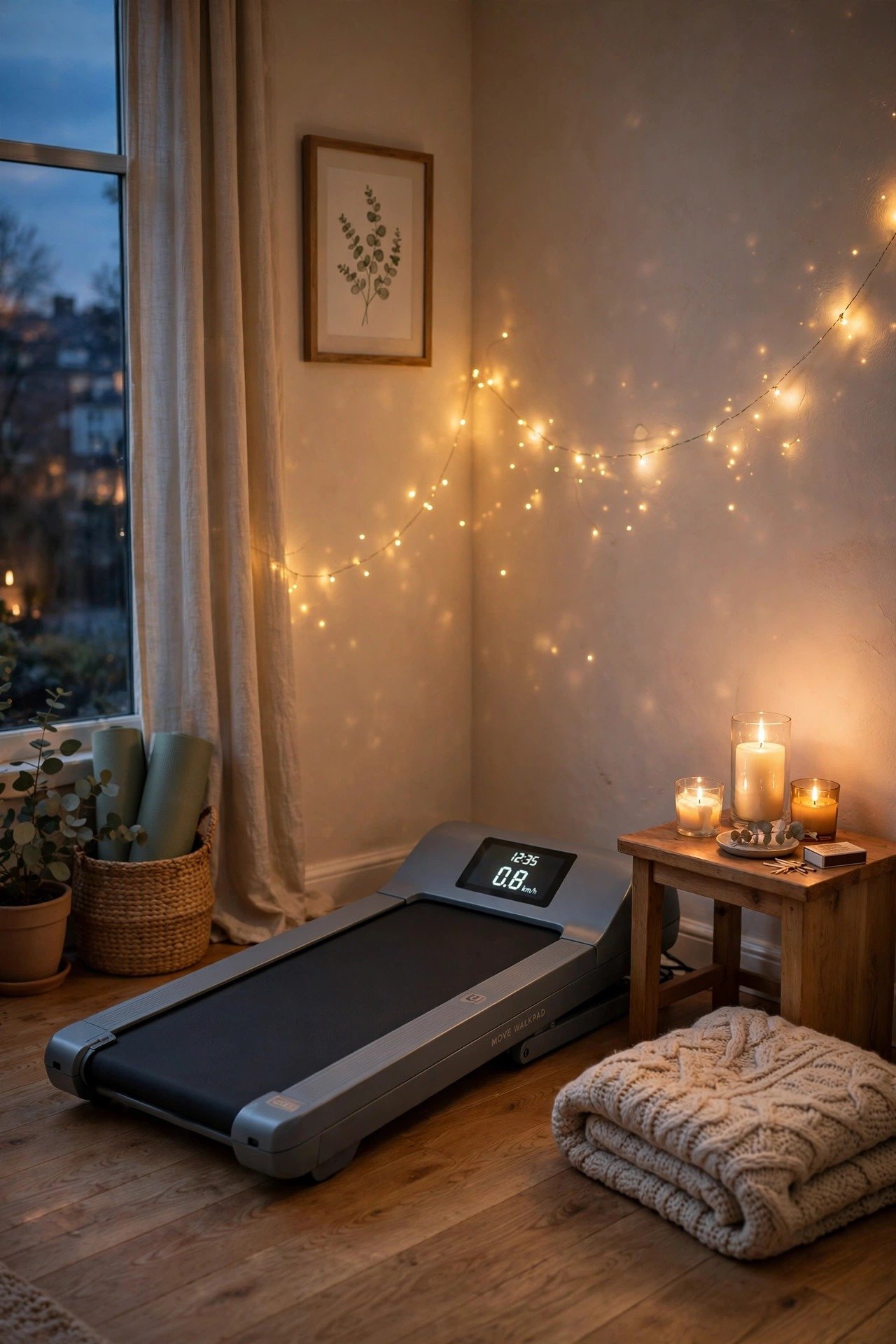
Strip away the aesthetic and cozy cardio is disarmingly simple: low-intensity walking — usually on a slim under-desk walking pad — done in a deliberately pleasant environment. Dim lamps instead of overhead glare. Fairy lights. A candle or two. Your comfort show on a tablet. Warm socks. The “workout” part is intentionally unremarkable; the setup is the entire method. Now here’s what it isn’t, because the internet loves to oversell: it is not a weight-loss hack, and anyone selling it as one is lying to you. It is not a replacement for serious training if you’re chasing strength or speed. And it is definitely not “just walking with extra steps” — that framing misses the point completely. The candles aren’t decoration; they’re behavioral design. Every element of the setup exists to remove one reason you’d skip the session. Once I understood that, the whole trend stopped looking silly and started looking clever.
How I set mine up: the corner, the gear, the show
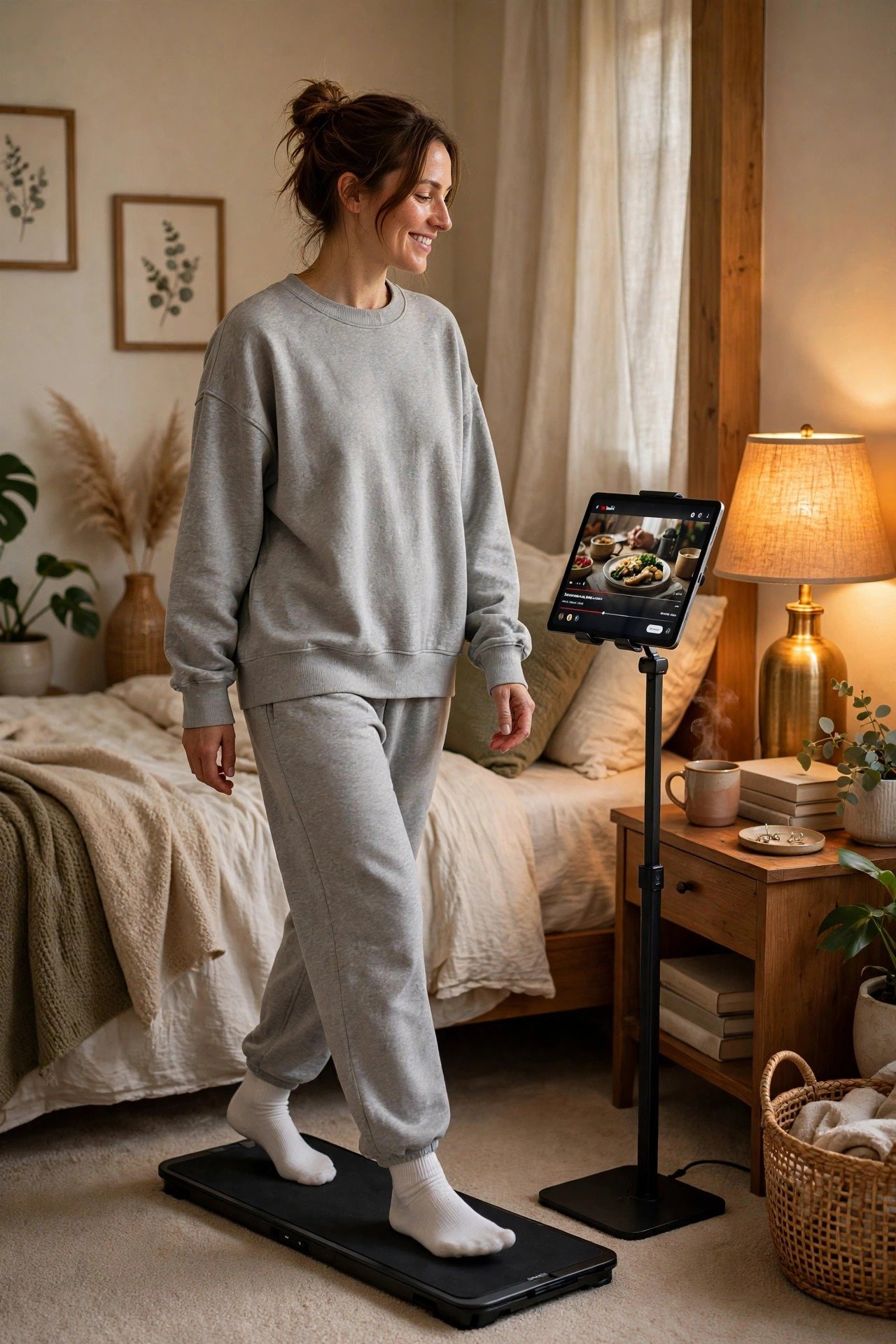
I claimed a dead corner of my living room — about the footprint of a prayer mat — and built the whole station in one evening. The gear list was short: a basic walking pad with a remote, a cheap tablet stand, a string of fairy lights I already owned, two candles from the kitchen shelf, and my everyday headphones. Total new spending: zero, because I borrowed the pad for the test and everything else was already in the house. That matters, because my first judgment call of the week is this: do not buy anything until you’ve done three sessions with what you own. Walk in place in your socks in front of your TV if you must — the test is whether you enjoy the ritual, not whether your gear is photogenic. For the show, I picked a comfort rewatch, not a new series, and I’d die on this hill: a brand-new thriller makes you crank the speed and white-knuckle the remote; a show you’ve seen four times lets your body settle into an easy, sustainable pace. Cozy cardio rewards the familiar.
Days 1–2: the novelty high
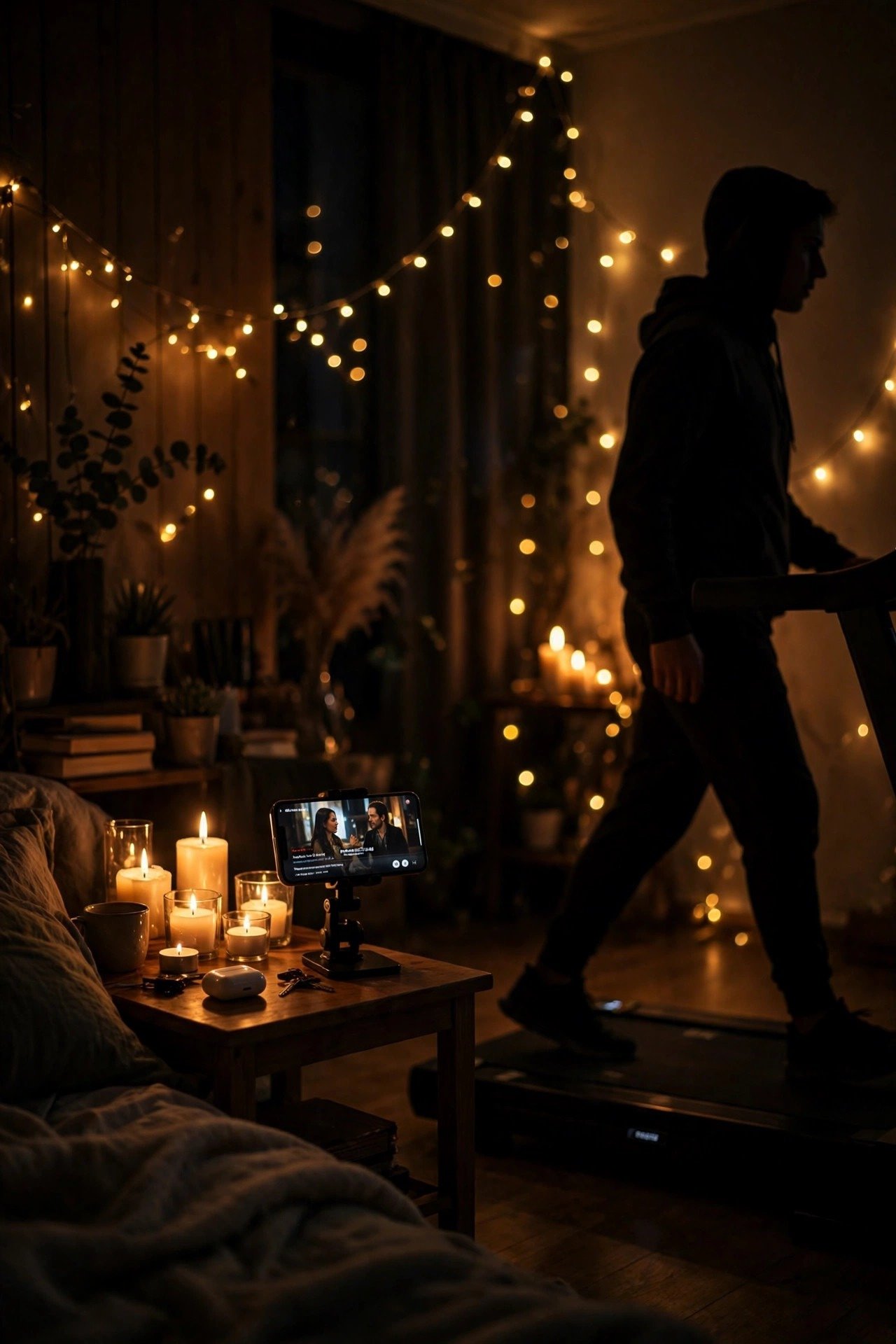
Day one felt ridiculous, and I’m not too proud to admit I laughed at myself while lighting a candle to go for a walk that went nowhere. But here’s the thing: the thirty minutes genuinely flew by. The show carried the time, the warm light made 9 PM feel like a treat instead of a chore, and my step counter — which usually flatlines on workdays — finally moved. Day two, I caught myself looking forward to it, which was the first surprise. I dimmed the lamps, put on the same rewatch, and walked while the evening settled around me. Mood-wise, the difference was noticeable: that restless, screen-fried feeling I usually carry to bed was softer. But I want to flag the trap here, because honesty is the whole point of this format: the novelty high is real, and it is also meaningless. Every fitness trend feels great on day two. The only question that matters is what happens when the fairy lights stop feeling special. That’s what days three through five are for.
Days 3–4: the dip (and the rain that saved it)
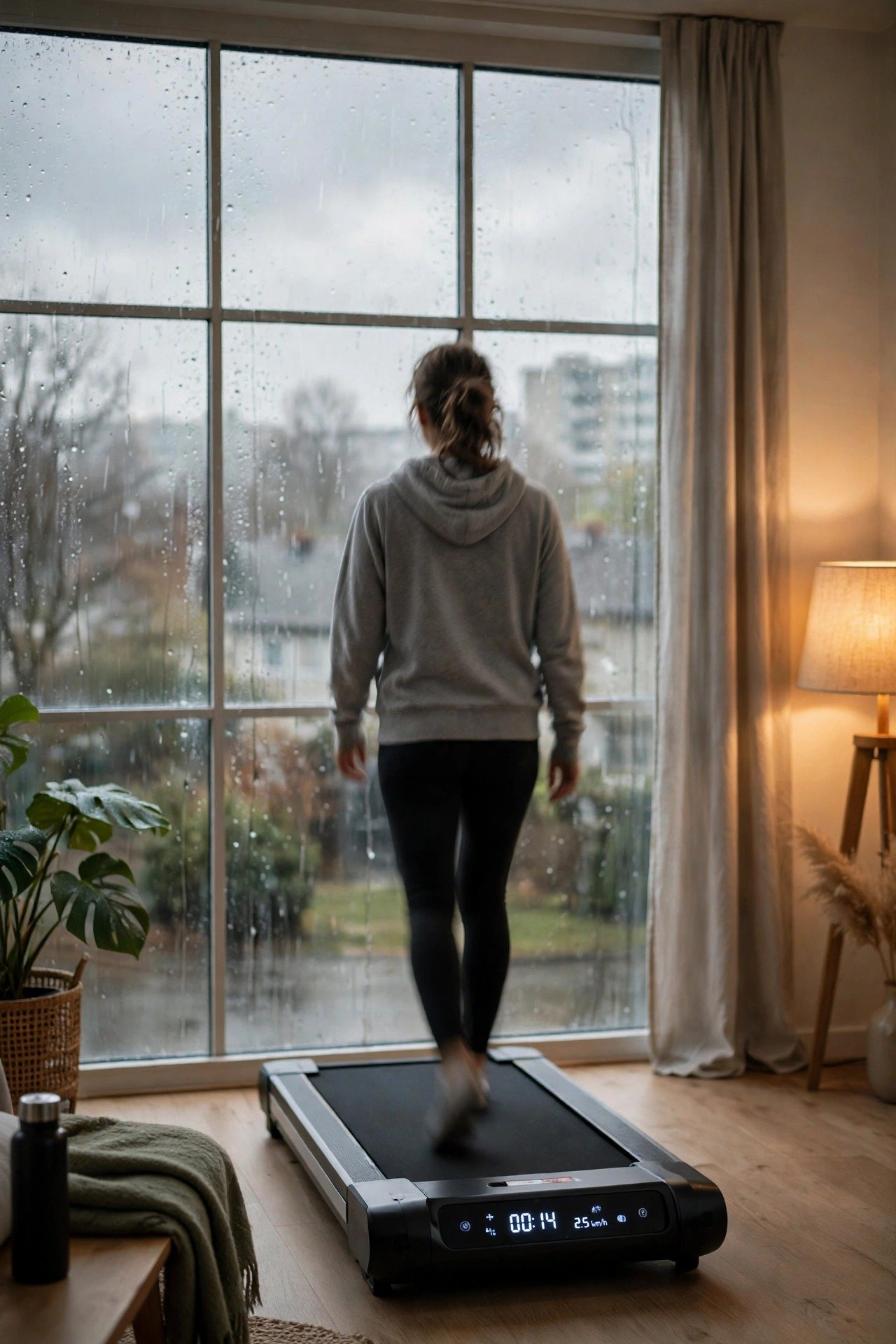
Day three is where trends go to die, and mine nearly did. I skipped the morning session telling myself I’d do it after dinner, then spent dinner negotiating with myself like a tired parent. I did the session — barely, distractedly, checking my phone twice — and it felt like nothing. Day four brought rain, the classic excuse-killer for outdoor walks, and this is when the penny finally dropped: I didn’t need the weather to cooperate, because my “gym” was six steps from my sofa. It was too wet to walk outside and too dark to feel like going anywhere, and yet there I was, walking in warm light with rain on the window, completely unbothered. That moment is the whole trend in miniature. Walking-pad searches are up 49% year over year as the weather turns, and now I understand why — cozy cardio isn’t competing with the gym. It’s competing with the couch on a rainy evening, and it’s winning because the barrier to starting is literally lighting one candle.
Day 5: the day I almost quit

Day five was the wall. Not soreness, not fatigue — boredom. Same corner, same pace, same episode arc, and my brain started filing complaints. I stood next to the walking pad for a full minute, remote in hand, genuinely negotiating a quit. What saved the streak wasn’t motivation; it was a rule change. I gave myself permission to do just fifteen minutes, phone face-down, comfort show only, no scrolling. Fifteen minutes felt insultingly small, which is exactly why it worked — I was lacing up (metaphorically; I was in socks) before my excuses finished forming. I ended up doing twenty-eight minutes anyway, because starting is the entire battle and everything after minute five is autopilot. My judgment call from the hardest day of the test: a fifteen-minute minimum you actually do beats a thirty-minute plan you skip. The trend is clearly going mainstream — even minutemirror.com.pk covered cozy cardio this week — and I suspect day-five boredom is where most people quietly drop it. The fix isn’t more discipline. It’s a smaller promise.
Days 6–7: the surprising part
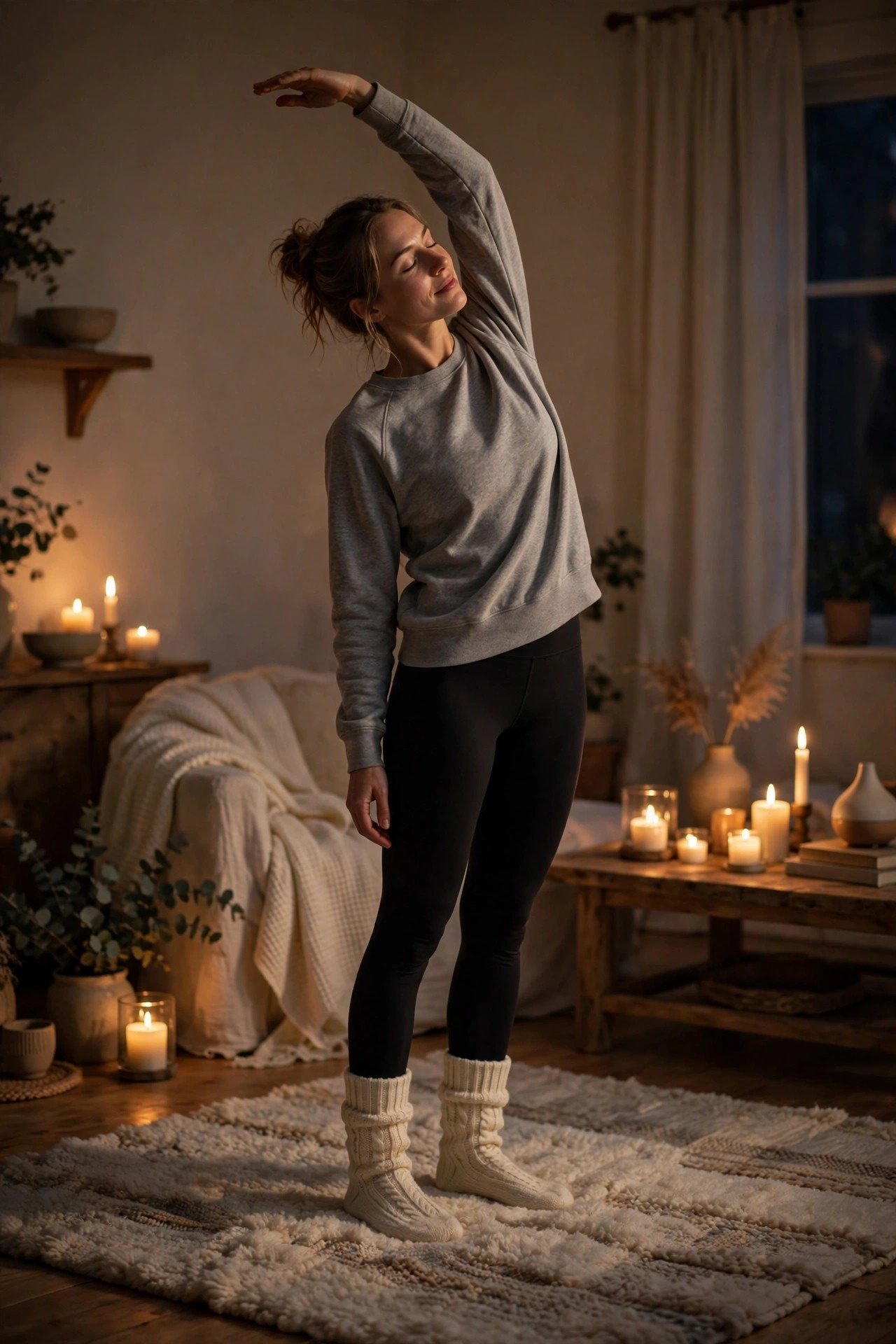
Here’s what I didn’t see coming: the surprise of the week had almost nothing to do with fitness. By day six, the evening session had quietly become a wind-down ritual — the part of my night where the day actually ended. I’d finish walking, stretch for five minutes in the candlelight, and realize my shoulders had dropped two inches. My sleep those last two nights was the best I’d had in weeks, and I’m not claiming the walking caused it directly — but swapping thirty minutes of doomscrolling for thirty minutes of gentle movement in warm light is not nothing. If you want to build a fuller evening ritual around it, my evening-maxxing guide pairs perfectly with this. Day seven, I caught myself thinking “just one more episode” — about walking. Me. The guy who rolled his eyes at this trend eight days ago. That’s when the angle of this whole piece locked into place: the workout was never special. The consistency was.
The rules that made it stick: my cozy cardio system
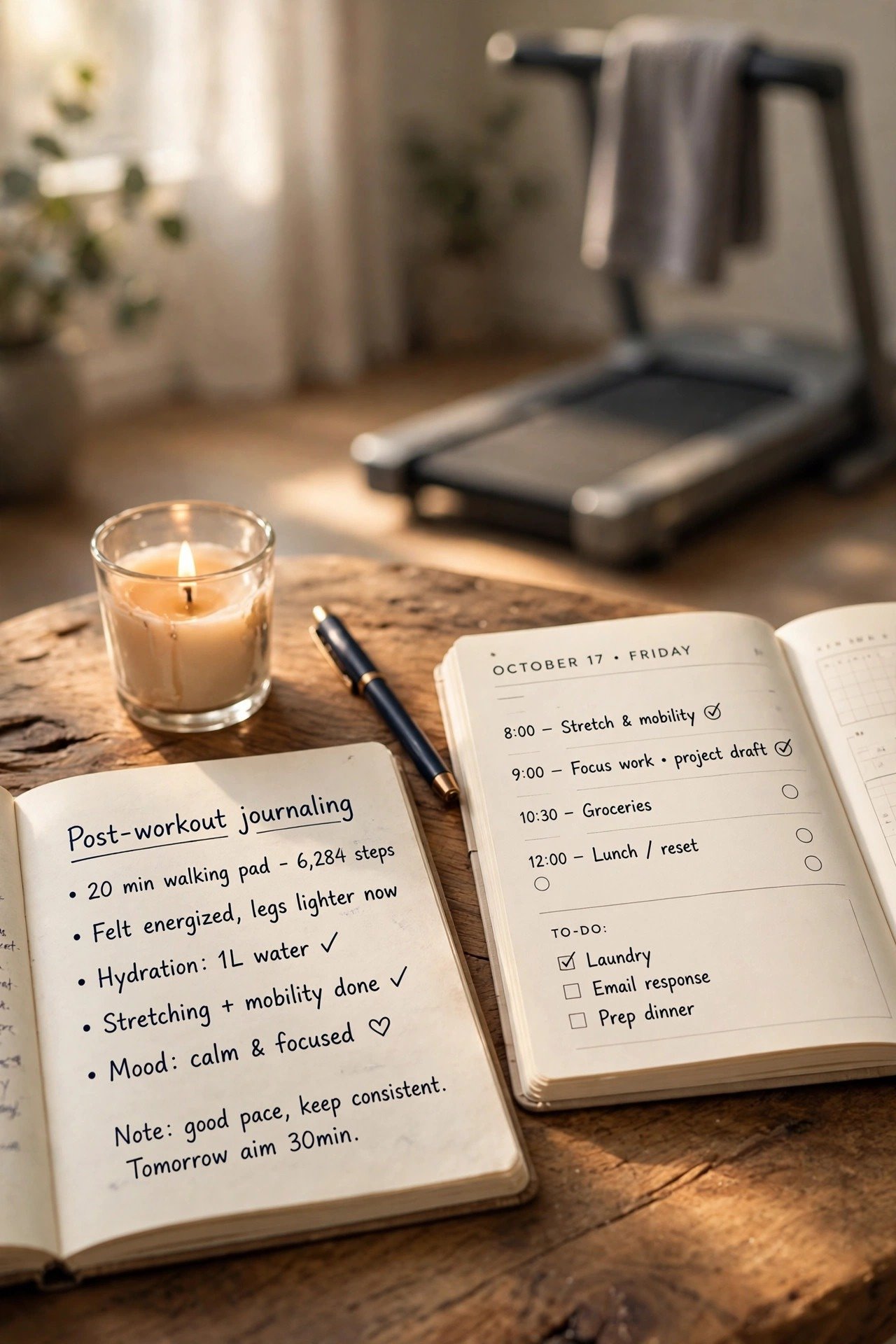
Seven days taught me that cozy cardio only works as a system, so here are the five rules I’d hand to anyone starting. One: comfort show only, never a new obsession. New shows spike your heart rate and your screen time; rewatches keep the pace honest. Two: lights on before feet on the pad. The ritual of dimming the lamps and lighting the candle is the starting gun — it tells your brain the session has begun before your body has to agree. Three: fifteen-minute minimum, thirty-minute target. The minimum gets you started on bad days; the target gives good days a shape. Four: same time every day. I did 9 PM, right after dinner settled. Decision fatigue kills more workouts than laziness ever will. Five: one line in a journal after. Just the date, the minutes, and one word for how you feel. Watching those lines stack up is weirdly addictive, and it turns an invisible habit into something you can see. Rituals are kind of my beat — my kitchen witch essentials piece is built on the same idea: small, repeatable, yours.
What I’d buy (and what I’d skip)
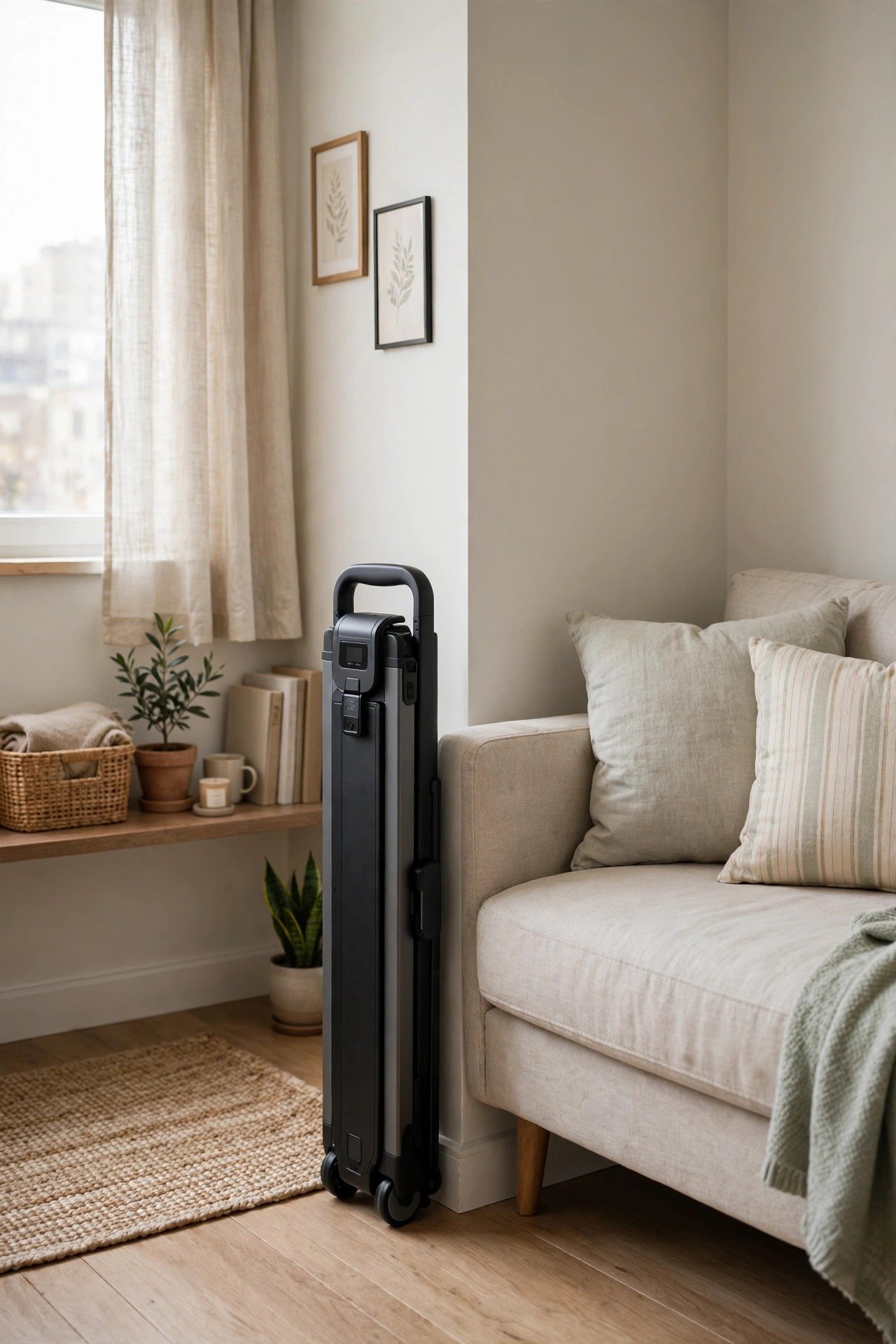
A week in, here’s my honest shopping list. Buy: a walking pad with a remote. The remote is non-negotiable — fumbling with foot controls mid-show breaks the spell, and a slim pad that slides under a sofa means no dedicated “gym corner” guilt. Buy: decent headphones. Not luxury ones; just comfortable enough that an hour doesn’t hurt your ears. Buy: a simple tablet or phone stand at eye level, because craning your neck down at a coffee table for thirty minutes is how you trade leg day for neck pain. Now the skip list, which I feel more strongly about: skip the expensive “smart” treadmill with a monthly subscription — cozy cardio’s whole philosophy is low friction, and a subscription is friction wearing a costume. Skip LED strip overload; one warm string of fairy lights beats a gamer-cave rainbow every time. Skip the weighted vest for these sessions — that’s a different workout wearing cozy cardio’s clothes. And skip the matching athleisure set. You’re in your living room. Wear the ratty sweatpants. That is genuinely the point. Even Women’s Running just ran a piece declaring “cosy cardio season is here,” which tells me the mainstream has arrived — and the mainstream version will try to sell you things. Don’t let it.
My honest verdict: who it’s for, and who should skip it
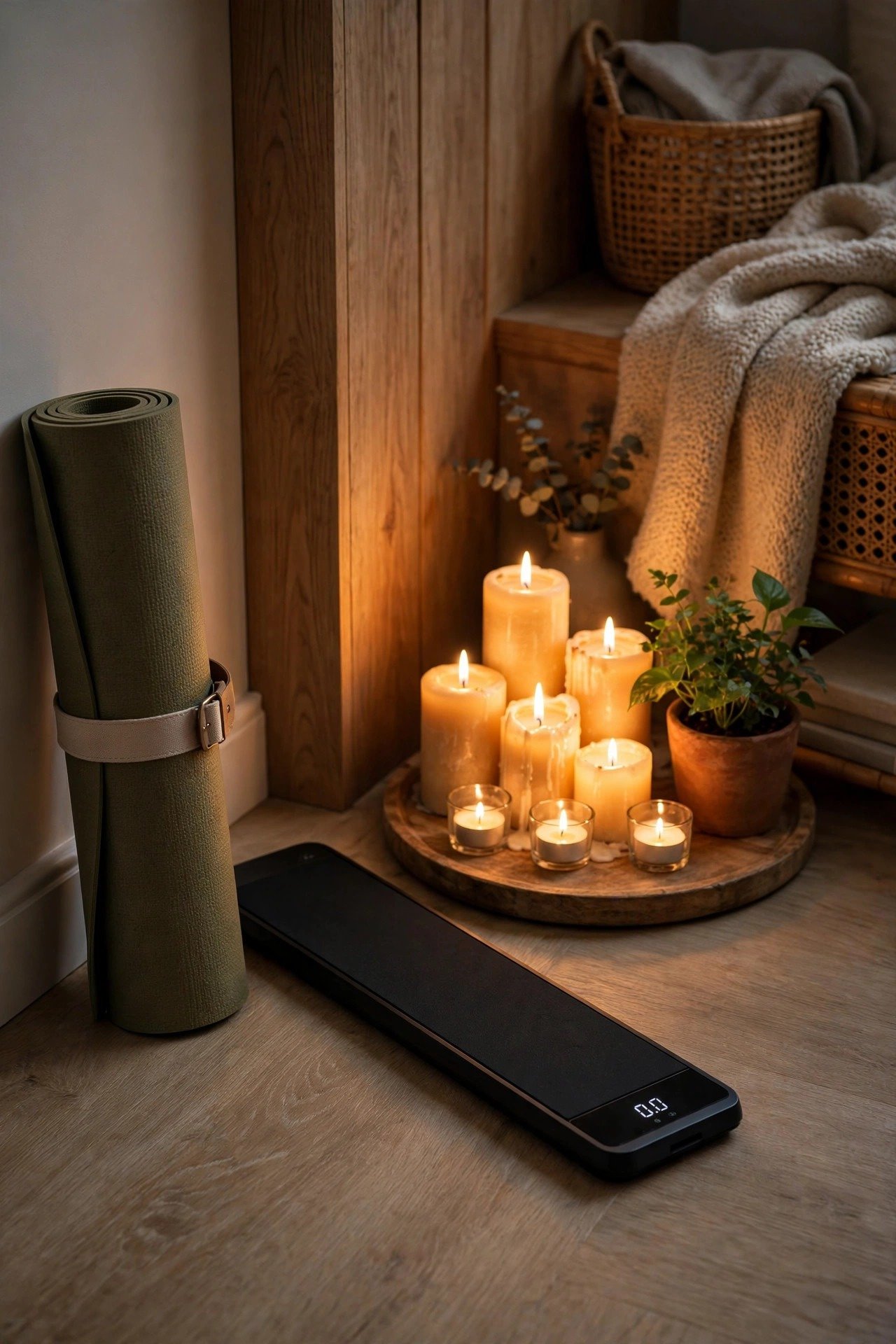
Seven days, three and a half hours of walking, one nearly-quit, zero regrets. So here’s my verdict, and I’m not hedging: cozy cardio is the only exercise trend I’ve ever tested that’s designed around consistency instead of intensity — and consistency is the entire game for most of us. Who it’s for: beginners who find the gym intimidating, inconsistent exercisers (my people), desk workers whose step counts are embarrassing, anyone who needs a wind-down ritual more than they need a workout, and night owls who do their best unwinding after dark. Who should skip it: if you’re training for a race, chasing progressive overload, or someone who genuinely loves hard workouts — this will bore you, and that’s fine; it’s not for you. My final judgment call: I came in expecting to debunk a gimmick and I’m keeping the fairy lights up. The candles aren’t decoration. They’re the method. And the method works.
One more thing, because a seven-day test raises the obvious question: am I still doing it? Yes — I’m on day ten as this publishes, and the only change I’ve made is swapping the rewatch for a podcast twice a week, which works just as well for keeping the pace easy. The fairy lights stayed. The candle stayed. The fifteen-minute minimum saved two more sessions this week alone. If there’s a week two lesson, it’s that the system needed zero maintenance once the ritual was set — which, after years of abandoned fitness plans, might be the most surprising sentence in this entire article.
Cozy cardio FAQ
What is cozy cardio?
Cozy cardio is a TikTok-popularized wellness trend, started by creator Hope Zuckerbrow, built around low-intensity walking — usually on a slim walking pad — in a deliberately pleasant setting: dim warm lighting, fairy lights, candles, and a comfort show or playlist. The idea is to make movement feel like a treat rather than a task, so you actually do it consistently.
Do I need a walking pad for cozy cardio?
No — and I’d strongly suggest you don’t buy one until you’ve tested the ritual. March in place, do laps of your living room, or use a regular treadmill if you have one. The walking pad is convenient because it’s quiet and slides under furniture, but the trend works with zero equipment. Buy the pad only after three sessions prove you enjoy the habit.
How long should a cozy cardio session be?
Thirty minutes is the sweet spot most people land on, but my tested rule is a fifteen-minute minimum with a thirty-minute target. On good days you’ll hit thirty without noticing; on bad days, fifteen keeps the streak alive. A short session you actually do will always beat an ambitious plan you skip.
Does cozy cardio actually count as exercise?
It’s genuine light-to-moderate movement, and for sedentary people it’s a meaningful step up from nothing — but be honest with yourself about what it is. It won’t build significant strength or cardiovascular capacity the way running or resistance training does. Its superpower is adherence: it’s movement designed to happen daily, and daily gentle movement beats sporadic intense workouts for most beginners.
What should I watch during cozy cardio?
A comfort rewatch — something you’ve seen before and love. New, gripping shows tend to spike your pace and glue you to the screen past your stopping point; familiar shows keep your effort easy and your session length sane. Save the prestige drama for the sofa and let the sitcom carry your steps.
Can I do cozy cardio without any equipment at all?
Absolutely. The non-negotiable ingredients are gentle movement, pleasant lighting, and something enjoyable to watch or listen to. Walk in place in your socks, pace your hallway, or step side to side — the fairy lights and the ritual matter far more than the hardware. Equipment upgrades the experience; it doesn’t create it.
Is cozy cardio good for beginners?
It’s arguably the best on-ramp in the current trend cycle. There’s no learning curve, no intimidation, no special clothing, and the intensity is self-regulated — you literally cannot do it wrong. If the gym feels like a lot and running feels like a punishment, this is the gentlest possible front door back into moving daily.
Will cozy cardio help me lose weight?
Anyone promising that is selling something. Cozy cardio burns modest calories — it’s a walk, not a fat-burning secret — but consistent daily movement supports overall health, sleep, and mood, which make every other healthy choice easier. Treat it as a habit-builder and a stress reliever first; any other benefits are a bonus, not a guarantee.
By Mehboob Hussain
Mehboob Hussain is the founder and editor of MubStyle, where he covers fashion, beauty, home decor and wellness. He researches and writes every article himself — testing each idea for real life before it makes the list — and creates original visuals for every guide. Based in Multan, Pakistan.

Mehboob Hussain is the founder and editor of MubStyle, where he covers fashion, beauty, home decor and wellness. He researches and writes every article himself — testing each idea for real life before it makes the list — and creates original visuals for every guide. Based in Multan, Pakistan.