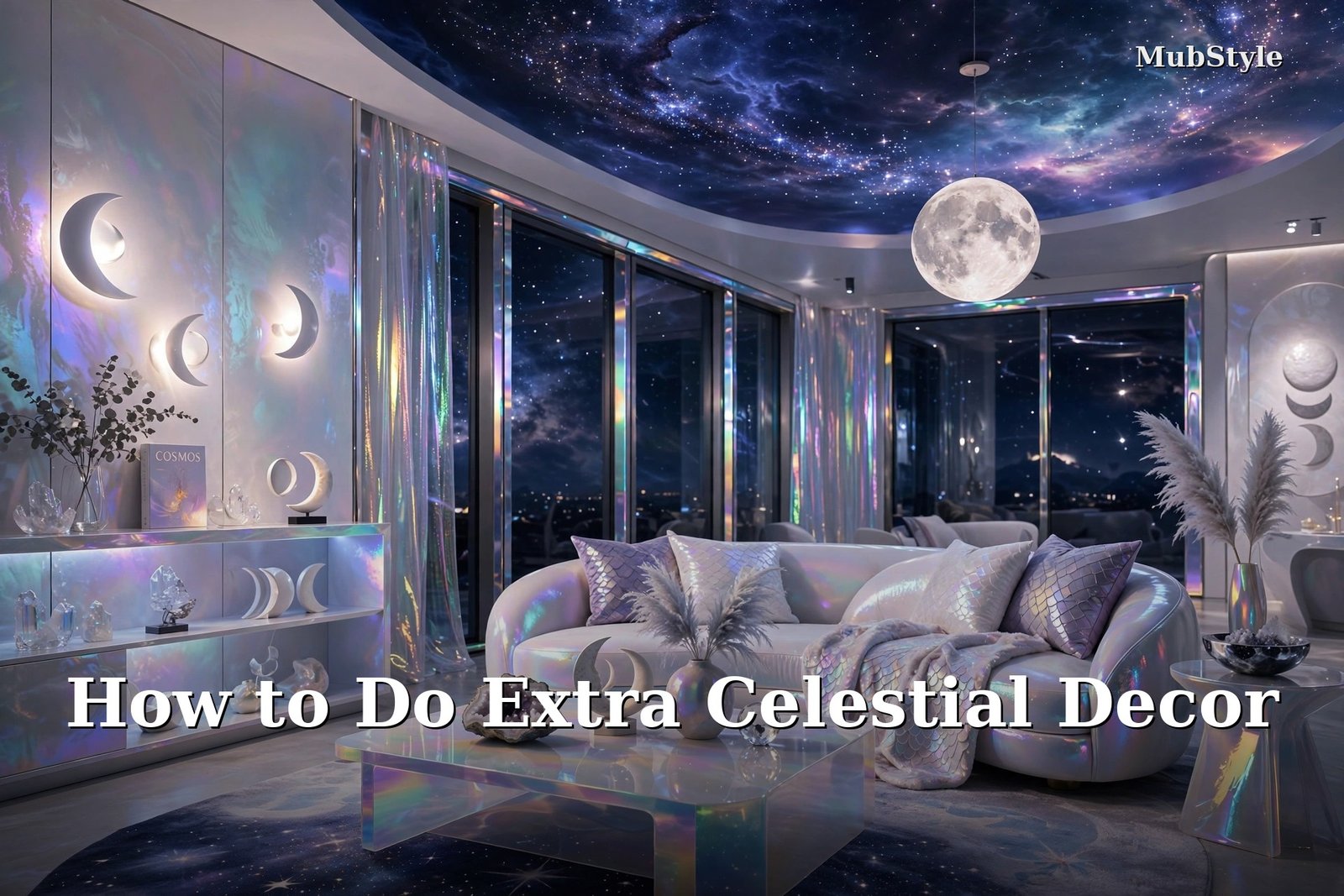
How to Do Extra Celestial Decor (Pinterest’s 2026 Cosmic Trend) Without Looking Like a Movie Set
I have to be honest: when Pinterest’s 2026 predictions landed “Extra Celestial” on my radar — opalescent searches up 115%, alien core aesthetic up 80% — my first thought was skepticism. I have lived through enough trend cycles to know that anything with the word “cosmic” in it usually means a room full of glow-in-the-dark stars and regret. But then I started actually testing the pieces, and I found the version that works. Here’s my judgment call, up front: Extra Celestial only works at accent level. Three small opalescent swaps deliver the entire trend; a whole cosmic room redo is the fastest way to make your home look like a sci-fi movie set. Everything below is built on that rule. If you’re the kind of person who wants to paint your walls purple and call it a galaxy, this is the one trend I’d tell you to skip — and I’ll show you what to do instead.
1. The One Rule: Light Before Stuff
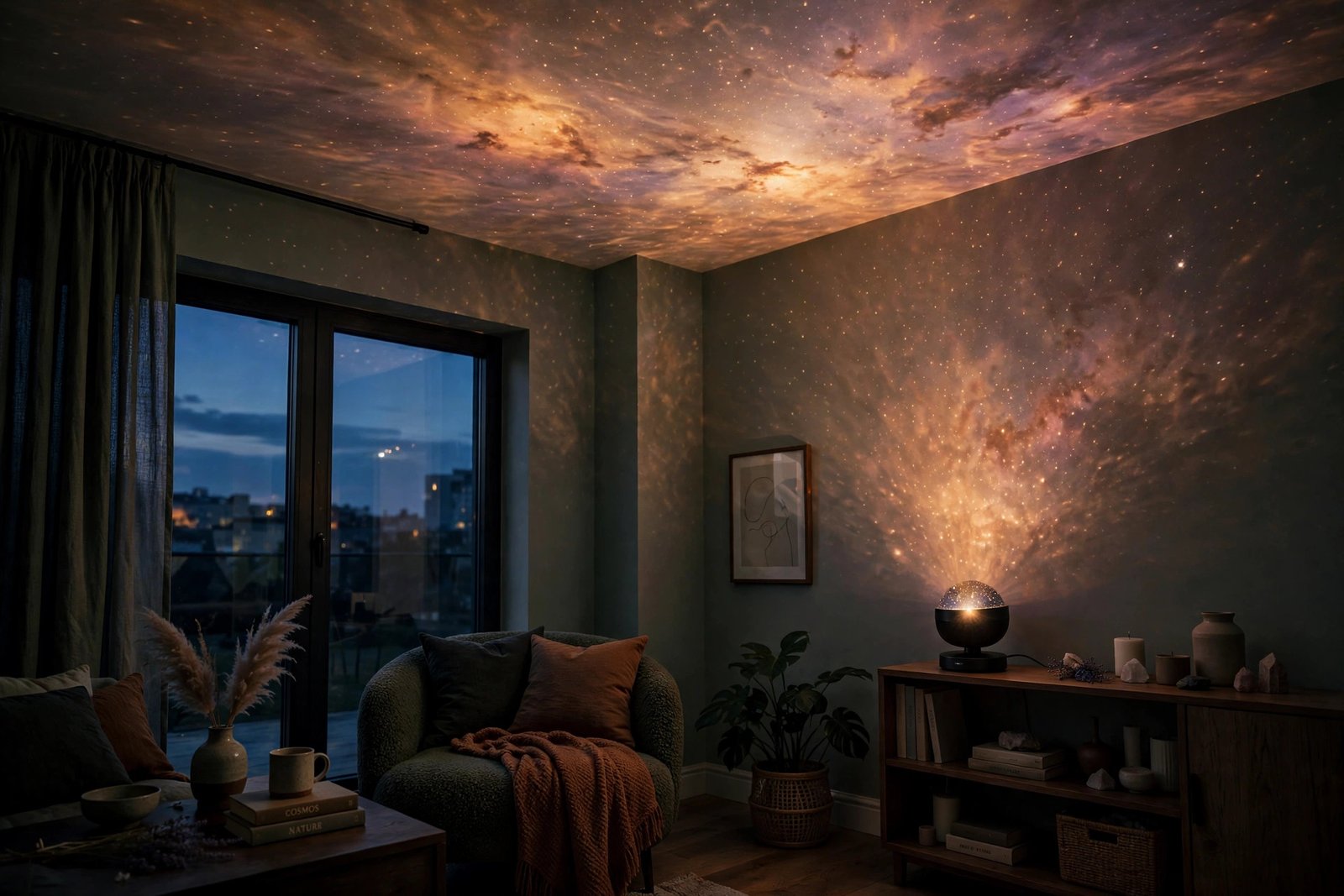
Before you buy a single thing, understand the physics of this trend, because it’s all physics. Opalescent and holographic finishes do nothing under flat, cool overhead lighting — they need light to play with, or they sit there looking like dull gray plastic. In my experience, the difference between “dreamy cosmic glow” and “cheap party-store vibes” is entirely about where your light comes from. If your living room only has one cold ceiling tube, fix that first, because no amount of holographic decor survives bad lighting. This is the one I’d prioritize over every product on this list: a warm 2700K bulb and a lamp placed low, grazing a surface, will do more for the trend than any single purchase you’ll make.
2. Swap In an Opalescent Accent Piece (a Vase or Side Table)
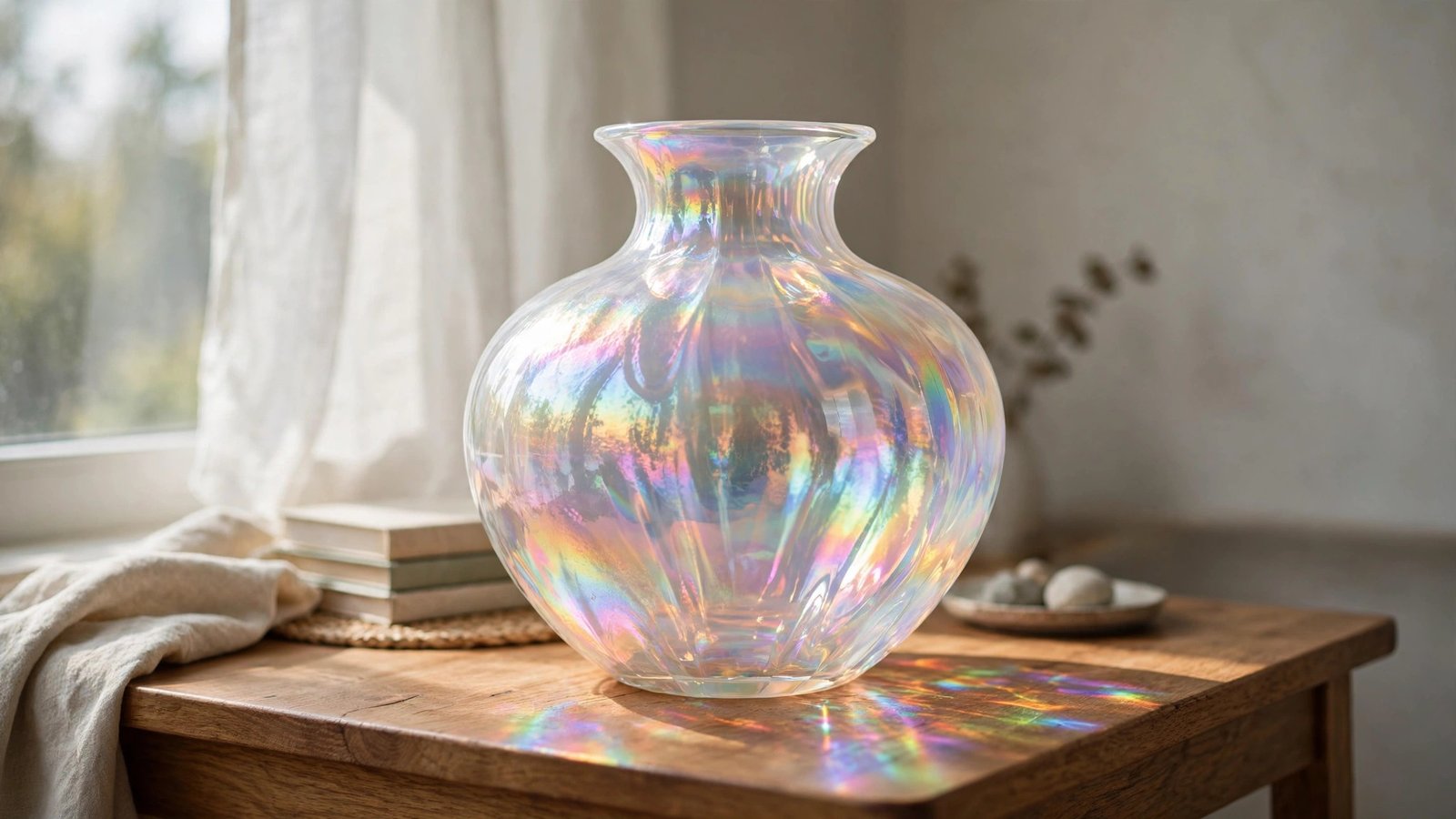
This is swap number one, and honestly, for most rooms it’s all you need. One opalescent object — a vase, a small side table, even a decorative bowl — placed where the light hits it. I mean this literally: do not buy a set. One piece reads as intentional and artistic; three matching opalescent pieces read as a themed gift shop. My judgment call here is that a vase is the best starter piece because it’s movable — you can shift it around until you find the spot where the iridescence actually shows, and it costs almost nothing relative to furniture. What I’d buy: a single mouth-blown or high-quality glass piece with an iridescent coating, in a shape you actually like when the shimmer isn’t there, because half the day it won’t be catching the light and it still has to earn its spot. Skip this if your home is full of matte, warm minimalism and you’re not willing to let one shiny object disrupt it — the trend demands that one shiny object, and it can’t be shy about it.
3. Chrome + Glow: The Metal Pairing That Actually Works
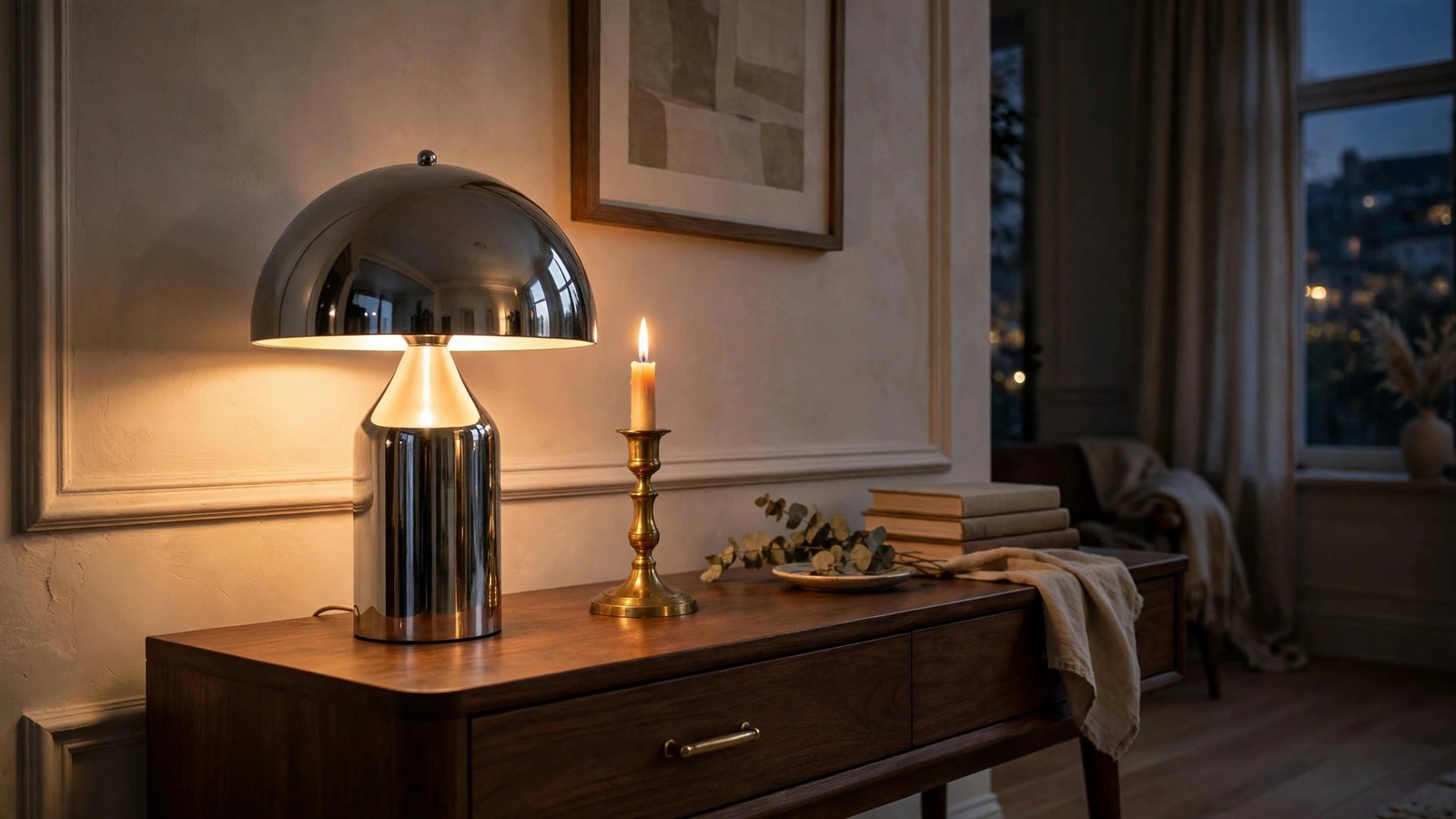
Opalescent finishes look lonely without something to anchor them, and chrome is the pairing that works — I’ve tested gold, brass, and matte black, and none of them land the same way. Chrome and iridescence share the same visual language: reflection, shift, glow. A chrome lamp base, a polished metal candle holder, or even chrome picture frames near your opalescent piece create a little constellation of reflective surfaces that make the whole corner feel intentional rather than random. This only works if you keep the chrome minimal, though — one or two hard, polished pieces, not a full chrome furniture set, which drags the look straight into retro-diner territory. Keep your existing warm metals elsewhere in the room; the chrome should live only in the little cluster with the iridescent piece, like a zone within the room. That zone is the whole look.
4. Color-Shifting Textiles (a Throw, Not a Whole Sofa)
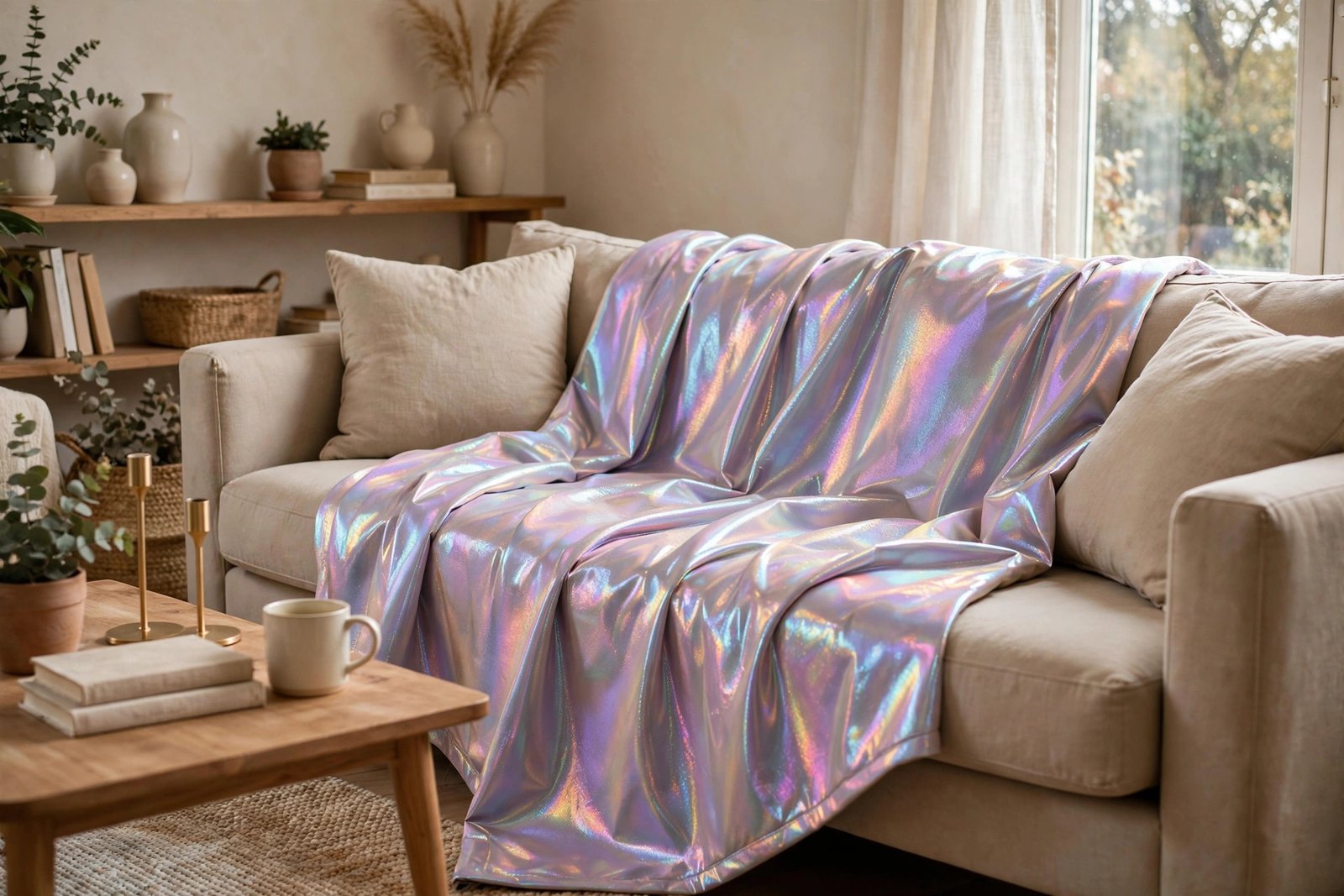
Swap number two, and the rule is right there in the heading: a throw, not a sofa. Iridescent and color-shifting fabrics are everywhere this fall — throws, cushion covers, table runners — and they are the easiest entry point because they’re cheap, removable, and you can demote them to another room if you hate it. Here’s what I’ve found actually works: look for fabrics where the shift is subtle, like a satin that moves between champagne and pale blue, rather than the full rainbow hologram prints that scream costume party. A throw folded over your sofa arm catches light as you move through the room, and that movement is the whole point — static iridescence is boring; iridescence that changes as you walk past is magical. This is where it mixes beautifully with existing decor, too: the same warm brown fall palettes that are everywhere this season actually make a cool-toned iridescent throw pop harder, because the contrast between warm neutrals and a cool shimmer is exactly the tension the trend is built on.
5. Lighting Is the Engine (LED Strips, Galaxy Projector, Smart Bulbs)
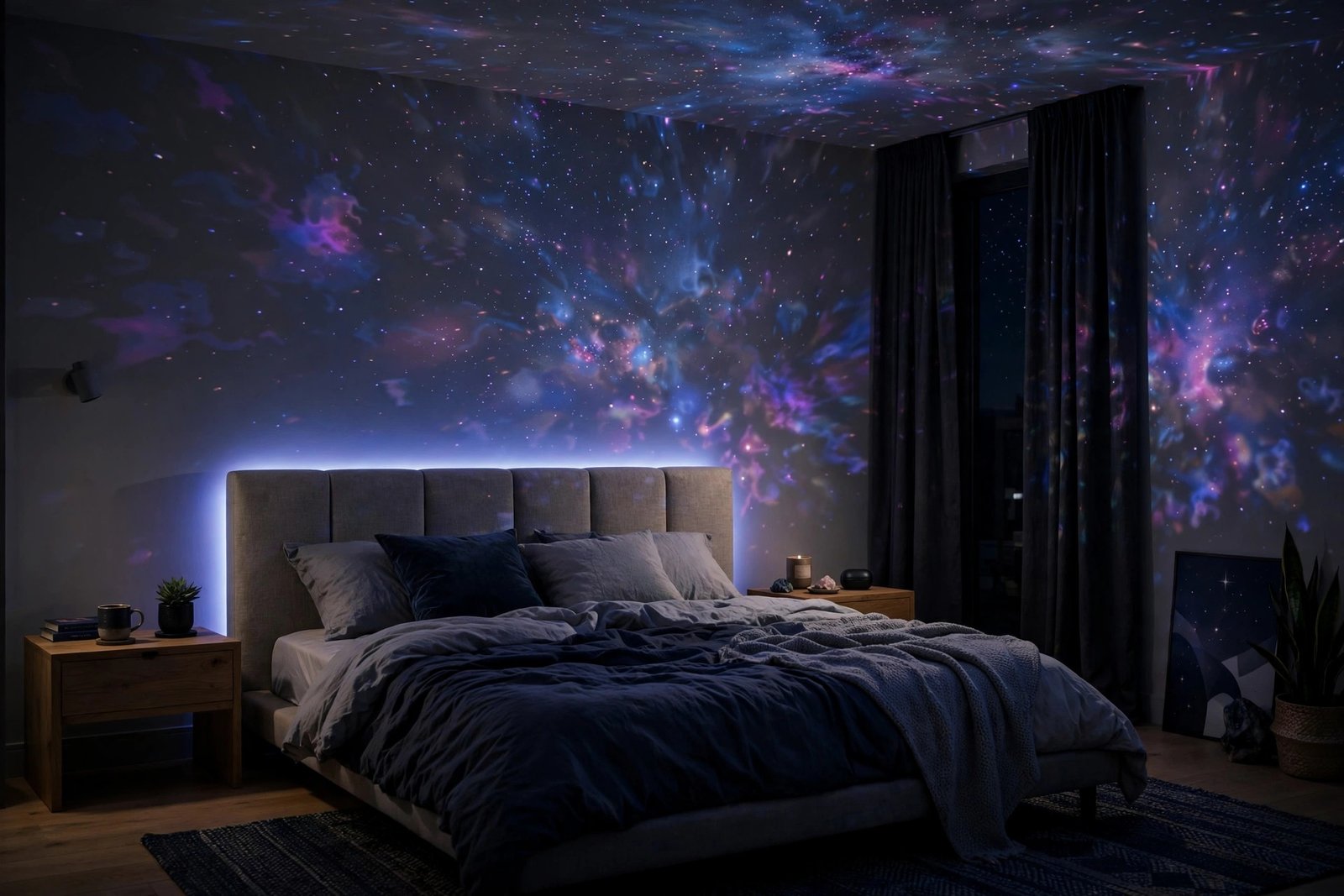
If accents are the body of this trend, lighting is the engine — and it’s also where people blow it. The key insight: your Extra Celestial lighting should be hidden and warm-tinted, never a bare neon tube glowing purple in your face. LED strips tucked behind a headboard, under floating shelves, or along the back edge of a TV unit throw an indirect wash of color that makes every iridescent surface in the room wake up. A galaxy projector aimed at the ceiling is the one overtly “space” gadget I’d allow, and even then, only in a bedroom or a cozy corner — it’s the difference between atmosphere and theme park. Smart bulbs are the sleeper hero here: dial them to a warm purple-rose in the evening and your opalescent pieces shift into colors they never show in daylight. My hard judgment call: never run cool white-only lighting with this trend. Cold white kills every bit of warmth and turns iridescence clinical — it’s the single most common reason people’s cosmic corners look cheap in photos.
6. Sculptural, Curved Furniture Silhouettes
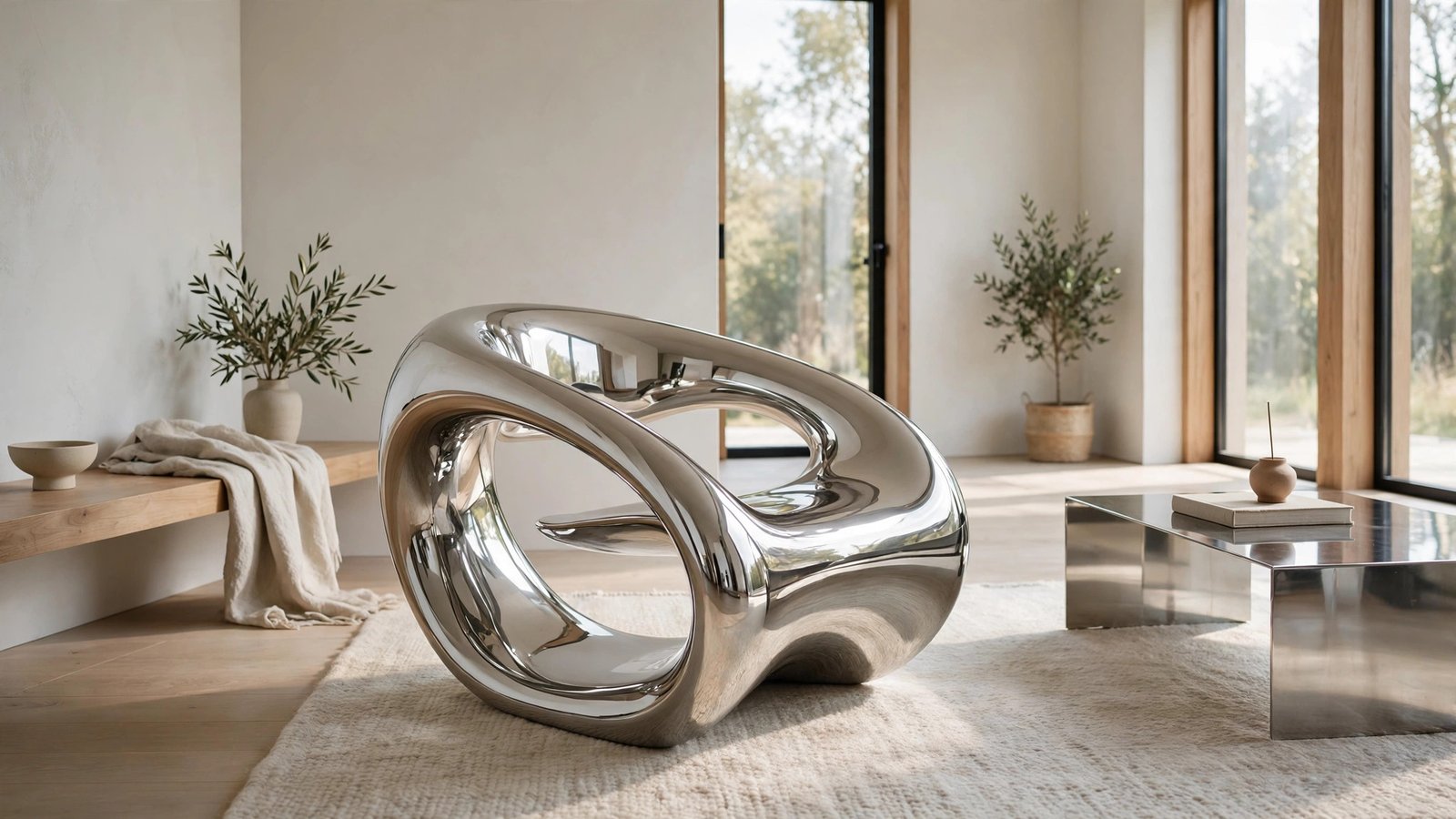
The furniture side of Extra Celestial isn’t about space-age plastic pods — it’s about curves. Rounded, organic, sculptural silhouettes: a curved accent chair, a round ottoman, an arc floor lamp, a pebble-shaped side table. This works because the trend is fundamentally about softness and glow, and hard angular furniture fights that every step of the way. You don’t need to replace your sofa; one curved piece is enough to shift the geometry of a corner toward the aesthetic. In my experience, a curved floor lamp is the smartest buy here — it delivers the silhouette, it’s functional, and its arc usually comes in chrome or polished metal, which ties straight back to the metal pairing in section three. This only works if the curve feels modern and calm, though. The moment a curved chair turns bulbous and kitschy, you’ve left Extra Celestial and entered spaceship gift shop, and no amount of iridescence will bring you back.
7. One Statement Wall (Metallic Wallpaper or a Mural — Never All Four)
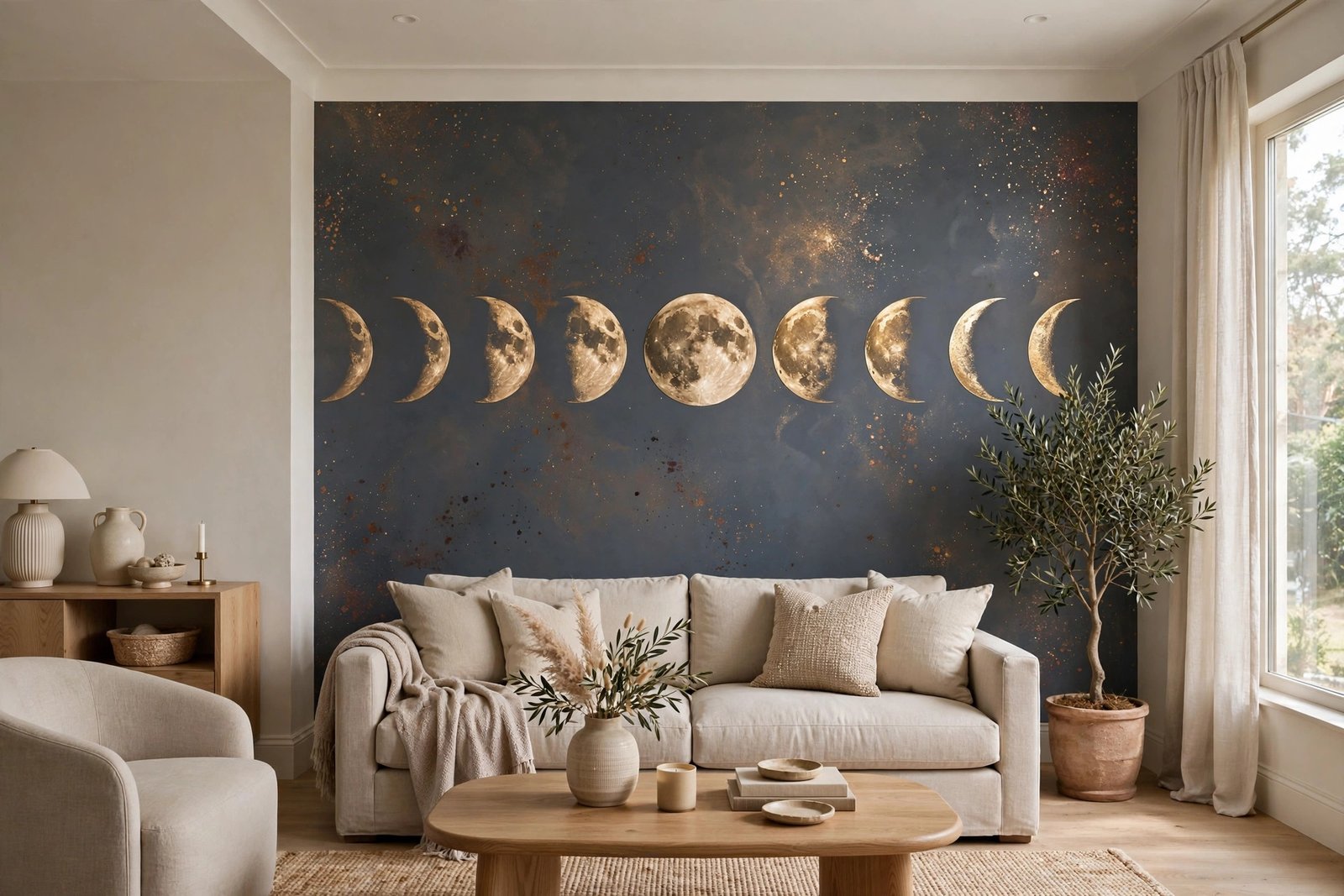
Swap number three, and the biggest one: a single statement wall. Metallic wallpaper with a subtle shimmer, a soft ombre mural that fades like a nebula, or even a peel-and-stick starry design behind a bed or sofa. The word “one” is doing all the work in this sentence. A whole room of galaxy wallpaper is precisely the movie-set trap this guide is trying to keep you out of — it’s the number one regret I hear from people who went all-in on cosmic decor. One wall gives you the drama; the other three walls in a calm neutral give you a home. If you’re renting, this is still doable: peel-and-stick metallic wallpaper and removable murals are genuinely good now, and a single wall comes off cleanly when you move. My judgment call: pick the wall you see least when you first enter the room — behind the bed headboard, behind the sofa — so the shimmer reveals itself rather than ambushing you. That restraint is what separates a designed room from a themed one.
8. Holographic Glass and Tabletop Styling
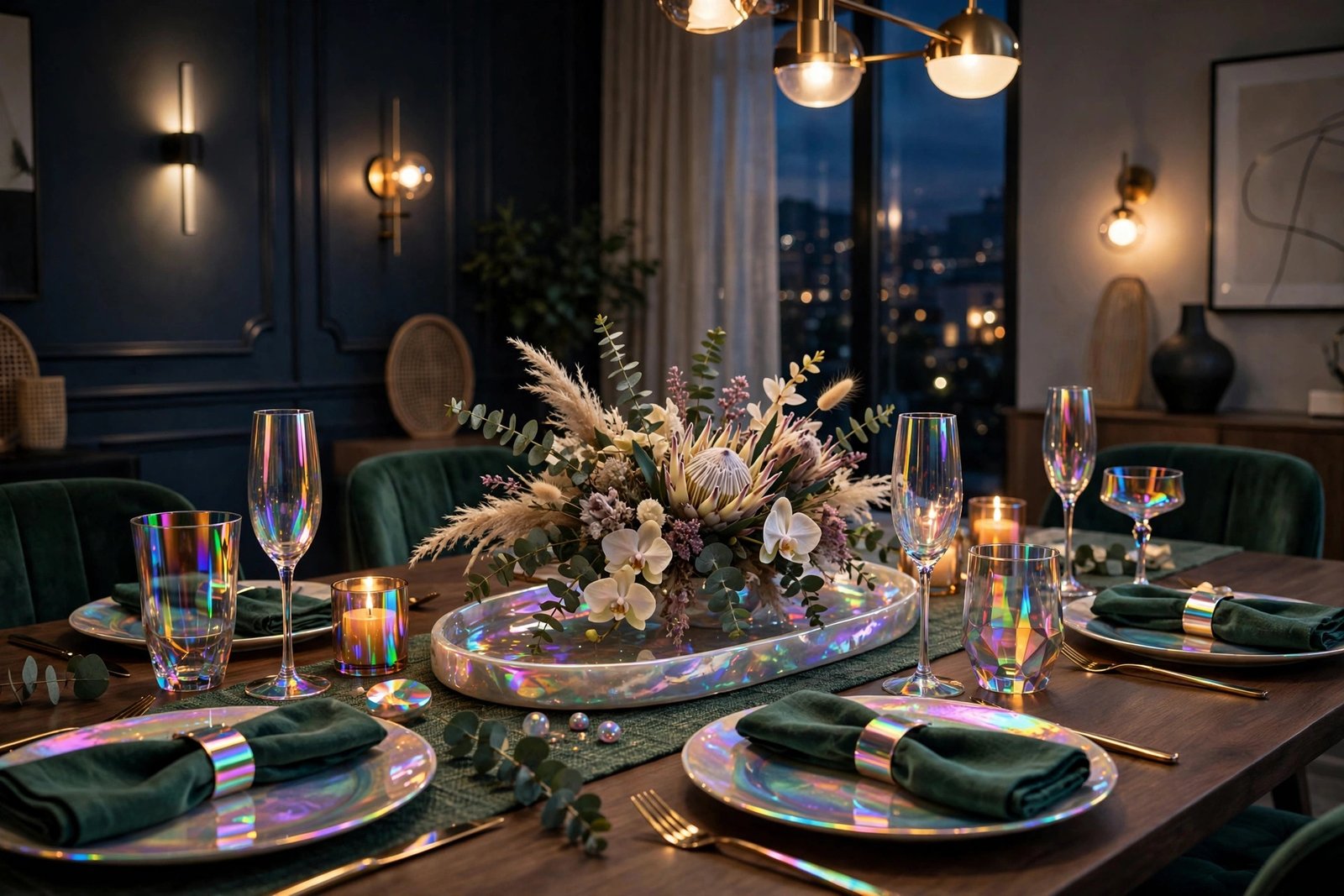
Tabletops are where the trend gets fun at the smallest scale, and this is my favorite low-risk entry point if you’re still nervous. A couple of holographic glasses, an iridescent candle holder or two, a small tray with a mirror finish — styled together on a coffee table or a console, they become a little altar of light-catchers. The styling rule is restraint plus grouping: cluster three to five small reflective objects together so they read as one composition, and give them breathing room from everything else on the table. Scatter them across every surface and it looks like you knocked over a gift bag; cluster them and it looks curated. Mix in one non-shiny object — a small plant, a stack of books — because the contrast makes the shimmer more visible, not less.
9. A Starlight Bedroom Corner (the Easiest Room to Start)
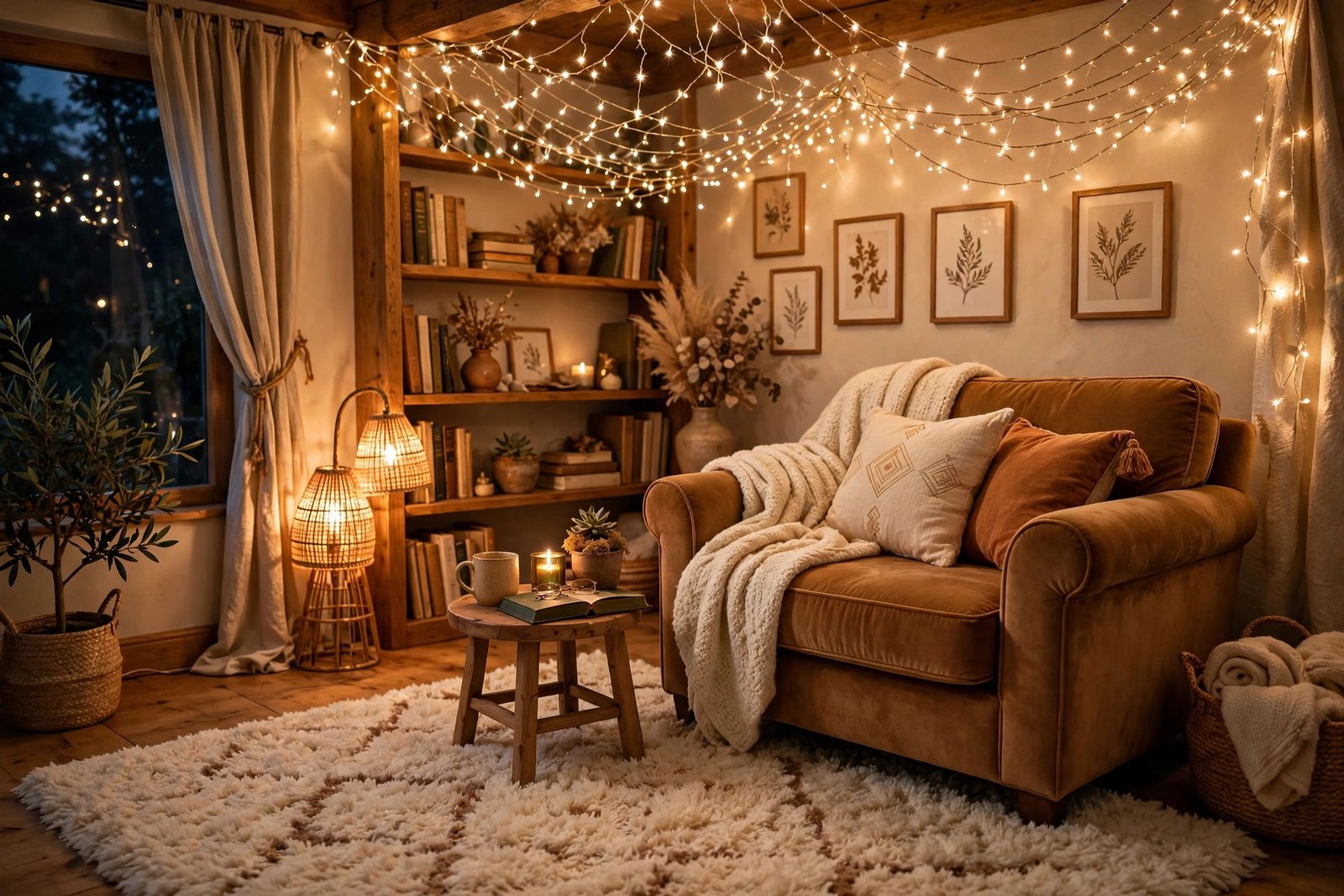
If you’re wondering where to actually begin, start in the bedroom — it’s the easiest room in the house to make this work. Bedrooms are private, they’re naturally dimmer, and the trend’s glow-atmosphere reads as cozy there instead of showy. You don’t need to redo the bedroom: one corner is enough. A reading chair or a floor cushion in that corner, an iridescent throw over it, a galaxy projector or a string of warm fairy lights behind it, and your opalescent accent piece on a small table beside it. That’s the whole starter kit, and it pulls together everything in sections two through five in one contained zone. In my experience this is also where the trend genuinely improves daily life — a soft, glowing corner where you wind down at night feels like a small luxury, and unlike a full cosmic bedroom redo, it doesn’t make you feel like you’re sleeping inside a planetarium. If you only do one thing from this guide, do the bedroom corner; it’s the highest reward for the lowest commitment.
10. The 5 Mistakes That Make It Look Cheap (the Anti-Checklist)
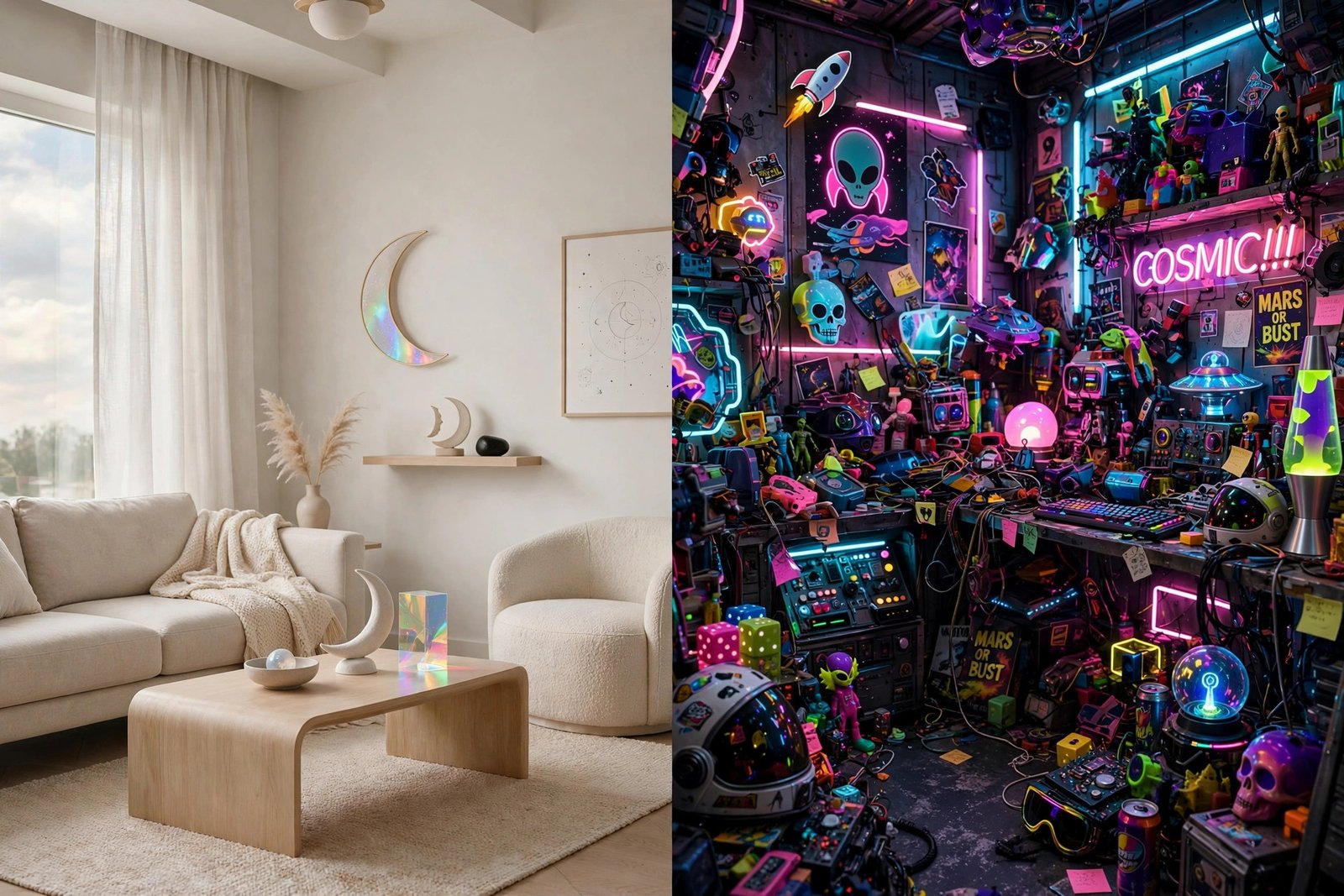
Everything above works because it avoids these five traps.
1. The whole-room redo
The fastest way to make your home look like a sci-fi movie set. Cosmic bedding plus galaxy curtains plus star decals on every wall plus purple LED strips everywhere isn’t Extra Celestial — it’s a themed hotel room from a waterpark. Three accent swaps. That’s the budget. Hold the line.
2. Too many holo colors at once
Rainbow holographic everything clashes with itself. Pick one shift direction — cool (blue-green-silver) or warm (rose-gold-champagne) — and keep every iridescent piece in that family. Mixed rainbow finishes are what make a room look like a teenager’s birthday party.
3. Cheap plastic finishes
Thin plastic holographic film, peel-and-stick stars from a discount bin, flimsy iridescent party ware — these are the pieces that photograph badly and scratch in a week. If the finish feels cheap in your hand, it will look cheap on your shelf. Glass and metal or nothing.
4. Cool white-only lighting
Said it in section five, saying it again because it’s the killer: cold white light turns every iridescent surface clinical and flat. Warm 2700K light, always, as the base layer. Cool light is for offices, not for cosmic glow.
5. Mixing every cosmic cliché
Galaxy print plus alien figurines plus astronaut posters plus constellation decals plus a moon lamp — each one is fine alone, all of them together is a movie set. The trend is “extra celestial” in mood, not in inventory. If it looks like a prop department, edit something out. This is the same restraint that makes layered styles like Afrohemian work — the mix only sings when something holds it back.
If you want a softer seasonal counterpoint to all this shimmer — say, for a porch or entryway where the cosmic look doesn’t belong — my cozy fall porch ideas keep the warm side of autumn alive while your living room goes celestial.
Frequently Asked Questions
How much does Extra Celestial decor cost to try?
Far less than you’d expect, because the trend works at accent level. A decent opalescent glass vase, an iridescent throw, and a set of warm smart bulbs can come in well under what a single piece of statement furniture costs.
Can renters do Extra Celestial decor without losing the deposit?
Yes — this trend is renter-friendly by nature. The three swaps are all non-permanent: a freestanding accent piece, textiles, and lighting. Even the statement wall is doable with peel-and-stick metallic wallpaper or a removable mural on one wall. Nothing here requires drilling, painting, or anything your landlord would notice.
Is this trend kid-friendly?
Mostly, with one adjustment: put the glass pieces up high. Kids genuinely love the color-shifting surfaces — an iridescent throw or a galaxy projector in a child’s room is a huge hit — but holographic glass vases and chrome pieces are breakable and have sharp edges when broken. Keep the fragile accents in adult zones and let kids have the textiles and the lighting.
How do I mix Extra Celestial with my existing decor style?
By treating it as jewelry, not a wardrobe change. Your existing furniture, rugs, and neutrals stay exactly as they are; the opalescent and chrome pieces sit on top like accessories. It pairs especially well with warm neutrals and browns, because cool iridescence against a warm base is the contrast the whole look depends on. It also layers cleanly over minimal, boho, and modern styles — the only styles I’d call a bad match are full traditional and heavy rustic, where the shimmer has nothing to talk to.
What lighting temperature works best with holographic and opalescent pieces?
Warm — 2700K as your base, always. Warm light lets iridescence shift through its rose, gold, and champagne tones; cool white light flattens it into something clinical. If you use smart bulbs, a warm purple-rose in the evening is the sweet spot for cosmic atmosphere without tipping into nightclub.
How do you clean holographic and iridescent surfaces?
Gently, and dry or barely damp. Microfiber cloths only — no abrasive pads, no ammonia-based glass cleaners on coated pieces, because the iridescent coating is a thin film and harsh chemicals will strip it. A soft dry cloth for dust, and a slightly damp microfiber for fingerprints. If a piece is genuinely grimy, a drop of mild dish soap in water, then dry immediately.
Where can I buy opalescent and holographic decor pieces?
Home decor retailers, online marketplaces, and artisan glass shops all carry them now that the trend has scaled — search “opalescent vase,” “iridescent glass,” or “holographic home decor.” Check reviews for how the piece looks in normal room light, not just in the seller’s dramatic product photos.
Will Extra Celestial decor hurt my home’s resale value?
Not if you follow the accent-level rule. Everything in this guide is removable — textiles, freestanding pieces, lighting, peel-and-stick wallpaper — so there’s nothing for a buyer to object to or for you to undo. The only version that hurts resale is the permanent one: painted galaxy murals, bolted-in neon, full-wall metallic installations. Keep it removable and your home stages exactly as it did before.

Mehboob Hussain is the founder and editor of MubStyle, where he covers fashion, beauty, home decor and wellness. He researches and writes every article himself — testing each idea for real life before it makes the list — and creates original visuals for every guide. Based in Multan, Pakistan.