10 Evening-Maxxing Rituals to Wind Down Better (Sorted by the Time You Actually Have)
By Mehboob Hussain
I’ll say the quiet part first: most wind-down routines are written for someone with two free hours and a spa budget. My evenings have neither. I usually get about forty minutes between dinner and a brain that refuses to shut up — and that’s on a good night. So when “evening-maxxing” started popping up all over Pinterest and wellness feeds, I rolled my eyes. Then I tried it anyway, because the idea underneath the buzzword is genuinely good: treat your evening like it matters instead of doom-scrolling through it.
For the past month, I’ve tested dozens of wind-down rituals — the science-backed ones, the TikTok ones, the ones my grandmother would have laughed at — and kept the ten that actually moved the needle on my sleep. Here’s my judgment call up front: skip the fancy twelve-step routines. The ritual that fits your actual energy level beats the perfect one every time. So I sorted these by how much time you honestly have: 5-minute resets, 15-minute wind-downs, and the 30-minute full max. The 5-minute ritual you do every night will always beat the 45-minute ceremony you do twice.
New here? Prefer to watch instead of read? View this as a Web Story — all 10 rituals in tap-through slides.
The 5-Minute Resets (For Nights When You’re Running on Fumes)
1. The Digital Sunset (5 Minutes)
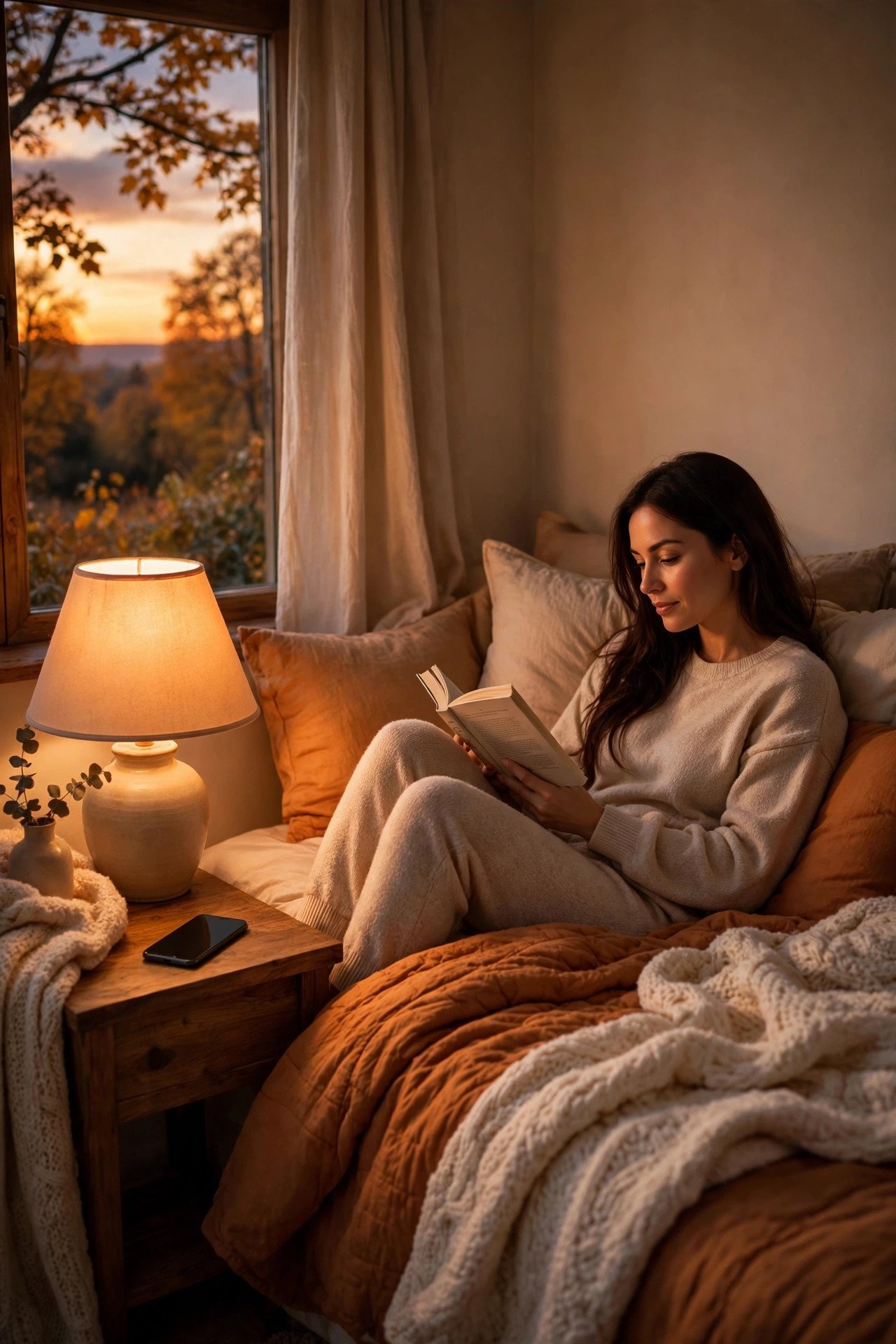
If you only take one thing from this list, take this one. The digital sunset means your phone goes face-down, into another room, or at minimum into night mode with the screen flipped toward red — a full hour before bed. I’ll be honest: this is the hardest ritual on the list and the one everything else depends on. Blue light suppresses melatonin, but the real thief is the content — every scroll keeps your nervous system in fight-or-flight. In my experience, the first three nights feel like withdrawal. By night five, I was falling asleep noticeably faster and my “one more video” sessions had shrunk on their own. My judgment call: skip the fancy screen-time apps and just charge your phone in the kitchen. The distance does the work. If you absolutely must have the phone nearby, switch the display toward the red end of the spectrum — it’s less disruptive to your melatonin than standard white light.
2. The 4-6 Breathing Reset (5 Minutes)
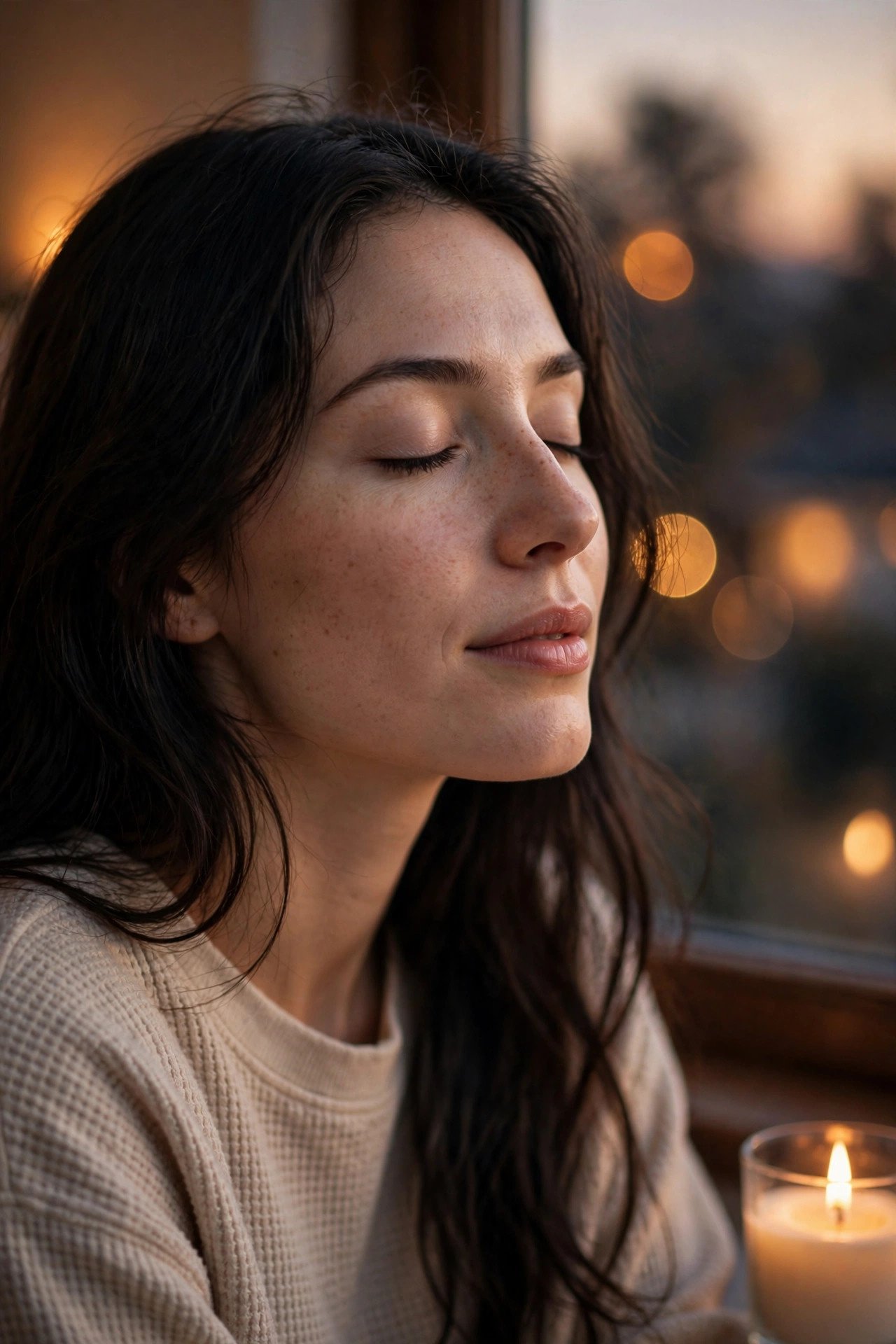
This one costs nothing, needs no equipment, and I’ve come to trust it more than any sleep gadget I’ve tried. Breathe in slowly through your nose for four counts, then exhale for six. Do ten rounds — that’s about five minutes. The longer exhale is the whole trick: it nudges your parasympathetic nervous system, the body’s “safe to rest” signal, and your heart rate genuinely starts to slow. I do it sitting on the edge of my bed, lights already dimmed, one hand on my chest so I can feel my breathing slow down. Skip the meditation apps with their 200 guided options — decision fatigue at 10pm is real, and this single pattern beats all of them. In my testing, this works best right after the digital sunset, as a bridge between “phone is away” and “body is calm.” If your mind races, count the exhales and restart at one whenever you lose track. No judgment, just restart.
3. Tomorrow’s Top-3 Brain Dump (5 Minutes)

Most nighttime anxiety isn’t really anxiety — it’s your brain refusing to file unfinished business. The fix is embarrassingly simple: keep a notebook by your bed and write down your top three tasks for tomorrow before you sleep. Not a full planner spread, not a color-coded system — just three lines. This is the ritual I’d prescribe first to anyone who lies awake mentally rehearsing their morning. Writing it down tells your brain the information is stored somewhere safe, so it stops looping. I keep mine deliberately ugly and unfiltered; this isn’t journaling, it’s a brain offload. Here’s my specific judgment call: do it before you get into bed, not after. Once you’re under the covers with the notebook, you’ve given yourself permission to keep thinking. Write the three, close the notebook, and the day is officially over. Tomorrow-you will thank tonight-you.
4. Amber Hour: Kill the Overheads (5 Minutes)
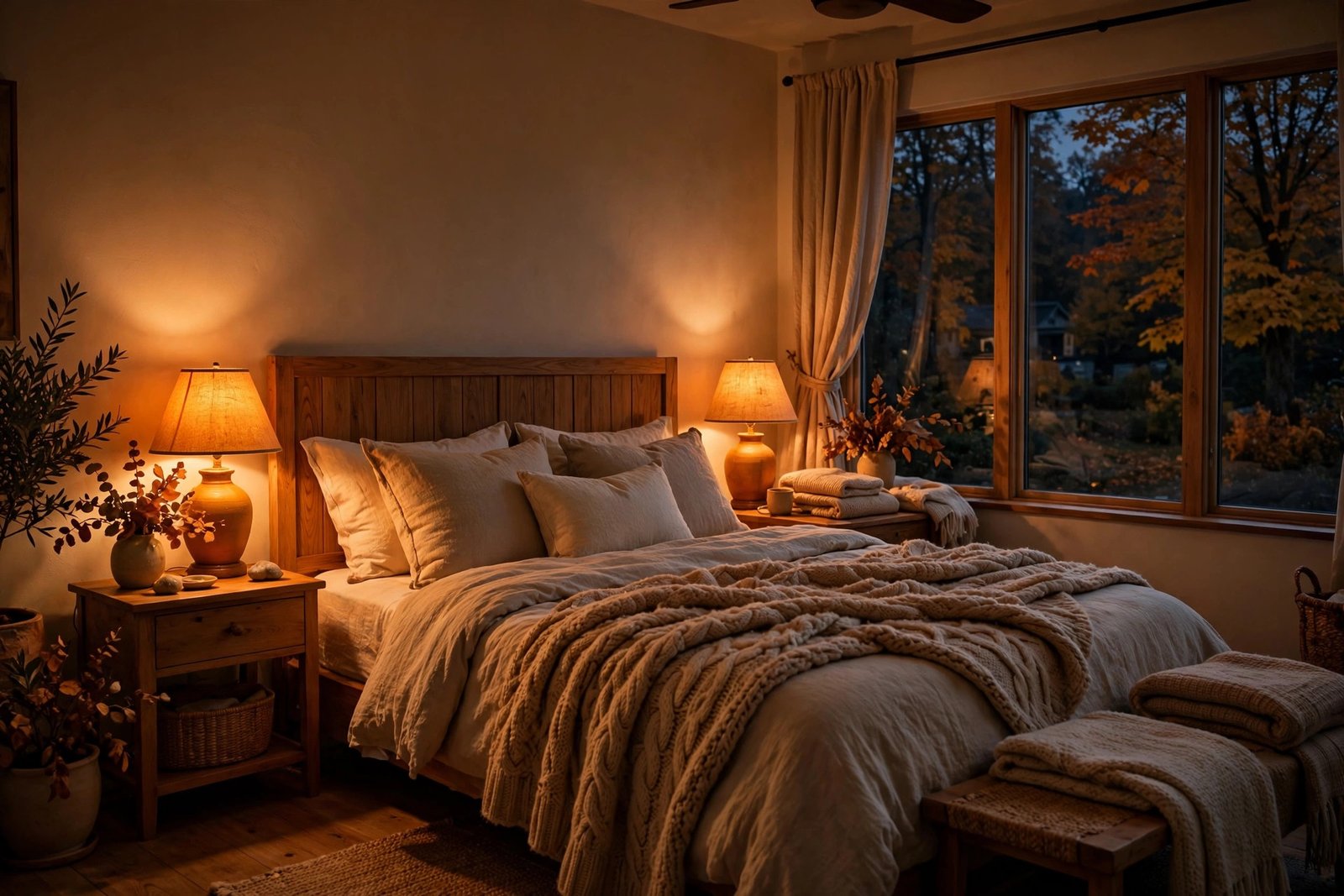
Overhead lighting is the enemy of evening calm, and I say that as someone who used to run every ceiling light in the house until midnight. Your brain reads bright overhead light as daylight, which delays melatonin release. The fix: an hour before bed, kill the overheads and switch to one or two warm, low lamps. That’s it. In my experience, a single warm lamp does more for my sleep hormones than any supplement I’ve tried — the whole room feels like permission to slow down. If you want to go further, this is where cozy warm-toned room styling pays off: layered textiles, amber bulbs, and soft shadows turn your bedroom into a signal that the day is done. My judgment call: buy the warm bulbs before you buy anything else on this list. It’s a five-minute change with a every-night payoff, and it makes every other ritual on this list feel twice as effective.
The 15-Minute Wind-Downs (For Normal Evenings)
5. Golden Milk & the Warm-Drink Ritual (10 Minutes)

There’s real science behind the old warm-drink-before-bed advice: warmth relaxes you, and the ritual itself becomes a sleep cue your brain starts recognizing within a week. My version is golden milk — warm milk with turmeric, a pinch of cinnamon, and honey. On nights I want something lighter, I brew tulsi and ginger tea, which has a genuinely calming effect on the nervous system. Skip the forty-dollar “sleep lattes” from wellness brands; turmeric, warm milk, cinnamon, and honey do the same job for pennies. The key detail most guides miss: drink it slowly, away from screens, ideally in the same spot every night. Consistency is what turns a drink into a cue. If you love kitchen rituals, my kitchen witch guide has more cozy seasonal ideas. In my testing, the drink matters less than the pause — but the pause needs a prop, and a warm mug is the best one there is.
6. The 10-Minute Reset Shower (10 Minutes)

This one surprised me the most, because the science is almost unfairly good. A warm shower — around 40 to 42 degrees Celsius, for about ten minutes, taken one to two hours before bed — is associated with falling asleep faster and sleeping more efficiently. It works because warming your skin sends blood to your hands and feet, which helps your core body temperature drop afterward, and that drop is part of your body’s natural sleep preparation. I’ve tested this for three weeks and the nights I shower at the right time, I genuinely feel drowsy about an hour later, like clockwork. But here’s my honest caveat: this only works if you don’t pick up your phone right after. The shower buys you a physiological head start; one scroll session spends it. Keep the bathroom light warm if you can, and let the last two minutes run a little cooler — the temperature shift amplifies the effect.
7. Legs-Up-the-Wall + Gentle Stretches (10 Minutes)
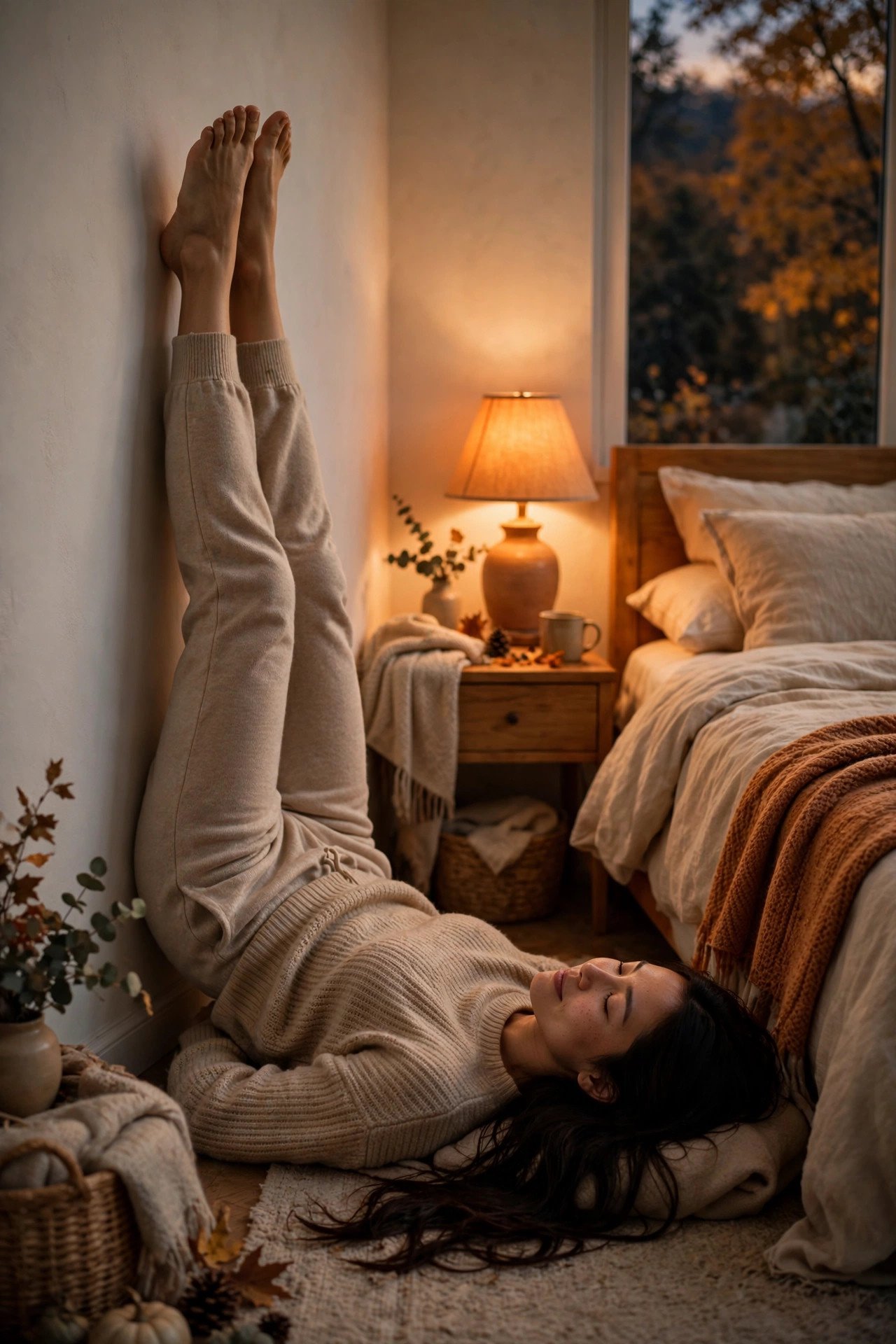
Vigorous exercise before bed is a mistake — it spikes your energy when you need the opposite. Slow movement does the reverse. My routine is almost embarrassingly simple: legs up the wall for five minutes (hips near the wall, legs resting vertically, arms out), then a few neck rolls, shoulder stretches, and a gentle forward fold. That’s the whole thing, done in soft light with quiet music or nothing at all. In my experience, this beats a thirty-minute evening yoga video — not because it’s better yoga, but because you’ll actually do it. Research has found gentle yoga associated with significantly better sleep in women with sleep problems, and you don’t need a class for that; you need ten minutes and a wall. My judgment call: do this in your pajamas, on your bedroom floor, with zero performance standards. The goal isn’t flexibility. It’s telling your body the day is over in a language it understands: slow, easy movement.
8. Self-Massage With Warm Oil (15 Minutes)
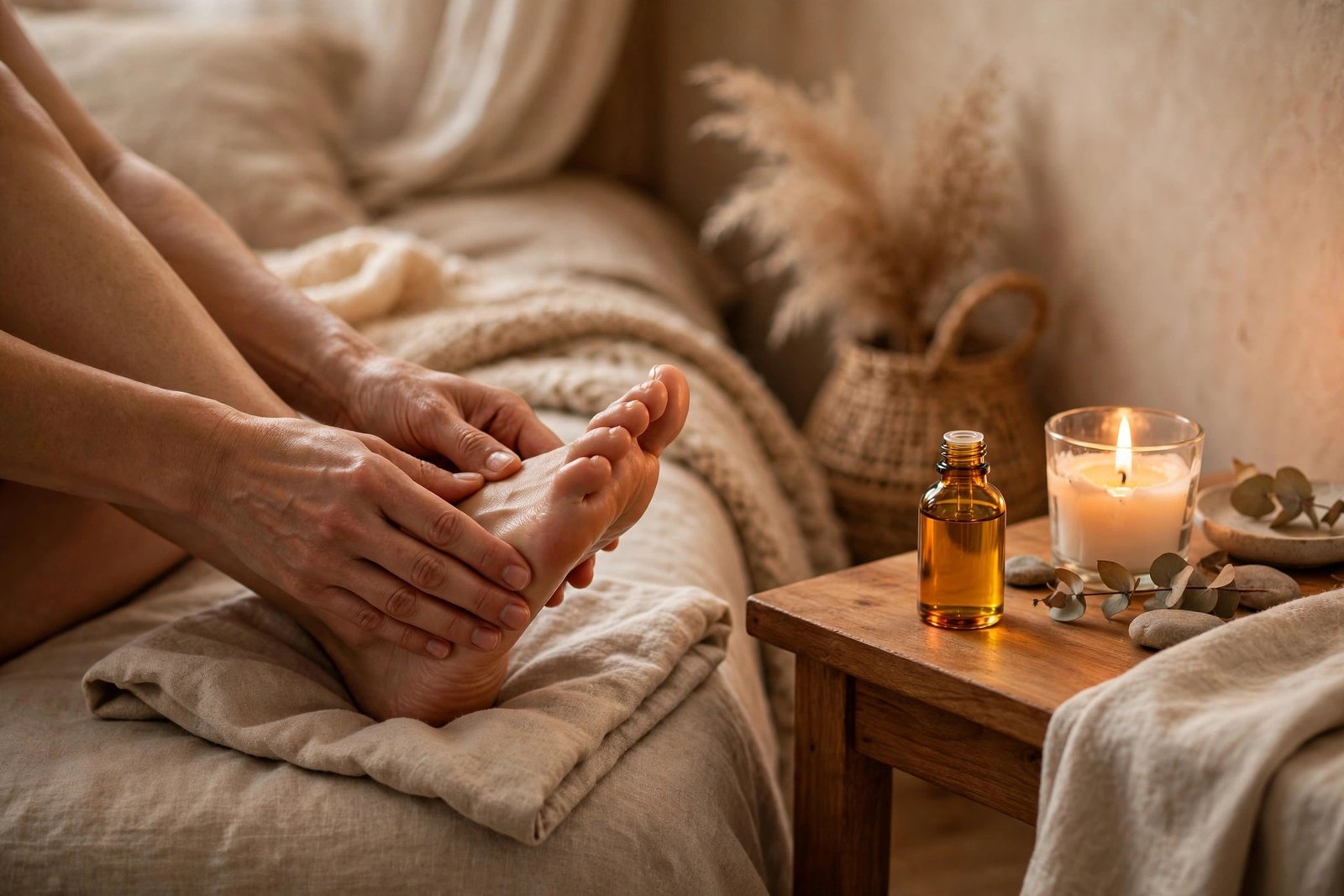
This one comes from Ayurvedic tradition — abhyanga, warm-oil self-massage — and I was skeptical until I tried it on a restless night and slept like I’d been sedated. Warm a little plain oil (coconut, sesame, or almond all work), and spend ten to fifteen minutes on your feet, neck, and shoulders with slow, firm strokes. You don’t need technique; you need warmth and pressure. Skip the full-body fantasy you see in spa videos — two focused minutes on each foot plus your neck and shoulders is enough to feel the shift. Adding a scent you love makes it a real ritual; my perfume layering guide taught me how much scent anchors a mood, and a drop of lavender or sandalwood oil in your massage oil works the same way. Fair warning: use an old towel and old pajamas, because oil gets everywhere. That small inconvenience is the only downside I’ve found.
The 30-Minute Full Max (For Slow Evenings)
9. Analog Reading Hour (30 Minutes)
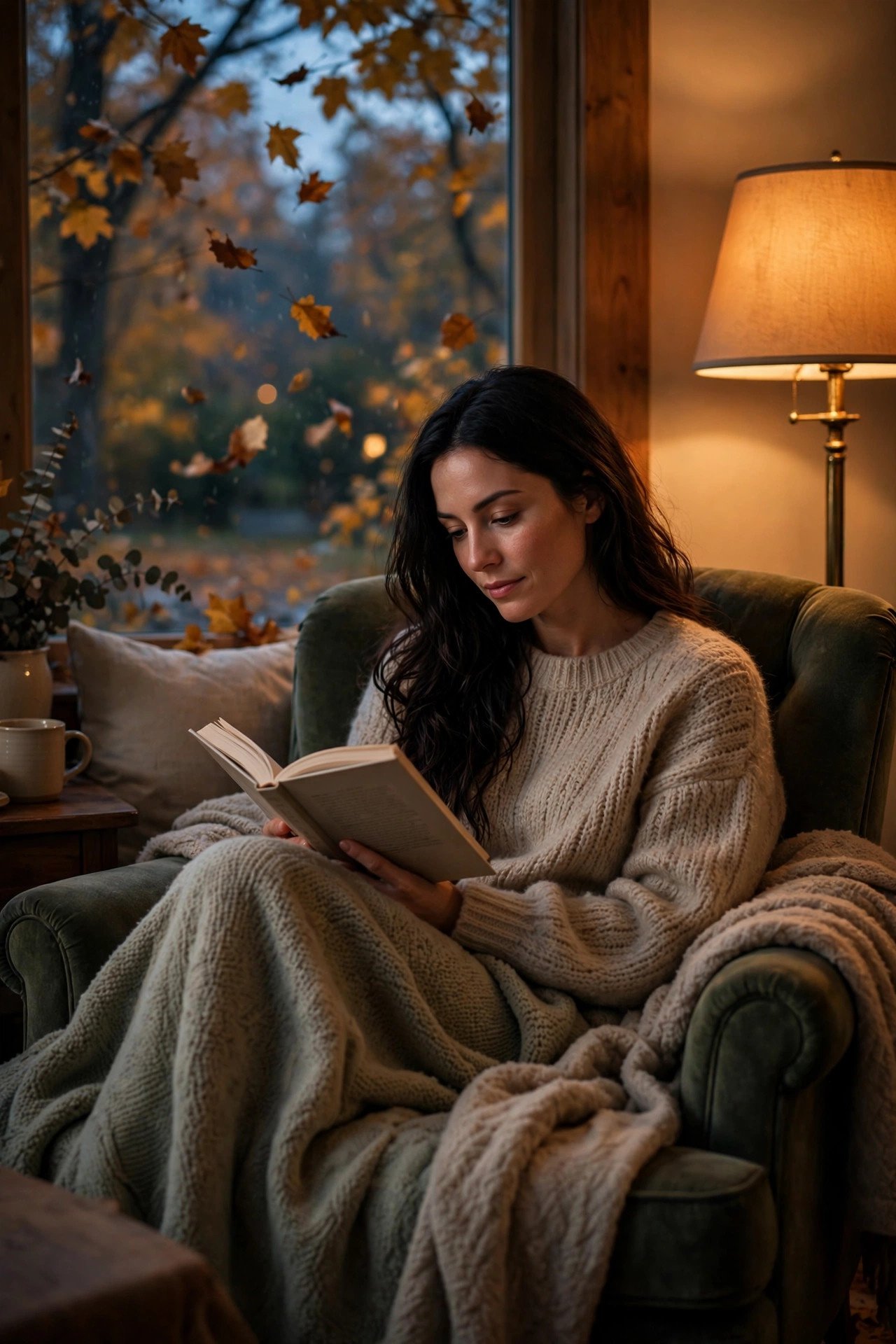
A physical book, a warm lamp, thirty minutes, no phone in the room. That’s the whole ritual, and it’s the one I reach for on evenings when my brain is loudest. Reading on paper removes the blue light, but more importantly it removes the exit ramp — there’s no notification to pull you out of the story, so your attention finally gets to settle somewhere. Here’s my specific judgment call: read fiction, not self-help. The goal is to bore your planning brain into submission, and a novel does that beautifully while a productivity book keeps your to-do circuits firing. In my experience, twenty pages is the magic number — by then my eyes are heavy and the book is falling onto my chest, which is exactly the outcome we’re after. Keep a dedicated “evening book” that’s purely for pleasure. The moment reading becomes homework, the ritual stops working.
10. Candlelit Gratitude Journaling (20 Minutes)

I’m saving my favorite for last. Light a candle, open a notebook, and write three things you’re grateful for plus one win from the day — big or small, “finished the report” counts exactly as much as “made great tea.” This is the one I’d buy, if I had to put money on a single ritual: a three-dollar candle and a notebook have outperformed every gadget and supplement I’ve tested. Gratitude journaling genuinely shifts your mindset before sleep; instead of replaying what went wrong, you close the day on what went right. The candlelight matters more than you’d think — it makes the whole thing feel like a ceremony rather than homework, and ceremonies are what our brains actually remember. My judgment call: keep it short enough that you’ll do it on a tired Tuesday. Five honest lines beat two pages of forced positivity every single time.
My Honest Takeaway
Evening-maxxing isn’t about optimizing yourself into a productivity machine — it’s about deciding your evening deserves the same intention you give your morning. Start with the tier that matches your real life, not your aspirational one. Stack two or three rituals, keep them for two weeks, and pay attention to how fast you fall asleep. In my month of testing, consistency beat intensity every single time: the boring 5-minute reset, done nightly, outperformed every elaborate routine I abandoned by day four. Your evening is the foundation your morning is built on. Max it.
Tap through all 10: View this as a Web Story
Frequently Asked Questions
What is evening-maxxing?
Evening-maxxing is the 2026 wellness trend of intentionally maximizing your evening hours for rest and recovery — building a deliberate wind-down routine instead of losing the night to scrolling. It’s about treating the hours before bed as valuable, not leftover.
How long should an evening wind-down routine be?
Honestly? As long as you’ll actually do. My testing says a consistent 5-minute routine beats an ambitious 45-minute one you abandon by day four. Start with one tier from this guide — the 5-minute resets if you’re exhausted, the 15-minute wind-downs on normal nights, the 30-minute max when you have a slow evening.
Does evening-maxxing actually improve sleep?
The individual pieces are well-supported: warm showers 1–2 hours before bed are associated with faster sleep onset, gentle yoga with better sleep quality, and reduced evening screen time with earlier melatonin release. In my month of testing, the combination noticeably shortened the time it took me to fall asleep.
What’s the single best wind-down ritual if I only have 5 minutes?
The digital sunset — phone away, ideally in another room, one hour before bed. It’s the hardest and the most effective. Everything else on this list works better once the scrolling stops.
Can evening-maxxing help with nighttime anxiety?
In my experience, yes — especially the brain dump and breathing rituals. Most bedtime “anxiety” is unfiled thoughts looping; writing tomorrow’s top three tasks gives your brain permission to let go, and slow breathing with a longer exhale directly calms the nervous system.
Do I have to give up screens completely in the evening?
No — and anyone who tells you otherwise is selling something. The realistic goal is a screen-free final hour. If you must use your phone, switch the display toward the red end of the spectrum, which research shows is less disruptive to melatonin than blue-white light.
What should I drink before bed for better sleep?
Something warm and caffeine-free: golden milk (turmeric, warm milk, cinnamon, honey), chamomile tea, or tulsi-ginger tea. Skip the expensive “sleep lattes” — the ritual of drinking something warm slowly, away from screens, matters more than the specific ingredients.
How long before I notice better sleep from a wind-down routine?
Give it two weeks of consistency. In my testing, the breathing and shower rituals showed effects within days, but the full benefit — falling asleep faster most nights — settled in around the two-week mark, once the routines became automatic cues.
About the author: Mehboob Hussain is the founder and editor of MubStyle, where he covers fashion, beauty, home decor and wellness. He researches and writes every article himself — testing each idea for real life before it makes the list — and creates original visuals for every guide. Based in Multan, Pakistan.

Mehboob Hussain is the founder and editor of MubStyle, where he covers fashion, beauty, home decor and wellness. He researches and writes every article himself — testing each idea for real life before it makes the list — and creates original visuals for every guide. Based in Multan, Pakistan.